
Water Heater Repair in Rowley, MA
Rowley has a lot of older housing on private wells, and that combination is hard on a water heater. Sediment and mineral content build up in the tank faster than they do on town water, which means Rowley homeowners tend to see heating element failures, popping and rumbling noises, and shortened tank life well before a heater’s rated age.
Water Heater Repair in Rowley
Chris and the plumbing crew handle water heater calls all over Rowley, from the older farmhouses near the river to newer construction off Route 1A. Most calls start the same way: no hot water, lukewarm water, a leaking tank, or a unit that’s making noise it didn’t used to make. We come look at the actual heater before we tell you anything, because the fix depends entirely on what’s failed and how old the unit is.
What Rowley Homes Typically Have
A good share of Rowley’s housing stock dates back decades, and it shows in the mechanical systems. You’ll find plenty of older oil-fired boilers still running hot water off a tankless coil or an indirect tank, alongside standalone electric and gas water heaters in newer additions or renovated basements. Natural gas isn’t run down every street here the way it is closer to Salem, so a fair number of homes are on oil or propane, which changes what a repair or a future replacement looks like. If you’re on propane, tank sizing and venting have to be sized for that fuel specifically, not just swapped from a gas spec sheet.
Well water is common outside the town center, and it’s the single biggest factor in how long a water heater lasts here. Hard, mineral-heavy well water accelerates sediment buildup in the tank and can eat through heating elements and anode rods years ahead of schedule. If your water heater is underperforming and you’re on a well, that’s usually not bad luck. It’s the water.
What the Work Involves
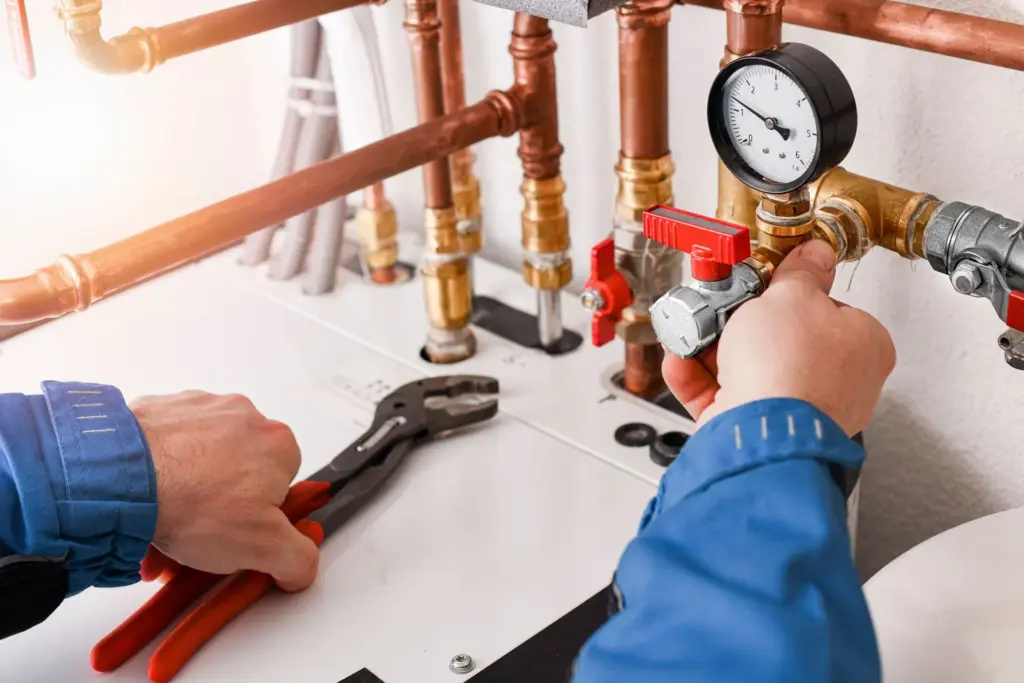
A repair call starts with draining the tank, at least partially, to inspect the elements, thermostat, thermocouple, or gas valve depending on the fuel type. On electric units we’re checking voltage at the elements and testing for a tripped high-limit switch. On gas and oil-fired systems we’re checking the burner assembly, venting, and gas line sizing to make sure the unit is getting the right supply, especially if a larger tank was ever swapped in without upsizing the line.
If the tank itself is leaking from the shell rather than a fitting, that’s not repairable. Tanks don’t get patched. Everything else on the unit is fair game for repair, and most calls are done same-day. A straightforward element or valve swap takes under two hours. If we need a part that isn’t on the truck, we’ll tell you honestly what the wait looks like rather than guess.
Repair or Replace
This is where we tell you straight, not steer you toward the bigger job. If your water heater is under 8 years old and the failure is a part, a thermostat, an element, a valve, that’s almost always worth fixing. Parts are inexpensive relative to a new install, and a repaired unit will run for years afterward.
If the tank is leaking from the body, if it’s original to a house built decades ago, or if you’re on your second or third repair in as many years, replacement is the honest answer. Chris will walk you through both options on the spot and won’t recommend a new tank just because it’s the bigger ticket. On well water especially, we’ll also flag if sediment is the underlying cause, because a repair without addressing that just buys you a shorter reset before the next failure.
What It Costs
Repairs run from a simple part swap to a more involved valve or vent repair, and the cost depends on what’s actually broken and what fuel type you’re running. We’ll give you a number before any work starts, not after. Replacement costs more up front but comes with a full new unit and, on gas or oil systems, a fresh look at venting and gas sizing to make sure everything meets current code. Call {PHONE} and we’ll talk through your specific setup before you commit to either path.
How Long It Takes
Most repair visits are finished in one visit, often in an hour or two once we’ve diagnosed the issue. Parts availability is the main variable. Common electric elements and thermocouples are usually on the truck. Less common gas valves or oil burner parts on older units sometimes need a day to source. A full replacement, when that’s the right call, is typically a same-day job as well, including draining, disconnecting, and setting the new unit with correct venting and gas or electrical hookup.
Common Questions
Is it worth repairing a water heater over 10 years old?
Usually not, especially on well water. Once a tank is past its typical lifespan, sediment and corrosion are working against the tank itself, not just individual parts. We'll still inspect it and tell you honestly if a repair makes sense, but replacement is more often the right call at that age.
Why does my water heater fail faster than my neighbor's in town?
Well water is the usual reason. Hard water with more mineral content builds sediment in the tank faster and wears down heating elements and anode rods ahead of schedule, which is common across Rowley's well-water properties.
Do you work on oil-fired and propane systems, not just gas?
Yes. A lot of Rowley homes run on oil or propane rather than natural gas, and we service tankless coils, indirect tanks, and standalone propane water heaters along with standard gas and electric units.
Can a bigger water heater cause problems with an old gas line?
It can. If a larger tank was installed at some point without checking the existing gas line sizing, the burner may not get adequate supply. We check line sizing as part of any gas water heater repair.
How fast can someone come look at a leaking water heater?
Reach Out for Water Heater Repair
If your water heater is giving you trouble in Rowley, call {PHONE}. We’ll ask a few questions about the unit, the fuel type, and what’s happening, and get a plumber out to look at it directly.
Contact information
Talk to Chris
Chris runs the plumbing side of the business and takes these calls directly. If you’re dealing with a water heater that’s acting up, describe what you’re seeing, no hot water, a leak, strange noise, and he’ll tell you honestly whether it’s a repair or something bigger before anyone comes out. No pressure toward a bigger job you don’t need.