
Generator Installation and Connection in Salisbury, MA
Generator Installation and Connection in Salisbury
Salisbury sits right on the coast, and that means the power goes out here more than it does a few miles inland. Nor’easters off the water, wind off the marsh, salt air chewing on transformers and lines – it adds up to outages that last longer than a candle and a flashlight can cover. If you’ve lost power twice in the same winter, or you’re tired of driving to a hotel every time a storm rolls through, a properly installed generator connection is the fix.
Why Salisbury Homes Need This
A lot of homes on the Salisbury beachfront and around the town center are older cottages and ranches that were wired decades before anyone thought about central air, an EV, or a second refrigerator in the garage. Many are still running on 60 amp or 100 amp services that were sized for a much smaller electrical load. Some of the older cottages still have cloth-insulated wiring or knob and tube in parts of the house, and a few have panels from manufacturers like Federal Pacific or Zinsco that are known for breakers that don’t trip the way they should.
Add a coastal storm track that regularly knocks out power for a day or more, and you’ve got a real case for a generator connection – not as a luxury, but as the thing that keeps your sump pump running, your heat on, and your food from spoiling while National Grid or your utility works through a long list of downed lines.
What the Work Involves
There are two ways to do this right: a manual transfer switch paired with a portable generator, or an automatic standby generator that starts itself and switches over in seconds. Both require the same core piece – a transfer switch that physically isolates your house wiring from the utility line, so you never back-feed power onto a grid that a lineman might be working on.
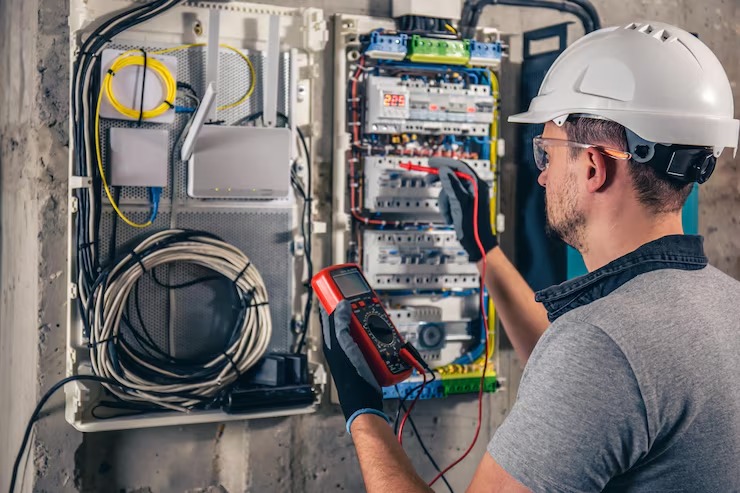
For a standby system, Brandon sizes the unit to your actual panel and the circuits you want covered – furnace, well pump, sump pump, refrigerator, a few lighting circuits, sometimes the whole panel if the generator is large enough. The gas or propane line gets sized to the generator’s BTU demand, the unit gets set on a pad outside at the required clearance from windows and doors, and the transfer switch gets wired into your existing panel or a subpanel next to it.
Your utility has to be notified and, in some cases, has to disconnect and reconnect the meter for the interconnection. That part is on their schedule, not ours. The actual power-out window for the electrical work itself is usually a few hours, not a full day, and it’s scheduled so you’re not caught without power overnight.
What It Costs
A manual transfer switch setup for a portable generator generally runs {PRICE_LOW} to {PRICE_HIGH}, installed. A full automatic standby system – generator, pad, transfer switch, gas line, and wiring – runs more, and the number moves with the size of the generator, whether you’re running propane or natural gas, how far the unit sits from the panel, and whether your existing service and panel can handle the interconnection or need upgrading first. Brandon gives you the number after he’s looked at your panel and talked through what you actually want covered during an outage, not a guess over the phone.
How Long It Takes
A manual transfer switch install is usually a single day. A standby generator project takes longer because of the moving pieces outside our control – the gas company sizing and running the line if you’re switching to natural gas, the utility coordinating the meter work, and the town scheduling the inspection. Start to finish, most standby jobs land somewhere between one and three weeks, with the actual on-site electrical and mechanical work only taking a day or two of that.
Permits and Inspection
Generator installations are permitted work in Massachusetts, and Salisbury’s inspector signs off on both the electrical connection and, where applicable, the gas piping. That means a licensed electrician pulls the permit, the town inspects the transfer switch and wiring before it’s covered up or energized, and you get a paper trail showing the work was done to code. Skipping that step is common with unlicensed installers and it’s exactly what causes insurance headaches and back-feed hazards later. [EXTERNAL LINK: Massachusetts Board of State Examiners of Electricians – licensing and code reference, for homeowners who want to verify licensing requirements]
Common Questions
Can I use a portable generator without a transfer switch?
You can run a portable generator with extension cords to individual appliances, but that's not a permitted or safe way to power your house. A transfer switch is what keeps you from back-feeding the utility line, which is a real hazard to line workers, and it's what makes the setup inspectable and legal in Massachusetts.
Do I need to upsize my electrical panel to add a generator?
Not always. If your existing panel has room for a transfer switch or subpanel and can handle the interconnection, you may not need an upgrade. If you're still on a 60 amp or 100 amp service, Brandon will usually recommend addressing that first since it affects what the generator can realistically back up.
Natural gas or propane for a standby generator?
It depends on what's available at your property. Natural gas is simpler if the gas company can run a line to your home. Propane works well where natural gas isn't an option, but it requires a tank and periodic refills. Brandon and the gas sizing will factor into the total cost either way.
How often does a standby generator need maintenance?
Standby units run a short self-test cycle on their own on a regular schedule, and most manufacturers recommend an annual service check – oil, filters, battery, and a load test. That upkeep is what keeps the unit ready to actually start when a storm knocks out power.
Reach Out for Generator Installation
If you’re planning ahead of next winter’s storms, or you just went through an outage that made the decision for you, call {PHONE}. Belfiore is a Salem-based company working across Salisbury and the rest of the North Shore, and Brandon can walk your panel with you and put together a plan that fits the house you actually have.
Contact information
Talk to Brandon
Brandon is the electrician on the Belfiore team, and generator work is a job he likes because it’s concrete – you can size it, test it, and know exactly what it’ll do the next time the power drops. If you tell him what you want to keep running during an outage – heat, the well pump, the fridge, the whole house – he’ll tell you what size unit that actually takes and what your panel can support.