
Electrical Troubleshooting and Repair in Salem, MA
Most Salem homes were built before anyone plugged in a microwave, a window AC, and a laptop charger on the same circuit. A lot of them were built before central heat. The wiring underneath your walls has usually been added to, patched, and rerouted by three or four different people since then, and none of it was designed for what you’re asking it to do now.
Why Salem Homes Need This
Salem’s housing stock skews old, and the electrical systems inside it skew older than the last renovation would suggest. It’s common to find a kitchen remodel with granite counters and recessed lighting still fed by a 60 amp service installed when the house had an icebox. Behind the plaster in the McIntire District and the Point neighborhood, we still find knob and tube wiring doing double duty in walls that were never opened up during later work. Cloth-insulated cable, brittle after decades of heat cycling, shows up in basements and attics on a regular basis.
Panel-wise, Salem has its share of Federal Pacific Stab-Lok and Zinsco panels still in service, both known for breakers that don’t trip reliably when they’re supposed to. Add in three-family conversions where a single 100 amp service somehow feeds three separate units, and you’ve got a town where electrical troubleshooting isn’t a luxury call, it’s routine maintenance for houses that have outlived their original wiring plan by seventy or eighty years.
What the Work Involves
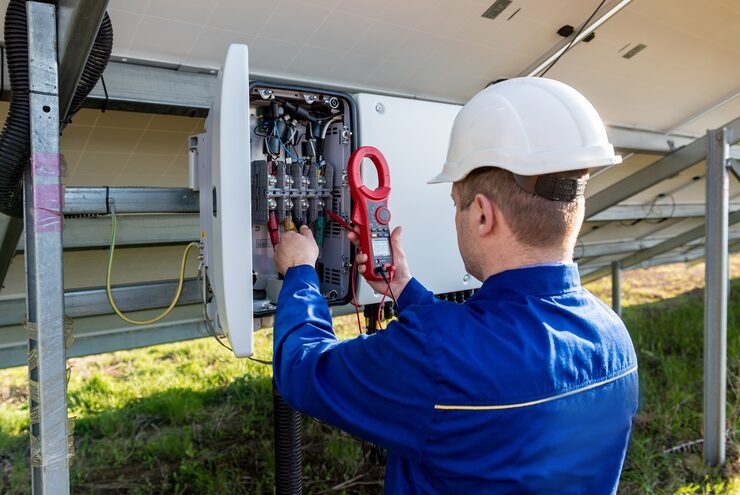
Troubleshooting starts with figuring out where the problem actually lives, not just where it shows up. A dead outlet in the dining room might be a loose wire nut two rooms away, upstream on the same circuit. Brandon traces the circuit, checks connections at the panel, and tests for voltage drop, arcing, and loose neutrals before opening anything up.
For repairs, expect a shutoff of the specific circuit involved, not the whole house, unless the fix is at the panel itself. If it’s panel work, the power stays off for the duration, usually a few hours, and if the service itself needs attention, National Grid has to schedule the meter disconnect and reconnect on their end, which is outside our control on timing. Everything else, from pulling new cable to replacing a bad breaker to correcting an overloaded circuit, is our work start to finish.
What It Costs
A single dead outlet or a tripping breaker traced to a loose connection runs toward the lower end, {PRICE_LOW} on a straightforward call. Add in aluminum wiring connections that need pigtailing, a Federal Pacific panel with multiple bad breakers, or knob and tube that has to be partially replaced to pass inspection, and the job moves toward {PRICE_HIGH}. What moves the number is how much of the house the problem touches and whether we’re chasing one bad connection or rebuilding a circuit that was never sized right in the first place.
How Long It Takes
A single troubleshooting visit for a dead circuit or a nuisance breaker typically wraps in one visit, a few hours on site. More involved repairs, like replacing a section of knob and tube feeding a bedroom or correcting a double-tapped breaker at the panel, still usually close out same day. If the fix uncovers something bigger, like a panel that’s not rated for what it’s carrying, we’ll tell you before we start cutting into a second job, not after.
Permits and Inspection
Electrical repair work in Massachusetts is permitted and inspected, and that’s not paperwork for its own sake. Panel work, new circuits, and anything touching the service entrance gets pulled through the City of Salem’s building department, and a local inspector signs off before the walls close up. Brandon is a licensed electrician, which means the permit is filed under his license and the work is on record. A handyman doing the same repair without a permit leaves you with wiring nobody inspected and nothing on file if you sell the house or file an insurance claim. [EXTERNAL LINK: Massachusetts electrical code (527 CMR 12) reference for homeowners researching permit requirements]
Common Questions
How do I know if my house has knob and tube wiring?
Look in an unfinished basement or attic where wiring is exposed. Knob and tube uses individual ceramic knobs and tubes to run single conductors, no sheathed cable. If your house was built before 1940 and hasn't had a full rewire, there's a good chance some of it is still there even if parts have been replaced.
Is a 100 amp service enough for a Salem home?
It depends on what's running off it. A 100 amp service can be fine for a smaller house with gas heat and standard appliances. Add central AC, an electric range, and an EV charger, and it usually can't keep up. We check the actual load before recommending an upgrade.
What's wrong with Federal Pacific and Zinsco panels?
Both brands have a documented history of breakers that fail to trip during an overload, which is the entire point of a breaker. They're not automatically dangerous in every case, but most electricians, including us, recommend replacement when we find one, especially in an occupied home.
Do I need a permit for a simple outlet repair?
Straightforward repairs like replacing a receptacle or fixing a loose connection generally don't require a separate permit. Anything involving new circuits, panel work, or service changes does, and we handle that filing as part of the job.
Can you fix the problem without shutting off my whole house?
Usually. Most repairs only require shutting off the specific circuit involved. Whole-house shutoffs are only necessary for panel or service work.
Reach Out for Electrical Repair
If something in your house is tripping, sparking, buzzing, or just not working right, call {PHONE}. We work across Salem and the surrounding North Shore, and we’ll walk you through what we find before any wall gets opened up.
Contact information
Talk to Brandon
Brandon left union electrical work to run the electrical side of a two-brother shop, plumbing and electrical under one roof, both trades licensed. He’s the one who traces the circuit, opens the panel, and tells you straight whether you’re looking at a fifteen-minute fix or a service that needs to come off the wall. No call center between you and the person doing the work.