
EV Charger Installation in Newbury, MA
A lot of Newbury’s housing stock dates back to farmhouses and colonials built long before anyone imagined charging a car in the driveway. Many of these homes still run on a 100 amp service, sometimes less, and were never wired with a 240 volt circuit anywhere near the garage or parking pad. Add a Level 2 charger to that setup without checking the panel first and you’re asking for tripped breakers or worse.
Why Newbury Homes Need This
Newbury’s rural and semi-rural lots mean detached garages, barns converted to workshops, and driveways set well back from the house. That distance matters for wire runs and conduit planning. It also means a lot of these properties are on well and septic, which usually isn’t relevant to electrical work directly, but it tells you something: these are older systems that haven’t been touched in decades, and the electrical panel is often just as original as the well pump.
We still find 60 amp services in this town, along with cloth-insulated wiring from the mid-1900s and, in a handful of older renovations, Federal Pacific panels that were popular before anyone knew about their breaker failure rate. Knob and tube shows up occasionally in homes that kept original wiring in the attic or basement even after a partial rewire. None of that is a reason to panic, but it is a reason to have an electrician actually look at the panel before you buy a charger, not after.
There’s also the outage argument that comes up across this part of the North Shore. Newbury loses power for longer stretches than towns closer to the coast during bad storms, between tree cover and the distance from substations. Homeowners who add a generator interlock at the same time as a charger circuit are thinking ahead, and it’s worth discussing both jobs together since the panel work often overlaps.
What the Work Involves
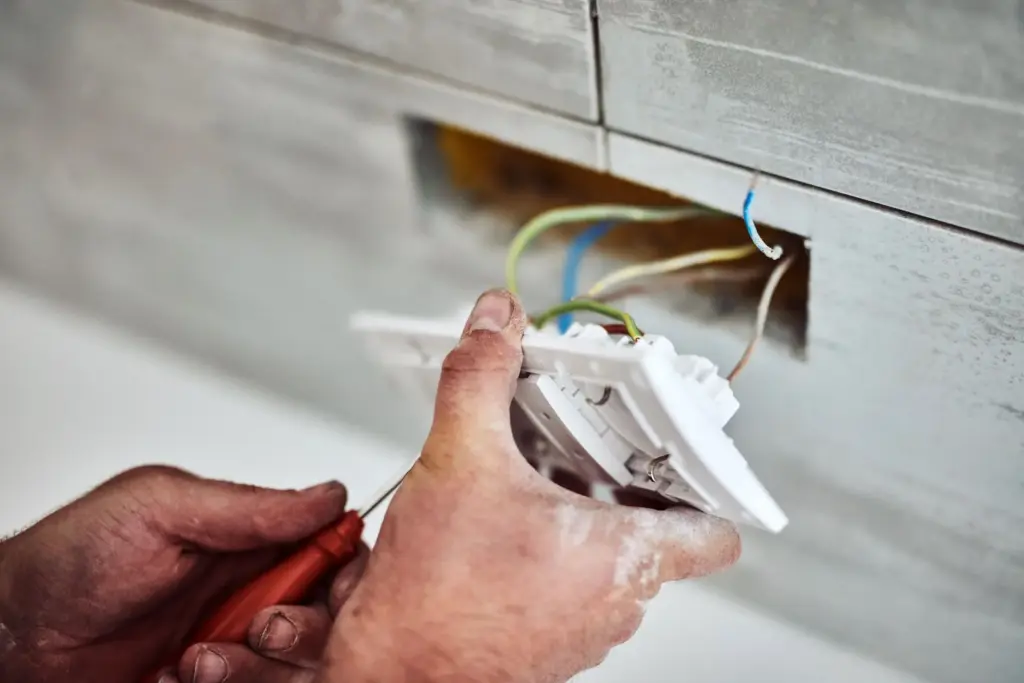
Every EV charger install starts with a load calculation. Brandon checks your panel’s total capacity against what’s already running – central air, electric heat, a well pump, a dryer – and figures out whether there’s headroom for a dedicated 240 volt circuit, usually 40 or 50 amps depending on the charger, or whether the panel needs an upgrade first.
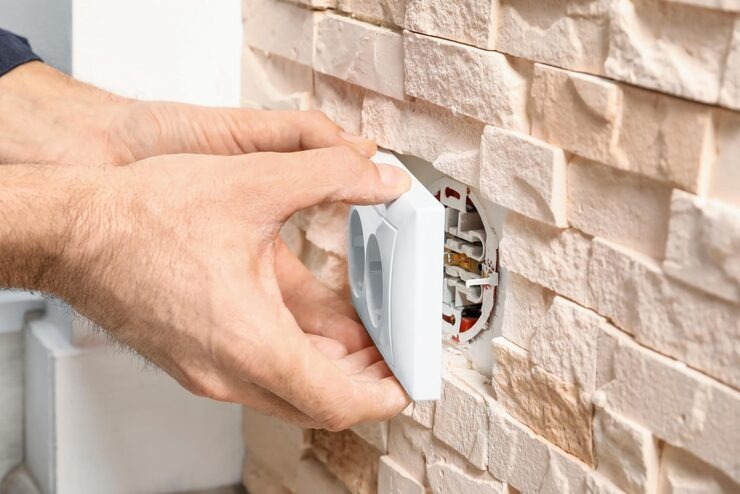
Once the circuit is sized, the job typically runs a dedicated double-pole breaker back to the panel, new copper wire (usually 6 or 8 gauge depending on amperage and run length) in conduit or cable rated for the location, and either a hardwired connection or a NEMA 14-50 outlet at the charger location. If the run goes to a detached garage, that’s usually trenching and buried conduit, which adds time.
Power to the house gets shut off only briefly, typically under an hour, while the new breaker is set and connections are made at the panel. If the service itself needs upgrading from the utility side – a new meter socket or heavier service drop – National Grid handles the utility-owned equipment and scheduling, while Brandon handles everything from the meter inward. That coordination is often the part homeowners don’t expect, and it’s why timelines can stretch if a service upgrade is involved.
What It Costs
A straightforward dedicated circuit for a Level 2 charger, panel already has room, short wire run, generally lands between {PRICE_LOW} and {PRICE_HIGH}. What moves that number: distance from the panel to the charger location, whether the run is inside finished walls or exposed in a basement, whether trenching is needed for a detached garage, and whether the panel itself needs to be upgraded to handle the added load. A 60 amp service that can’t support a charger circuit at all is a different conversation, and Brandon will tell you that upfront rather than after the work starts.
How Long It Takes
Most straightforward installs are a single day’s work, from running the new circuit to setting the breaker to testing the charger. Detached garage runs with trenching can take two days once you factor in digging and conduit burial depth requirements. If a panel upgrade or utility coordination is part of the job, plan on it stretching across a scheduled utility visit, which is outside our control but something we track for you.
Permits and Inspection
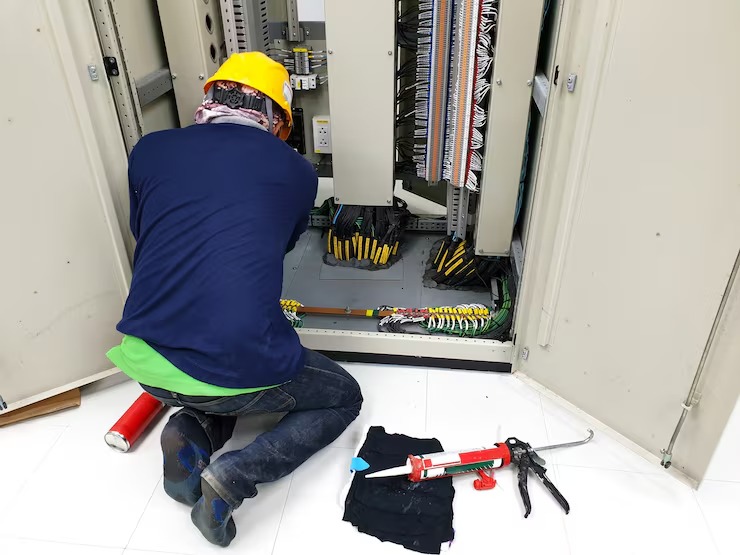
This work gets a permit and an inspection, full stop. Massachusetts requires an electrical permit for new circuits and panel work, and the local inspector signs off before the circuit is energized for regular use. That inspection checks breaker sizing, wire gauge, grounding, and that the installation matches the [EXTERNAL LINK: Massachusetts electrical code (527 CMR) reference for licensed electrical work and permitting requirements]. A permit pulled and closed properly also matters when you sell the house or file an insurance claim. Anyone offering to skip that step to save time isn’t doing you a favor.
Common Questions
Can my 100 amp panel handle an EV charger in an older Newbury home?
Sometimes, depending on what else is running off that panel. A load calculation tells you for sure. If there's not enough headroom, the options are usually a panel upgrade or a smart charger that manages load automatically.
Do I need a permit for a home EV charger in Massachusetts?
Yes. Any new dedicated circuit or panel work requires a permit and inspection under Massachusetts electrical code, regardless of town.
What amperage charger should I install?
Most Level 2 chargers run at 32, 40, or 48 amps, which usually calls for a 40 or 50 amp dedicated circuit. The right size depends on your vehicle and how fast you want to charge, and Brandon can walk through the options for your specific car.
My house still has knob and tube wiring somewhere. Does that affect an EV charger install?
Should I combine an EV charger install with a generator interlock?
Reach Out for EV Charger Installation
If you’re in Newbury and thinking about a home charger, call {PHONE} and describe your panel and where you want the charger located. We’ll walk you through what it’ll take before anyone shows up with tools.
Contact information
Talk to Brandon
Brandon is the licensed electrician at Belfiore and handles EV charger work directly, from the first look at your panel to the final inspection. He’ll tell you straight whether your existing service can handle a charger or whether that’s a separate conversation first. No sales pitch, no upsell to work you don’t need.