Tankless Water Heater Installation in Georgetown, MA
A lot of Georgetown homes are still running a 40 or 50 gallon tank that was undersized the day it went in. Add a few teenagers or a soaking tub and the hot water runs out before the shower does. If your house is also on well water, that tank is likely taking a beating from sediment it was never built to handle.
Tankless Water Heater Installation in Georgetown
A tankless unit heats water on demand instead of storing 40 or 50 gallons at a time. For a lot of Georgetown houses, that solves two problems at once: no more running out of hot water, and no tank sitting in the basement slowly rotting from the inside out. Chris runs the plumbing side of the business and he will tell you straight whether a tankless conversion makes sense for your house or whether a standard tank replacement gets you the same result for less trouble.
Tankless is not automatically the right call for every home. It works best where gas supply and venting can be sized properly, and where the household’s hot water demand actually justifies the switch. We will walk the house with you before we quote anything.
What Georgetown Homes Typically Have
Georgetown’s housing stock runs from old farmhouses on the back roads to newer construction near the center, and the mechanical setup varies a lot depending on which decade the house went up. Older homes here often still have oil-fired boilers and standalone electric or oil-fired water heaters, especially further from the main roads where natural gas was never run to the street. Closer to the center and along the newer subdivisions, gas service is more common and that changes what a tankless upgrade looks like and what it costs.
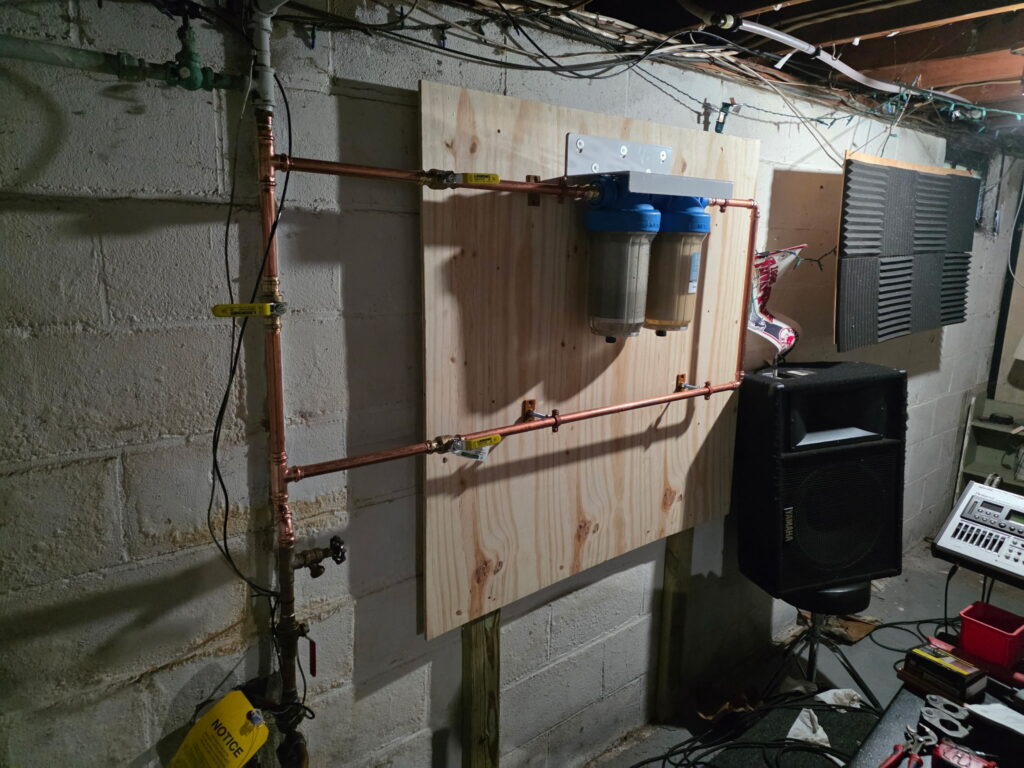
Well water is common in the outer parts of town, and septic systems are the norm rather than the exception. That combination means hard water and sediment are a real concern for any water heater, tank or tankless, and it is worth talking about a filtration or scale-control setup at the same time as the heater itself. If your house is on town water, that is one less variable to plan around, but Georgetown has enough well-served homes that we never assume either way.
What the Work Involves
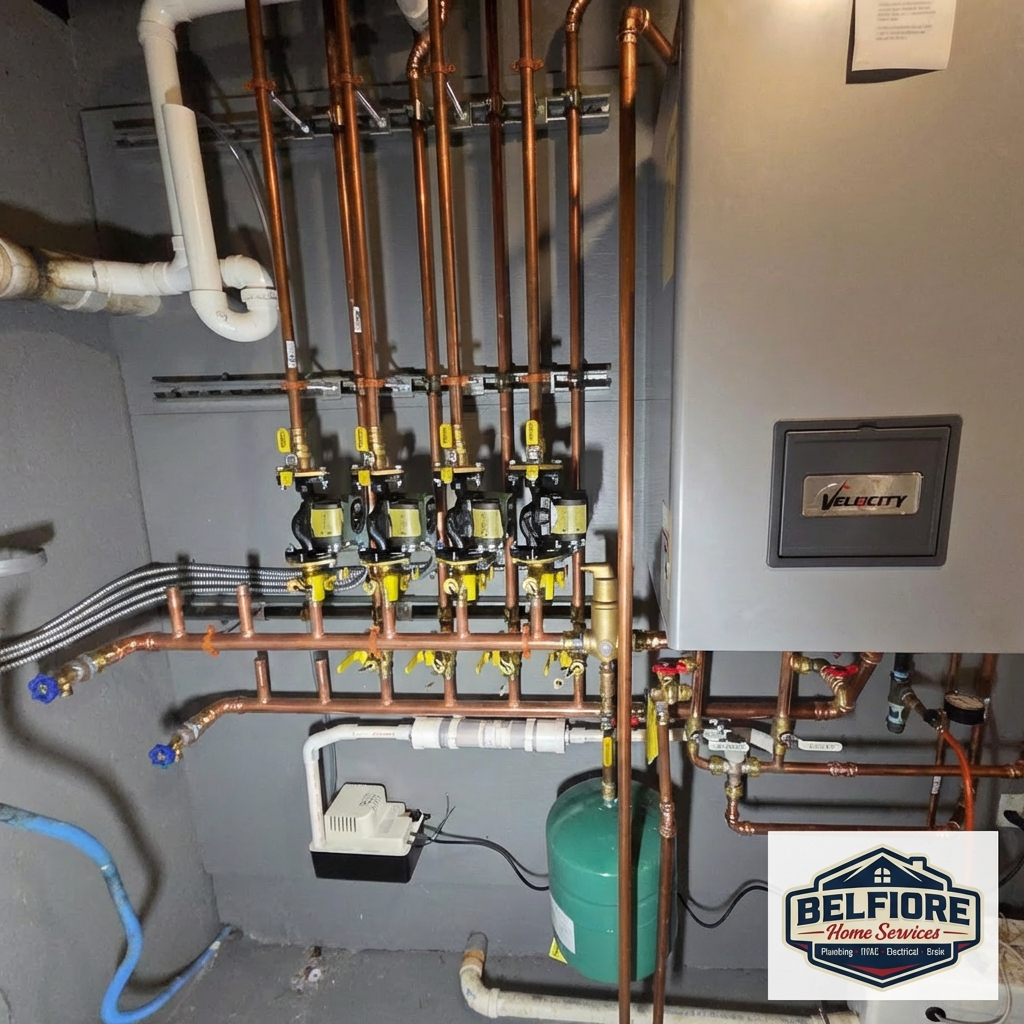
A tankless conversion is more involved than a straight tank swap, and it is worth knowing what is actually happening in your basement or utility closet. The old tank gets drained and disconnected. If you are switching from electric or oil to a gas-fired tankless unit, we need to confirm gas is available and sized correctly, because tankless units draw a much higher BTU input than a standard 40 gallon tank, often north of 150,000 BTU/h. That can mean upsizing the gas line from the meter, not just the last few feet of pipe.
Venting is the other technical piece. Tankless units need dedicated venting, usually PVC, CPVC, or stainless steel depending on the unit’s category, run to an exterior wall or through the roof. Older Georgetown homes were not built with this in mind, so the vent run is planned on site, not assumed from a spec sheet. We also confirm the gas line and vent termination meet current code, since both get inspected as part of the permit.
Most homes lose hot water for the better part of a day during the swap, not longer. We will tell you up front what the timeline looks like for your specific setup before work starts.
Repair or Replace
Not every water heater that is acting up needs to be replaced, and we will say so. A pilot light that will not stay lit, a bad thermocouple, a failing igniter, or a small mineral buildup issue can often be fixed for a fraction of what a new install costs. If your current unit is under ten years old and the tank itself is not leaking or rusted through, repair is usually the right call and we will tell you that on the first visit.
Replacement makes sense when the tank is leaking, when it is old enough that corrosion is the real issue, or when your household has simply outgrown what the unit can produce. If you are on well water and the tank has been running without any filtration for years, sediment damage is often further along than it looks from the outside. We will show you what we find and let you make the call, not the other way around.
What It Costs
Cost depends on whether you are doing a straight tankless-for-tankless swap or converting from a tank system, and whether the gas line needs upsizing to feed the new unit. Venting changes, gas line work, and any electrical work for the unit’s control board all factor in. We will give you a firm number after we have looked at the install location, not a phone estimate. {PRICE}
How Long It Takes
A like-for-like tankless replacement in a home that already has the gas and venting in place can often be done in a single day. A full conversion from a standard tank, especially one that requires upsizing the gas line or running new venting to the exterior, typically takes a full day and sometimes runs into a second for permitting and inspection. We will lay out the schedule for your specific job before we start, so there are no surprises about how long you will be without hot water.
Common Questions
Is tankless worth it if my Georgetown home is on oil, not gas?
Not usually, at least not directly. Gas-fired tankless units need a gas line sized for a high BTU draw. If your street does not have gas service, we would look at a high-efficiency oil-fired tank or an electric tankless option instead, depending on your electrical service capacity.
Will a tankless water heater work with my well water?
Yes, but filtration matters more with tankless units than with a standard tank because the heat exchanger has tighter internal passages that scale up faster. We usually recommend a sediment filter or water softener alongside the install if you are on well water without one already.
How much bigger does my gas line need to be for tankless?
It depends on the unit and the length of run from your meter, but most residential tankless units need significantly more gas flow than a standard tank heater. We measure your existing line and meter capacity on site before quoting any work.
Can you just repair my existing tank instead of replacing it?
Often, yes. If the tank itself is not leaking and the unit is not near the end of its expected life, a repair like a new thermocouple, igniter, or heating element is usually the more sensible fix. We will tell you which situation you are in.
Do I need a permit for a tankless conversion in Georgetown?
Reach Out for Tankless Water Heater Installation
If you are dealing with a water heater that cannot keep up, or you are just tired of running out of hot water halfway through a shower, call {PHONE}. We work across Georgetown and the rest of the North Shore, and we will give you a straight answer on repair versus replace before we ever talk about installation.
Contact information
Talk to Chris
Chris handles the plumbing side of the business and he is the one who will walk your basement, check your gas line size, and tell you honestly whether tankless is worth it for your house. No sales pitch, no upsell script. Just what the house needs and what your options actually are.