Electrical Panel Upgrades in Reading, MA
A lot of Reading’s housing stock went up in the post-war boom and the decades after, and most of it was wired for a 100 amp service, some of it less. That was plenty of capacity for a furnace, a dryer, and a few window units. It was never sized for an EV charger in the garage, a heat pump doing double duty as heating and cooling, and a finished basement with its own subpanel. If you’re adding any of that, the panel is usually the first thing that has to change.
Why Reading Homes Need This
Reading’s larger lots and colonial and split-level layouts mean more rooflines for solar, more garage space for a car charger, and more square footage overall to heat and cool electrically. That’s the group pattern across this part of the North Shore, and it shows up here as much as anywhere.
The town-specific piece is age. A good share of Reading’s homes were built before 1975, which puts them right in the window where 60 amp and 100 amp services were standard and aluminum branch wiring showed up in some builds. If your panel still has a Federal Pacific or Zinsco label on it, that’s a separate condition problem worth its own conversation, but plenty of Reading panels are simply undersized rather than defective. They did their job for forty years and now the job has changed. Adding a 240-volt EV charger circuit or a heat pump air handler to a 100 amp panel that’s already carrying a range, dryer, and central AC often means there’s no room left, not because anything is broken, but because the math doesn’t work anymore.
What the Work Involves
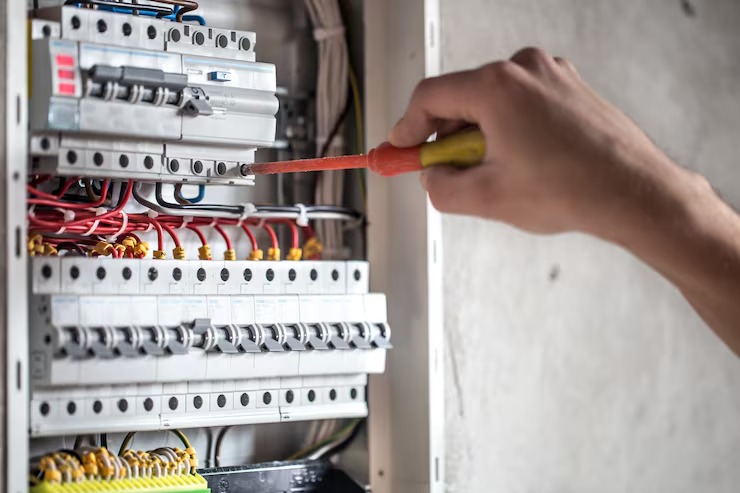
A panel upgrade means swapping the panel itself, and usually stepping up the service size, for example from 100 amp to 200 amp, so there’s headroom for what you’re adding. Brandon pulls the panel cover, evaluates the existing breakers, the bus bar, the grounding and bonding, and the condition of the wire coming in before he quotes anything, because what’s behind the cover changes the job.
The power has to come off the panel to do this safely, which means the house goes dark for a stretch, typically a few hours, not all day. Before that happens, the utility has to disconnect the service at the meter, since that part of the circuit isn’t the electrician’s to touch. Once the utility drop is clear, the panel comes out, the new one goes in, breakers get reinstalled or upgraded to match the new capacity, and everything gets torqued and labeled. The utility reconnects the meter once the new panel passes inspection, and Brandon tests every circuit before he calls it done.
What It Costs
Panel upgrades in Reading generally run {PRICE_LOW} to {PRICE_HIGH}. Where you land in that range depends on the amperage jump (100 to 200 amp costs more than a smaller step), whether the mast and weatherhead need updating to meet current utility standards, how many circuits get moved to the new panel, and whether a subpanel is part of the plan for a garage or finished basement. Brandon gives you a number after he’s looked at the panel, not before, because guessing at this from a phone call does nobody any favors.
How Long It Takes
Most straightforward panel upgrades in Reading are a one-day job once the permit is in hand and the utility coordination is scheduled. The outage itself is a few hours in the middle of that day. What actually controls the timeline is the utility’s schedule for disconnecting and reconnecting the meter, since that’s outside Brandon’s control, and the town’s inspection turnaround. Plan on the work itself being fast and the scheduling around it being the longer lead time.
Permits and Inspection
This work gets a permit and an inspection in Reading, no exceptions. Massachusetts requires a licensed electrician for panel work, and the town’s inspector signs off before the utility reconnects power for good. That inspection checks the grounding, the bonding, the breaker sizing against the wire gauge, and the labeling. It’s the step that separates a licensed job from something a handyman did over a weekend, and it’s also what keeps your homeowner’s insurance clean if there’s ever a claim tied to the electrical system. [EXTERNAL LINK: Massachusetts Electrical Code (527 CMR 12) via Mass.gov, for homeowners who want to see the actual permitting and inspection requirements]
Common Questions
Do I need a permit for a panel upgrade in Reading?
Yes. Panel work requires a permit and a town inspection in Massachusetts. A licensed electrician pulls the permit and schedules the inspection as part of the job.
How is a panel upgrade different from a panel replacement?
An upgrade is about adding capacity, like going from 100 to 200 amp for an EV charger or heat pump. A replacement is about a failing or obsolete panel, such as an old Federal Pacific or Zinsco unit, regardless of how much capacity you currently need.
Will I lose power during the upgrade?
Yes, for a few hours while the old panel comes out and the new one goes in. The utility disconnects and later reconnects the meter, and Belfiore coordinates that scheduling as part of the job.
Can my current panel handle an EV charger without an upgrade?
What size service do most Reading homes need after an upgrade?
Reach Out for Electrical Panel Upgrades
If your Reading home is still running on the panel it was built with and you’re planning a car charger, a heat pump, or a renovation that adds load, get it looked at before you buy the equipment. Call Belfiore at {PHONE} and Brandon will walk through what your panel can handle and what an upgrade involves.
Contact information
Talk to Brandon
Brandon’s the licensed electrician at Belfiore. He grew up doing this work in North Shore towns before he left the union to run the electrical side of the family business alongside his twin brother Chris, who handles plumbing and heating. If you’re weighing an EV charger, a heat pump, or just want an honest read on whether your Reading home’s panel has room to grow, he’ll look at it and tell you straight what your options are.