Gas Line Installation and Repair in Newbury, MA
Newbury has a lot of houses built long before gas piping was standard, which means a lot of retrofit work: running new lines into old framing, sizing for equipment nobody planned for fifty years ago, and figuring out whether a house on well water and an oil tank even has a gas meter to work with. This is not a one-size job, and it shouldn’t be treated like one.
Gas Line Installation and Repair in Newbury
Gas fitting is licensed work, and it should feel that way when someone shows up at your door. Chris handles the plumbing side of Belfiore Home Services, and gas line installation and repair is a regular part of that work across Newbury and the rest of the North Shore. Whether you’re adding a line for a new range, running gas to a generator, or fixing a line that’s failed pressure testing, this is a job where the person doing the work needs to know exactly what they’re looking at before they touch a fitting.
What Newbury Homes Typically Have
A good number of homes in Newbury date back to the 18th and 19th centuries, with additions and renovations layered on over the decades. That means original steam or gravity hot water heating in some houses, converted forced hot water systems in others, and a real mix of oil and gas as the primary fuel. Natural gas service isn’t universal here the way it is closer to Salem or Peabody – some streets have gas mains running down them, others don’t, and that changes the whole conversation about what’s possible before we even get to the equipment itself.
Well water and septic systems are common outside the village center, which matters less for gas work directly but tells you a lot about the age and layout of the house. If your street doesn’t have gas, propane is usually the fallback for ranges, generators, and sometimes heat. We’ll tell you straight which situation you’re in rather than assuming.
What the Work Involves
Installing or repairing a gas line starts with sizing. Every appliance draws a certain BTU load, and the line has to be sized in inches and rated for the total demand on that branch, not just the one appliance closest to the meter. Undersize it and you get pressure drop, pilot lights that won’t hold, or a furnace that short-cycles.
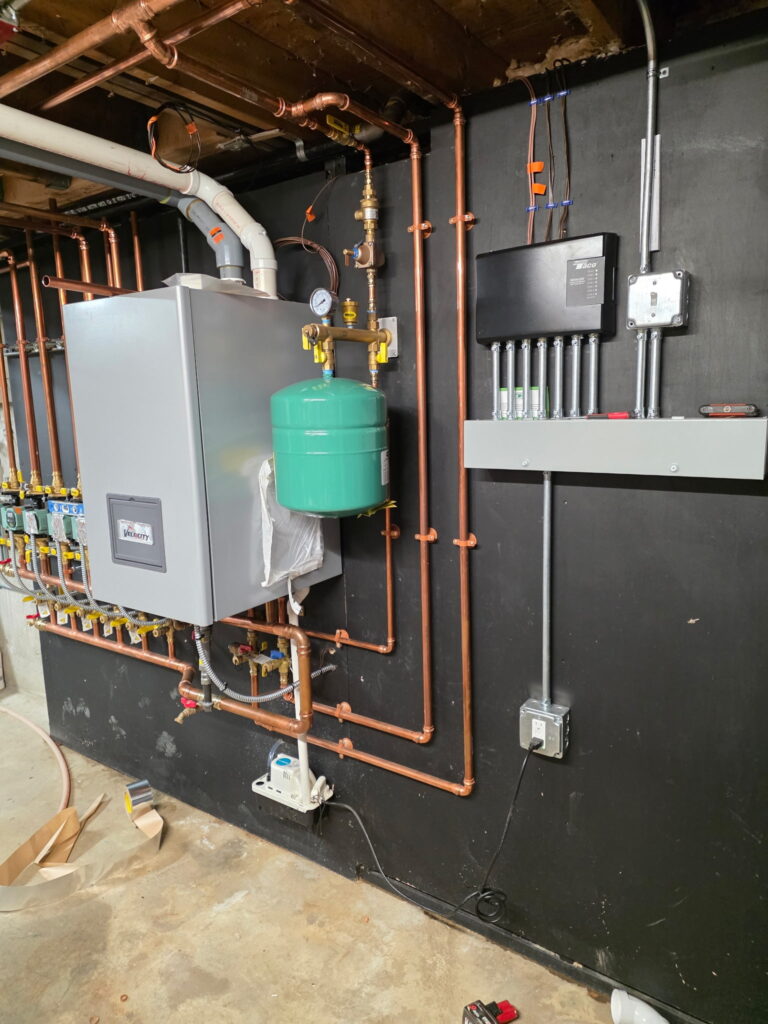
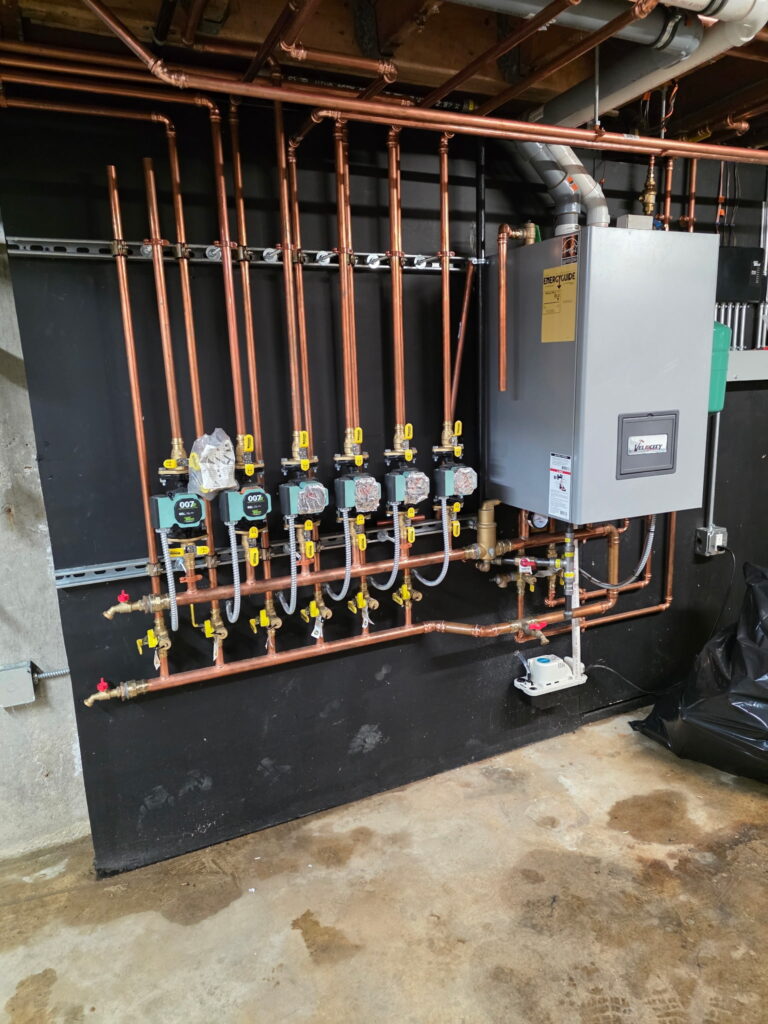
For a new line, that means running black iron pipe or corrugated stainless tubing from the meter or propane tank to the appliance, pressure testing the whole run before it’s ever turned on, and venting any combustion appliance correctly, whether that’s through an existing chimney liner or a new direct-vent termination. For a repair, we isolate the section with the leak or failure, cut it out, and rebuild that segment before retesting.
If the job touches your heating system, expect the boiler or furnace to be down for part of the day while lines are disconnected, tested, and reconnected. Hot water may be affected too if the water heater is gas-fired. We’ll walk you through the sequence before we start so there’s no surprise about what’s off and for how long.
Repair or Replace
Most gas line problems are section repairs, not whole-system replacements. A corroded joint, a fitting that was never sealed right, a line that’s undersized for one added appliance – these get fixed in place. If your line is testing fine on pressure and the rest of the run is sound, there’s no reason to open up walls or floors to replace pipe that isn’t the problem.
Full replacement gets recommended when the existing line is old black iron with widespread corrosion, when a house is switching from oil to gas and needs an entirely new supply run, or when you’re adding enough new appliances that the existing line can’t be resized to carry the load safely. Chris will tell you which situation you’re in and why, not default to the bigger job because it’s easier to sell.
What It Costs
Gas line pricing depends on run length, whether the line is exposed or has to be fished through finished walls or ceilings, the pipe material, and whether a permit and inspection are required, which they generally are for any new gas work in Massachusetts. A single-appliance hookup close to an existing line is a different job than running gas across a house to a new generator pad. We’ll give you a firm number for {PRICE} after we’ve actually looked at the run, not a phone estimate.
How Long It Takes
A straightforward repair or a single appliance hookup close to the meter is usually a same-day job. Longer runs, work that requires opening framing, or anything needing a town inspection before it can be turned on will stretch across a couple of days once you count permit and inspection scheduling. We’ll tell you upfront if your job needs an inspector’s sign-off before the gas gets turned back on, since that’s a step outside our control on the calendar.
Common Questions
Do I need a permit for gas line work in Newbury?
Yes. New gas piping and most repairs require a permit and a town inspection before the line can be put into service. We handle the permit application as part of the job.
My street doesn't have natural gas. What are my options?
A lot of Newbury is like this. Propane is the standard fallback for ranges, generators, and sometimes heating equipment, and the line sizing and venting work is similar to natural gas installation.
Can you add a gas line for a standby generator?
Yes, this is common work here given how often the area sees long power outages. We size the line for the generator's rated load and run it to the pad location you've chosen.
Is a gas smell always an emergency?
Any noticeable gas odor should be treated seriously. Leave the house, don't operate switches or open flames, and call your gas utility's emergency line, then reach out to us to locate and repair the source.
Will my heat or hot water be off during the repair?
Reach Out for Gas Line Installation and Repair
Belfiore Home Services is a Salem-based company, and we work across Newbury on gas line installation and repair for ranges, water heaters, boilers, and generators. Call {PHONE} to get a licensed plumber out to look at your line and give you a straight answer on what it needs.
Contact information
Talk to Chris
If you’re not sure whether your situation is a repair, a resize, or a full new line, that’s a normal question and worth a real answer before any work gets scheduled. Chris looks at the appliance load, the existing pipe, and what’s actually available on your street, gas main or propane, and tells you what the job actually requires.