
EV Charger Installation in Salem, MA
A lot of Salem homes were wired for a stove, a fridge, and a couple of lamps, not a car. Houses built before 1940 came in with 60 amp services as standard, sometimes upgraded to 100 amp somewhere along the way and never touched again. Now the same panel that struggles with a window AC unit and a hair dryer running at once is being asked to charge a Model 3 or an Ioniq overnight, and that math doesn’t work without an electrician looking at the actual panel first.
Why Salem Homes Need This
Salem’s housing stock is old, and old wiring was never built with an EV in mind. We still find knob and tube behind plaster walls in the McIntire District and in side streets off Federal Street, cloth-insulated branch circuits from the 1930s and 40s, and 60 amp services that were adequate in 1955 and are not adequate now. Two and three family conversions are common here too, which means a single service sometimes feeds more than one unit, leaving even less headroom for a 40 or 50 amp charging circuit.
We also still run into Federal Pacific Stab-Lok and Zinsco panels in this town. Both brands have a known history of breakers that fail to trip under fault conditions, and neither is a panel we’ll tap a new EV charger circuit into without a serious conversation about replacing it first. If your house still has one of these, an EV charger installation is often the moment that finally forces the panel question, and that’s a good thing to face head-on rather than patch around.
None of this is unusual for the North Shore. It’s just what happens when a housing stock this old meets a load this new.
What the Work Involves
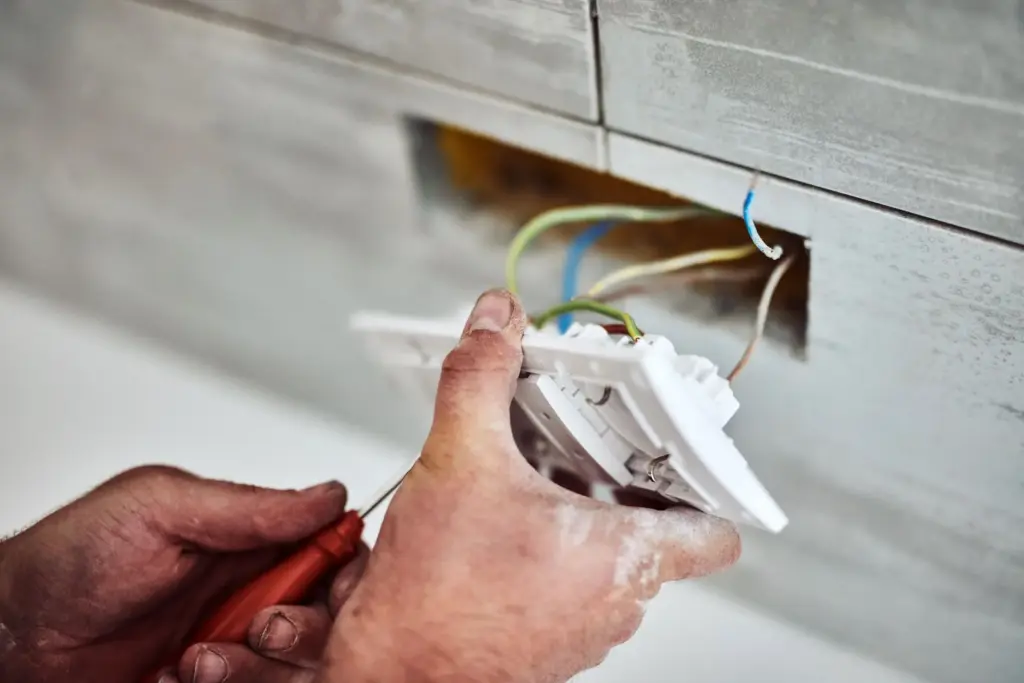
Brandon starts with a load calculation, not a sales pitch. That means checking your existing service size, what’s already on the panel, and whether there’s room for a dedicated 240-volt circuit sized to your charger, typically 40 or 50 amps depending on the unit and whether it’s a Level 2 charger built for 32 amp or 40 amp continuous draw.
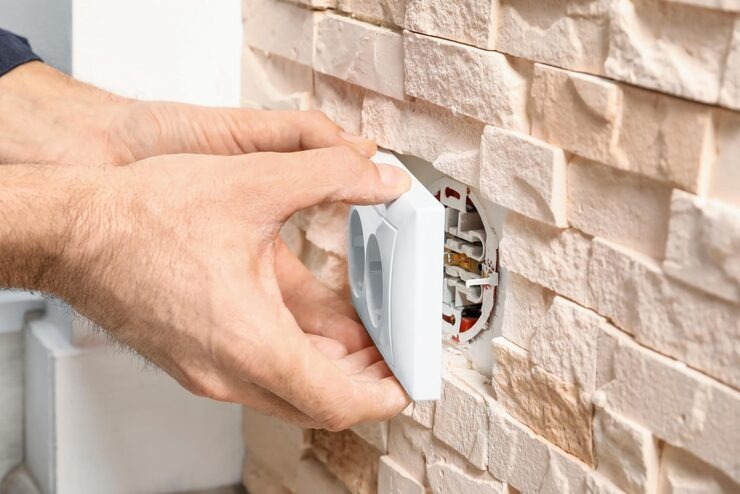
If the panel has room, the job is a dedicated circuit run from the panel to the charger location, a properly sized double-pole breaker, correct wire gauge (usually 6 AWG or 8 AWG copper depending on distance and amperage), and a NEMA 14-50 receptacle or hardwired connection depending on the charger you’ve bought or plan to buy. Power to the rest of the house stays on. The only outage is a short one on the panel itself while the new breaker goes in, usually well under an hour.
If the panel doesn’t have room, or the service is only 60 or 100 amp with little slack left, the conversation shifts to a service upgrade or panel replacement before the charger circuit goes in. That’s not an upsell, it’s the difference between a charger that works safely for years and a panel that’s overloaded the day it’s energized. The utility company owns the meter and the service drop, so any change to service size means coordinating with them for the upgrade on their end, while Brandon handles everything from the meter socket inward.
What It Costs
A straightforward dedicated circuit for a Level 2 charger, with a panel that already has capacity and a charger location close to the panel, generally runs {PRICE_LOW} to {PRICE_HIGH}. Cost moves with distance from the panel to the charger, whether the run is through finished walls or an accessible basement, and whether you need conduit outside for a detached garage or driveway-side mount.
If the panel itself needs a upgrade or replacement first, that’s a separate, larger cost on top of the circuit work. We’ll always tell you upfront if that’s where your house is at rather than finding out halfway through the job.
How Long It Takes
A dedicated circuit installation on a panel with existing capacity is typically a same-day job, often three to five hours depending on the length of the wire run. If a panel upgrade is part of the picture, plan on a full day for the panel work itself, plus scheduling time with the utility if the service size is changing. We’ll walk through the timeline with you before any work starts so there are no surprises about how long your power is affected.
Permits and Inspection
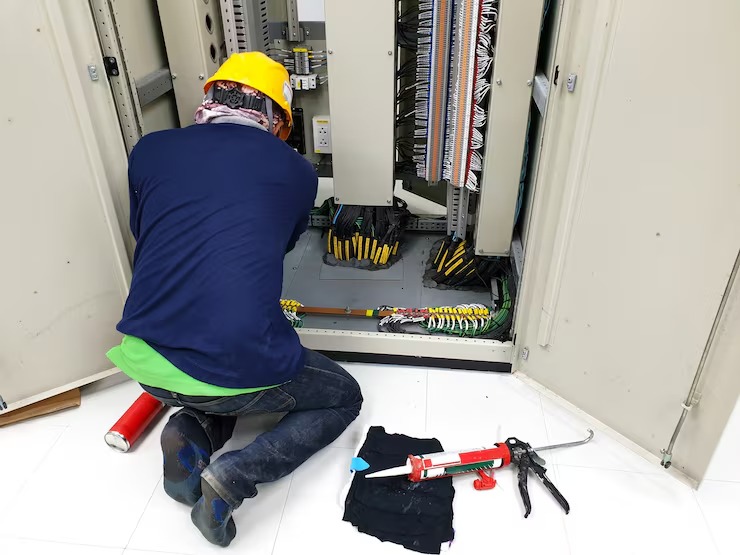
EV charger circuits and any panel work are permitted through the local building department and inspected under Massachusetts electrical code. That’s not a formality we skip. A permit means an inspector who doesn’t work for us checks the breaker sizing, the wire gauge, the grounding, and the termination before it’s signed off. It’s one of the clearest ways to tell a licensed electrician’s work from a handyman install, and it’s worth asking any contractor whether they pull permits before you let them touch your panel. [EXTERNAL LINK: Massachusetts electrical code (527 CMR 12) reference, for homeowners who want to see the actual standard the inspection is measured against]
Common Questions
Can my 100 amp service handle an EV charger?
Sometimes. It depends on everything else already drawing on that panel. Electric heat, an electric water heater, or a range on the same 100 amp service leaves very little room for a 40 or 50 amp charging circuit. A load calculation is the only way to know for sure, and Brandon does that as a normal part of quoting the job.
Do I need a service upgrade before I can add a charger?
Not always. Plenty of Salem homes with 100 amp or 150 amp services have enough headroom for a dedicated EV circuit with no other changes. Homes still on 60 amp service, or panels running close to capacity, usually do need an upgrade first.
What's the difference between a NEMA 14-50 outlet and hardwiring?
A NEMA 14-50 is a plug-in receptacle, similar to what an electric range uses, and it works with most mobile and portable Level 2 chargers. Hardwiring connects the charger directly to the circuit with no plug. Some chargers require hardwiring, others give you the choice. Your charger's spec sheet tells us which one applies.
Do Federal Pacific or Zinsco panels need to be replaced before an EV charger goes in?
Does the utility company need to be involved?
Reach Out for EV Charger Installation
If you’re planning an EV purchase or you’ve already got one parked outside a house with an outlet that isn’t cutting it, call {PHONE}. We’ll ask about your panel, your service size, and where the charger needs to go, and get a straight answer about what your Salem home actually needs.
Contact information
Talk to Brandon
Brandon is the electrician here, and he’s the one who’ll look at your panel, run the load calculation, and tell you straight whether your existing service can take a charger circuit or needs an upgrade first. He left union work to run the electrical side of a family business, and the way he explains a job is the same at your kitchen table as it would be to another electrician. No guessing, no upsell.