Electrical Service Upgrades in Danvers, MA
A lot of Danvers houses, especially around the older sections near downtown and the streets that grew up around the old State Hospital land, were wired for a world without central air, an EV in the driveway, or a kitchen full of countertop appliances. Many still run on the 60 or 100 amp service the house was built with, decades before anyone asked a panel to do this much work.
Why Danvers Homes Need This
Danvers has a good mix of housing stock: capes and colonials from the 1940s and 50s, older farmhouses closer to the center, and newer construction out toward the Topsfield and Middleton lines. On the older side of that mix, we still find 60 amp fused services, some knob and tube left in walls and attics that were never fully rewired, and panels built by manufacturers – Federal Pacific and Zinsco among them – that the industry no longer considers safe to leave in service.
None of that was a problem when a house ran a furnace, a fridge, and a couple of window units. It becomes a problem fast once someone wants central air, an electric range, a heat pump, or a Level 2 EV charger in the garage. A 100 amp service can sometimes carry one of those additions. It rarely carries two or three. That’s the point where we stop patching around the edges and talk about upgrading the service itself.
What The Work Involves
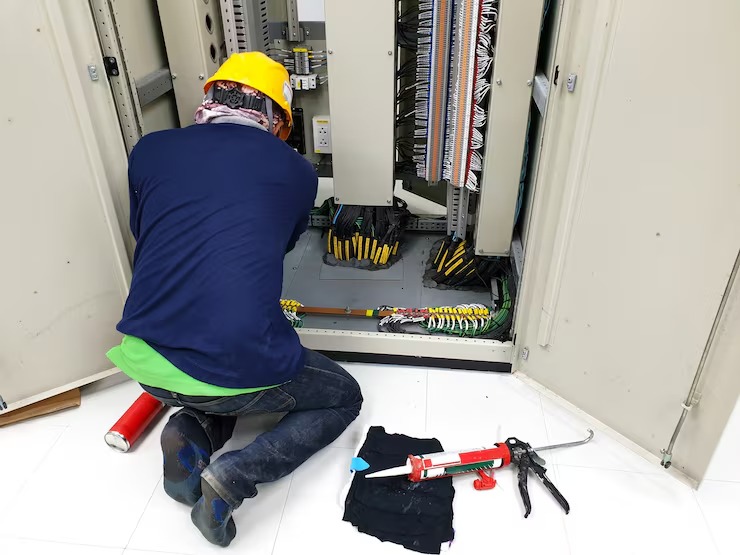
A service upgrade is different from a panel swap because part of the job belongs to the utility and part belongs to us. National Grid owns the drop – the wire coming from the pole or the transformer – and the meter. Brandon’s job is everything on the house side: the mast, the weatherhead, the service entrance conductors, the meter socket in most cases, and the panel itself.
On a typical 100 to 200 amp upgrade, we install a new mast and weatherhead sized for the larger service, run new entrance cable, set a new meter socket if the old one is rated too low, and land everything in a new 200 amp panel with breaker spaces for what the house actually needs now and what it’s likely to add later – an EV circuit, a heat pump, a generator interlock. The utility disconnects power at the transformer or pole while we make the connection, then reconnects once our work passes inspection. Power is typically out for a matter of hours, not days, and we coordinate the timing so it isn’t a surprise.
What It Costs
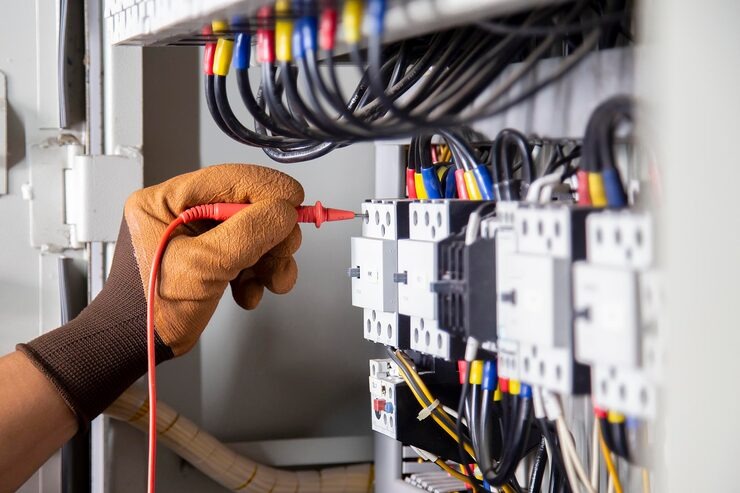
Most 100 to 200 amp service upgrades in Danvers run in the range of {PRICE_LOW} to {PRICE_HIGH}. Where you land in that range depends on a few things: whether the mast and weatherhead need full replacement or just the panel-side connections, how far the run is from the point of attachment to the panel location, whether the meter socket has to be upgraded, and whether the existing panel location meets current clearance and grounding requirements or needs to be relocated. Old knob and tube discovered mid-job, or a panel that turns out to be Federal Pacific and needs full replacement rather than reuse, can also move the number. We give you that range up front, based on what we can see, and tell you before we cut into anything if the scope changes.
How Long It Takes
The physical work on a straightforward service upgrade usually takes one day. What extends the timeline is scheduling around the utility. National Grid has to disconnect and reconnect service, and depending on the time of year and their queue, that can add a few days between the rough-in and the final energized connection. We build the permit and inspection step into the schedule from the start so there are no surprises about why the lights aren’t back on the same afternoon.
Permits and Inspection
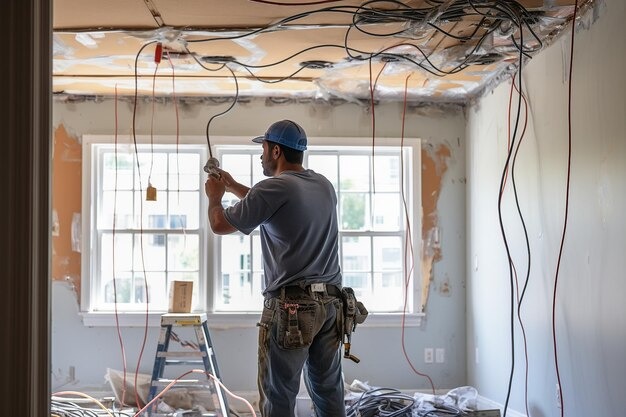
Service upgrades are permitted work under the Massachusetts Electrical Code, full stop. Brandon pulls the permit, the town’s electrical inspector signs off on the completed work, and National Grid won’t reconnect power until that inspection is done. That sequence exists for a reason – it’s the check that catches undersized conductors, bad grounding, or panels that don’t meet current code before they become someone’s house fire. It’s also the clearest difference between a licensed electrician and someone working without a license: an inspector never sees the second kind of job. [EXTERNAL LINK: Massachusetts Board of State Examiners of Electricians – electrical code and permit requirements]
Common Questions
How do I know if my Danvers home needs a service upgrade instead of just a new panel?
If your panel is rated for 100 amps or less and you're adding an EV charger, central air, or an electric range, the panel isn't the limiting factor – the service coming into the house is. Brandon checks the service size, the mast, and the meter, not just the panel, before recommending which job you actually need.
Will I lose power during the upgrade?
Yes, for part of the day. National Grid disconnects power at the transformer or pole while we make the connection on the house side, then we request reconnection once our work is inspected. We schedule this so you know the window in advance.
Is a 100 amp service really too small for a modern Danvers home?
It depends on what's running. A 100 amp service can sometimes handle one major addition, like central air or an EV charger, but adding a second or third large load – a heat pump plus an EV plus an electric range, for example – is usually where 100 amps runs out of headroom. Brandon runs the load calculation rather than guessing.
Do you handle the National Grid side of things too?
National Grid owns the drop and the meter, so that part is theirs. We handle everything from the meter socket into the house, coordinate the disconnect and reconnect timing with them, and make sure the finished work meets what they require to reconnect service.
What if my panel turns out to be Federal Pacific or Zinsco?
Those panels are common in older Danvers housing and are generally considered a safety concern industry-wide, not just an inconvenience. If we find one during a service upgrade, replacing it is part of the job, not a separate upsell – it has to come out for the new service to be inspected and energized anyway.
Reach Out for Electrical Service Upgrades
If you’re planning an EV charger, a heat pump, or an addition, or you’ve just had an inspector or insurance company flag your panel, call {PHONE}. We’re a Salem-based company and we work across Danvers regularly, so we know this housing stock and what a proper upgrade needs to look like here.
Contact information
Talk to Brandon
Brandon left union work to run the electrical side of this company, and service upgrades are some of the most technical work he does – there’s utility coordination, code compliance, and load calculation all in one job. If you’re not sure whether your Danvers house has 60, 100, or 200 amp service, or whether your panel is one of the models that should be replaced rather than reused, he’ll look at it directly and tell you what he sees, not a guess based on the house’s age alone.