
Dedicated Circuit Installation in Lynn, MA
Walk through a Lynn three-decker built before the 1950s and you’ll usually find one 15-amp circuit feeding a whole kitchen, or a single outlet in the basement meant for a work light, now asked to run a chest freezer and a sump pump on a shared extension cord. These houses were wired for a handful of lamps and a radio. They were never wired for a microwave, a window AC, and a phone charger all running off the same breaker, let alone an EV charger in the driveway.
Why Lynn Homes Need This
Lynn’s housing stock skews old and dense. A lot of it is multifamily, a lot of it is balloon-framed and a lot of it still has some original wiring behind the walls even after a few rounds of renovation. That means a few specific problems show up over and over on service calls here.
- 60-amp services. Plenty of Lynn three-deckers still run on a 60-amp main, sometimes split three ways for three units. That leaves almost nothing to spare for a dedicated circuit without a service upgrade first.
- Knob-and-tube and cloth wiring. Common in homes from the 1900s through the 1940s. It’s not automatically dangerous, but it can’t be extended or tied into safely, and most insurers won’t cover a house that still has it live in occupied rooms.
- Federal Pacific and Zinsco panels. Both brands were installed heavily through the 60s and 70s and both have documented breaker failure issues. If Brandon opens your panel and finds one of these, a dedicated circuit conversation usually becomes a panel conversation.
- Shared circuits doing too much work. Kitchens with one 15-amp circuit running the fridge, microwave, and counter outlets. Basements with a single line feeding a washer, a dryer, and a dehumidifier. This is the most common reason people call.
None of this is unique to one street. It’s the pattern across Lynn’s older neighborhoods, and it’s the reason dedicated circuit work here often starts with a look at the panel, not just the new appliance.
What the Work Involves
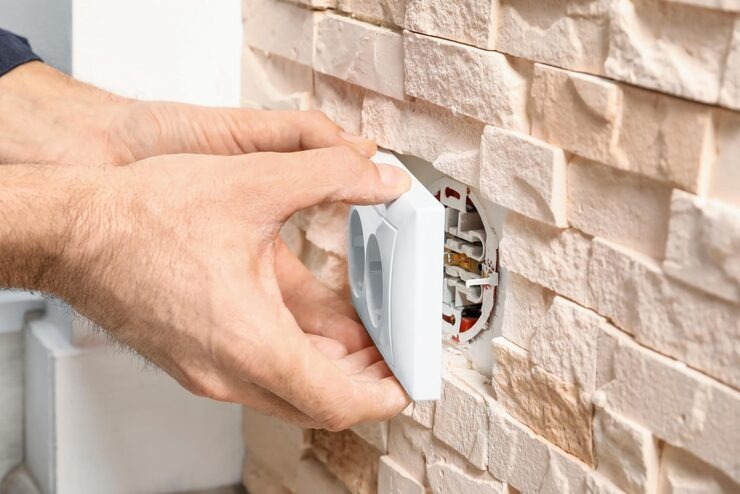
A dedicated circuit means one breaker, one wire run, and one outlet or hookup, with nothing else sharing that line. For a window AC or a microwave that might mean a new 20-amp, 12-gauge circuit. For an electric range it’s typically a 40 or 50-amp, 240-volt circuit on 6-gauge wire. For an EV charger it depends on the unit, but 40 to 60-amp 240-volt circuits are common. For a heat pump or mini-split condenser, Brandon sizes the breaker and wire to the equipment’s nameplate, not a guess.
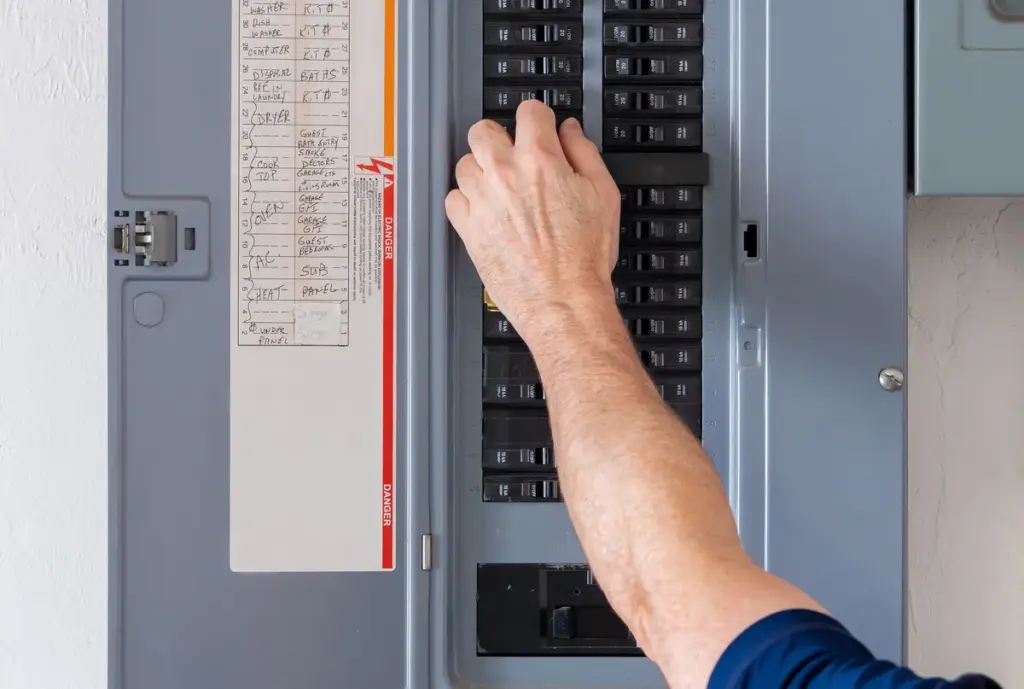
On the day of the work, power to the area being worked on gets shut off at the panel, not the whole house, unless the panel itself needs attention. Most single-circuit jobs mean an outage of an hour or two for that section of the house. Brandon runs the new wire from the panel to the location, sets the outlet or hardwires the equipment, labels the breaker, and tests the circuit under load before he leaves.
If your service is already maxed out, that’s a different scope. The utility owns the meter and the service drop, and any change to your amperage means coordinating a shutoff and reconnect with National Grid. Brandon handles the panel and interior wiring side. The utility handles their equipment. Both have to happen for a service upgrade to be complete.
What It Costs
A single dedicated circuit in an easy location, panel with room to spare, short wire run, generally lands in the range of {PRICE_LOW} to {PRICE_HIGH}. What moves that number: how far the wire has to travel, whether it’s running through finished walls or an open basement, whether the panel has an open slot or needs a subpanel or tandem breaker, and whether it’s a straightforward 120-volt line or a heavier 240-volt run for a range, dryer, or EV charger. A job that turns into a service upgrade because the panel can’t support the new load is priced separately, and Brandon will tell you that up front rather than partway through.
How Long It Takes
Most single-circuit installs are a one-visit job, done in a few hours including testing. Jobs that involve opening finished walls or ceilings to route the new wire take longer, sometimes a full day depending on how much patching is needed afterward. If the work uncovers a panel that needs replacing before the new circuit can safely go in, that adds a separate visit once the panel work is scheduled and inspected.
Permits and Inspection
New circuit work is permitted and inspected in Massachusetts. Brandon pulls the permit, does the installation, and the work gets signed off by a local inspector before it’s considered finished. This isn’t paperwork for its own sake. It’s the difference between a licensed electrician’s work and a handyman’s, and it matters when you sell the house or file an insurance claim down the line. For reference on how the state’s electrical code applies to residential wiring, the Massachusetts Board of State Examiners of Electricians publishes the current amendments. [EXTERNAL LINK: Massachusetts electrical code amendments, for homeowners who want to see the code language directly]
Common Questions
Do I need a dedicated circuit for a window AC or space heater?
If it's sharing a circuit with other outlets and tripping the breaker, yes, that's exactly the kind of load a dedicated circuit is meant to handle. Most window units over 8,000 BTU are happier on their own 15 or 20-amp line.
Can my 60-amp panel handle a new dedicated circuit?
Sometimes, if there's spare capacity and an open breaker slot. A lot of Lynn's older three-deckers are already close to full, though, which is why Brandon checks the panel load before quoting any new circuit.
How is a dedicated circuit different from just adding an outlet?
An outlet added to an existing circuit still shares that circuit's breaker and wire with everything else on it. A dedicated circuit runs its own wire straight to its own breaker so nothing else can overload it.
What size circuit does an EV charger need?
Is knob-and-tube wiring a problem for new circuits?
Reach Out for Dedicated Circuit Installation
If you’re adding a range, an EV charger, a mini-split, or just tired of tripping the same breaker every time the microwave and toaster run together, call {PHONE}. Tell Brandon what you’re adding and roughly where in the house, and he can walk you through what it’ll take before he ever sets foot in the basement.
Contact information
Talk to Brandon
Brandon is the electrician on the Belfiore side of the business. He’s licensed, he pulls his own permits, and he’ll tell you straight whether your panel can handle a new circuit or whether that conversation needs to start there instead. If you’re not sure what you’re dealing with behind the wall, that’s a normal starting point, not a problem.