Electrical Panel Upgrades in Salisbury, MA
A lot of Salisbury’s housing stock went up as small year-round conversions of old summer cottages, plus a wave of ranches and capes from the 1950s and 60s built with 60 or 100 amp electrical service. That was fine for a stove, a water heater, and a couple of window units. It is not fine for a heat pump, an EV charger, and a modern kitchen running off the same panel.
Why Salisbury Homes Need This
Salisbury sits between the beach neighborhoods and the older inland streets off Route 1, and the electrical service reflects that mix. Beach cottages that were winterized without a full rewire often still carry a 60 amp service and cloth-insulated wiring from the original build. Inland capes and ranches from the postwar boom frequently have 100 amp panels, and a fair number of those panels are Federal Pacific Stab-Lok or Zinsco. Both brands have documented breaker failures – breakers that don’t trip when they should – and both are considered a real safety concern by electricians and insurers alike.
On top of the panel itself, we’re seeing homeowners add central AC, electric ranges, hot tubs, heat pumps, and EV chargers to services that were never sized for that load. A 100 amp panel with a heat pump and an EV charger on it is usually maxed out before you even think about the dryer. That’s the point where you’re not looking at a repair, you’re looking at a capacity upgrade.
What the Work Involves
Brandon starts by figuring out what you actually need going forward, not just what’s failing today. If you’re adding a heat pump and an EV charger, that changes the math on whether 100 amp service still makes sense or whether it’s time to go to 150 or 200 amp.
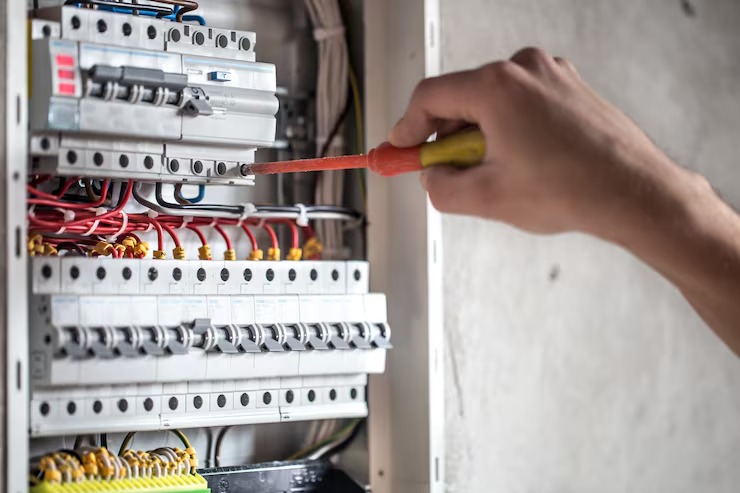
The job itself means the power to your house is shut off for the swap – typically a few hours, not all day. The old panel comes out, the new one goes in with a full breaker layout matched to your circuits: 15 and 20 amp breakers for lighting and receptacles, 20 and 30 amp for dedicated loads like a range or dryer, and any GFCI or AFCI breakers the current code calls for. Wire gauge gets checked at every connection, because a panel is only as good as what’s landing in the lugs.
If the upgrade also touches your service size, the utility has its own piece of this – reading and resetting the meter, sometimes upgrading the drop or the mast. Brandon coordinates that scheduling so you’re not left without power longer than you have to be.
What It Costs
A straightforward panel upgrade in Salisbury generally runs {PRICE_LOW} to {PRICE_HIGH}. What moves the number: whether you’re staying at 100 amp with a modern panel or jumping to 150 or 200 amp, how many circuits get relabeled and reconnected, whether the meter or mast needs utility work, and whether any of the existing wiring needs attention while the panel’s open. Brandon gives you the number after he’s seen the panel and talked through what you’re planning to add, not off a phone call.
How Long It Takes
Most panel upgrades are a single day of on-site work. If the utility needs to schedule a meter reset or service change on their end, that can add a day or two of coordination, but the actual time your house is without power is measured in hours, not days.
Permits and Inspection
Panel work is permitted and inspected in Massachusetts, full stop. Brandon pulls the permit, the town inspector signs off on the finished work, and you get a paper trail showing the job was done to code. That inspection step is exactly what separates a licensed electrician from someone working off the books – if a panel was never permitted, there’s no record it was ever checked by anyone but the person who installed it. [EXTERNAL LINK: Massachusetts Board of State Examiners of Electricians – licensing and code authority, useful for homeowners verifying electrician credentials]
Common Questions
How do I know if my panel needs an upgrade instead of just a repair?
If breakers trip under normal use, if you're adding major loads like a heat pump or EV charger, or if your panel is a Federal Pacific Stab-Lok or Zinsco brand, you're generally looking at a full upgrade rather than a spot repair. Brandon can tell within a few minutes of opening the panel.
Will I lose power during the upgrade?
Yes, but only for the hours the panel swap actually takes, not the whole day. If utility work is also needed for a service size change, that's scheduled separately and coordinated so the outage stays short.
Is a permit really required for a panel upgrade?
Yes. Panel work is permitted and inspected by the local building department in Massachusetts. Brandon pulls the permit and the town inspector reviews the finished work before it's signed off.
Do I need to upgrade my amperage if I'm just adding an EV charger?
What's the difference between a panel upgrade and a panel replacement?
Reach Out for Electrical Panel Upgrades
If your panel is maxed out, breakers are tripping for no clear reason, or you’re planning an EV charger or heat pump, call {PHONE} and talk to Brandon directly. He’ll walk through what your panel can handle and what your options look like before any work starts.
Contact information
Talk to Brandon
Brandon is the electrician half of Belfiore. He left union work to run the electrical side of his family’s company, and panel upgrades are some of the most common calls he takes across Salisbury and the rest of the North Shore. If you’re not sure whether your panel needs replacing or just needs more capacity, describe what you’ve got and what you’re planning to add, and he’ll tell you straight what makes sense.