
Dedicated Circuit Installation in Newbury, MA
A lot of Newbury homes started life with a 60 or 100 amp service and a handful of shared circuits, built for a house without a microwave, central air, or a car that plugs in overnight. Add a hot tub, a workshop heater, or an EV charger to that panel and you’re asking wiring from decades ago to do a job it was never sized for.
Why Newbury Homes Need This
Between the farmhouses off Route 1A and the older colonials tucked back from the river, Newbury has a real mix of housing stock, and a good share of it predates modern code by a wide margin. We still find knob and tube wiring in attics and wall cavities, cloth-insulated cable that’s brittle at the joints, and panels branded Federal Pacific or Zinsco that insurance companies flag on sight because their breakers don’t reliably trip.
Well pumps are common out here too, and a well pump on a shared circuit with anything else is asking for trouble the day both loads hit at once. So is running a generator transfer switch off a panel that’s already maxed out. Long outages aren’t rare on this stretch of the North Shore, and homeowners who invest in a standby or portable generator setup need dedicated, correctly sized circuits to make that investment actually work when the power drops.
What The Work Involves
A dedicated circuit means one breaker, one wire run, one outlet or hookup, feeding a single piece of equipment. No sharing, no daisy-chained outlets, no guessing why the lights dim when the dryer kicks on.
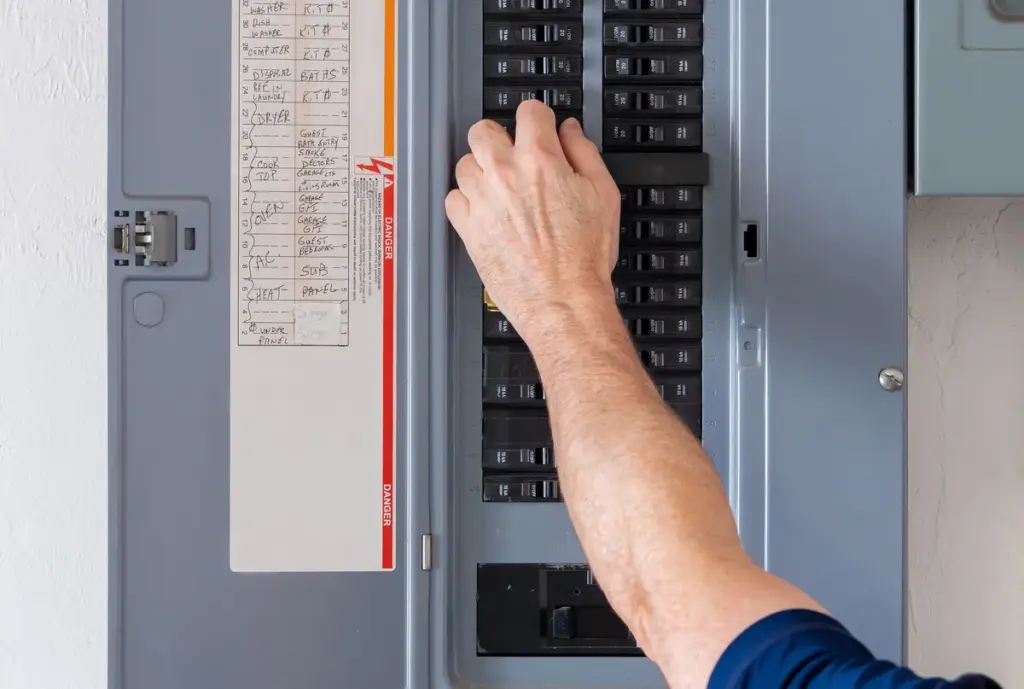
Brandon starts by checking your panel’s available capacity and the condition of the existing service. If there’s room on the breaker slots and the panel can handle the added load, we run new wire sized to the equipment: 12 gauge for a standard 20 amp circuit, 10 gauge for a 30 amp EV charger circuit, heavier still for a range or a larger charger. The breaker gets matched to the wire and the load, not the other way around.
Power to the work area gets shut off for the duration of the job, usually just that circuit or that section of panel, not the whole house. The National Electrical Manufacturers Association publishes wire and breaker sizing standards that we follow on every job – [EXTERNAL LINK: NEMA wire gauge and ampacity reference, for homeowners who want to see the sizing standards themselves]. If the service itself is undersized for what you’re adding, that’s a separate conversation about a panel or service upgrade, and we’ll tell you plainly if that’s where this is headed before any wire gets pulled.
What It Costs
A single dedicated circuit for something straightforward, a window AC unit or a workshop tool, typically runs {PRICE_LOW} to {PRICE_HIGH}. EV charger circuits, well pump circuits, and generator transfer switch work land at the higher end because of the wire gauge, breaker size, and often a longer run from the panel.
What moves the number: how far the new wire has to travel, whether it’s running through finished walls or an open basement, whether your panel has open slots or needs a subpanel added, and whether the panel itself needs work before we can add anything to it. We give you the real number after Brandon sees the panel and the run, not a phone estimate.
How Long It Takes
Most single dedicated circuits are a one-day job, often a half day if the panel has open capacity and the run is short. Power to that circuit is out for the work window, generally a few hours, not the whole day. Jobs that involve a subpanel, a longer wire run through an older house with plaster walls, or coordination with the utility for a service change take longer, and we’ll walk through the timeline with you before we start.
Permits and Inspection
Dedicated circuit work is permitted and inspected under Massachusetts electrical code, full stop. We pull the permit, the town inspector reviews the finished work, and you get a record that the circuit was done to code. That paperwork matters when you sell the house or file an insurance claim, and it’s the difference between a licensed electrician and someone working off a truck with no accountability. Brandon is licensed to do this work in Massachusetts and won’t cut that step, even on a job that looks simple.
Common Questions
Can my old panel handle a new dedicated circuit?
It depends on how many open breaker slots you have and what the panel's total capacity is. If it's already full or it's an older Federal Pacific or Zinsco panel, we may need to address the panel first before adding a new circuit.
Do I need a dedicated circuit for an EV charger?
Yes. Level 2 EV chargers need their own 240-volt circuit sized to the charger's amperage, typically a 30 to 50 amp breaker with matching wire gauge. Sharing that load with other outlets isn't allowed under code and isn't safe.
Will the power be off in the whole house during the work?
No. We isolate the circuit or section of panel we're working on. Most homes keep power everywhere else in the house during the job.
Does a well pump need its own circuit?
Is this work inspected?
Reach Out for Dedicated Circuit Installation
We work across Newbury and the surrounding North Shore towns. If you’re dealing with an old panel, a well pump on a shared circuit, or you’re finally ready to add that EV charger, call {PHONE} and we’ll get a time on the calendar to take a look.
Contact information
Talk to Brandon
Brandon’s the electrician half of this family business – his brother Chris runs the plumbing and heating side. If you’re planning an EV charger, a generator hookup, or you just want a straight answer on whether your panel can handle what you’re adding, call and talk it through with him directly. No call center, no script, just the person doing the work.