Electrical Service Upgrades in Wenham, MA
A lot of Wenham’s housing stock was built when a house ran a refrigerator, a furnace blower, and a few lamps. That meant a 60 or 100 amp electrical service was plenty. Now those same houses are running central air, a well pump, a generator transfer switch, and increasingly an EV charger in the barn or the new garage, all off a service that was never sized for any of it.
Why Wenham Homes Need This
Wenham is low density, with long driveways and a meaningful number of properties on well and septic. That combination changes the math on electrical capacity in a way it doesn’t in a denser town. A well pump alone can pull a serious draw at startup, and if you’re also running a whole-house generator because the power out here can stay off for hours after a storm hits the end of a rural feeder, a 100 amp service gets stretched thin fast.
The age of the housing stock matters too. We still find knob and tube wiring in the older farmhouses and estate properties around town, along with cloth-insulated cable from the 1950s and 60s. Panels are a real concern here as well. Federal Pacific Stab-Lok panels and Zinsco panels turn up more often than people expect on the North Shore, and both have documented breaker failure issues. If your panel is one of these, or if you’re still on a 60 amp fused service, a service upgrade is not cosmetic. It’s the foundation everything else in the house depends on.
What the Work Involves
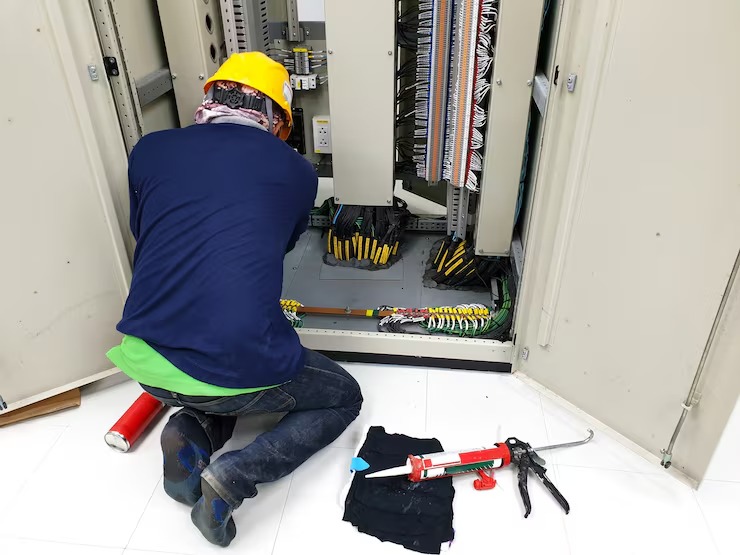
An upgrade from 100 to 200 amps touches three things: the utility drop or underground service lateral, the meter socket, and the mast or point of attachment on the house, plus the panel and grounding system inside. The utility, National Grid in most of Wenham, owns the drop and the meter. Brandon coordinates the disconnect and reconnect with them, but the mast, conduit, meter base, panel, and grounding electrode work is done by our crew.
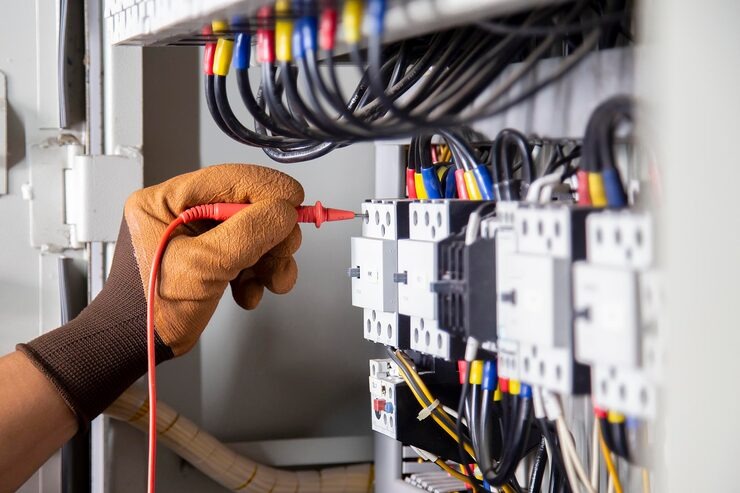
Power to the house is off for the duration of the swap, typically for a few hours on the day of the work, not the whole job. We size the new service conductors, install a new 200 amp panel with the breaker capacity your house actually needs, upgrade the grounding to current code including a proper grounding electrode system, and land every circuit clean and labeled. If there’s knob and tube or aluminum branch wiring feeding rooms off the old panel, we’ll flag it separately, because a bigger panel doesn’t fix wiring that’s already a problem at the outlet end.
What It Costs
A straightforward 100 to 200 amp overhead service upgrade in Wenham generally runs {PRICE_LOW} to {PRICE_HIGH}. What moves the number: whether the service is overhead or underground, how far the mast has to run to meet the utility’s point of attachment, whether the meter location is changing, and how much of the existing panel and grounding has to be brought up to code along the way. Older farmhouses with additions built over the years sometimes need extra work at the panel to consolidate circuits that were added piecemeal. We walk the property, look at the existing service, and give you a number based on what’s actually there, not a phone estimate.
How Long It Takes
Most 200 amp service upgrades are a one-day job on-site once the utility has scheduled the disconnect. The utility coordination is usually the longer lead time. Depending on National Grid’s queue, scheduling the temporary disconnect and reconnect can take anywhere from a few days to a couple of weeks. We build the timeline around that, so you know when the power will actually be off and for how long, rather than being surprised on the day.
Permits and Inspection
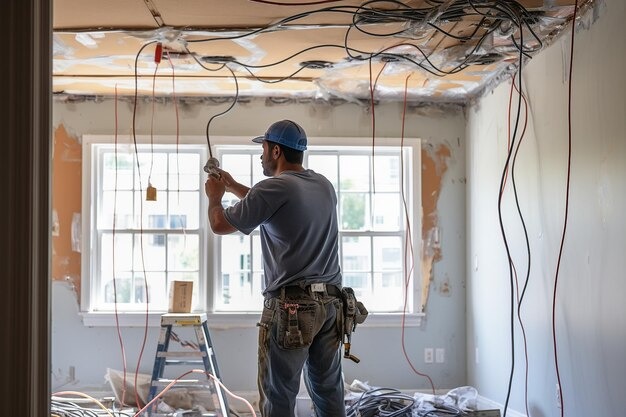
This work is permitted through the town and inspected by a Massachusetts electrical inspector. That’s not paperwork for its own sake. Service upgrade work has to meet the Massachusetts Electrical Code, and the inspection confirms the grounding, conductor sizing, and panel installation were done to that standard before the utility will energize the new service. Unlicensed work on a service or panel is genuinely common on the North Shore, and it’s also the work most likely to fail an inspection or cause a problem down the line. Brandon pulls the permit, schedules the inspection, and stands behind the work because it’s licensed and documented, not a handshake.
For homeowners who want to see the standard themselves, the Massachusetts electrical code reference from the state covers what inspectors are checking for. [EXTERNAL LINK: Mass.gov electrical code page, useful for homeowners who want to verify licensing and code requirements independently]
Common Questions
Do I need a service upgrade or just a panel upgrade?
A panel upgrade adds circuit capacity inside the panel you already have. A service upgrade changes the size of the power coming into the house, from the utility drop through the meter to the panel. If you're adding a generator, EV charger, or heat pump on top of an already-full 100 amp service, you likely need the service itself increased, not just a new panel box.
How do I know if I have a Federal Pacific or Zinsco panel?
Open the panel door and check the label on the inside cover or the breakers themselves. Federal Pacific panels usually say Federal Pacific Electric or FPE Stab-Lok, and Zinsco panels often have distinctive colored breaker switches. If you're not sure, we can identify it during a walkthrough.
Will the power be off all day during the upgrade?
No. The actual disconnect and reconnect is typically a few hours on the day of the work, not the full day. Most of the project timeline is the utility coordination beforehand, not the outage itself.
Does a service upgrade help with well pump or generator issues?
It can. A well pump and a whole-house generator transfer switch both add real load to a service that may already be near its limit. Increasing the service to 200 amps gives that headroom, but we'll look at your actual load before recommending a size.
Is this work inspected by the town?
Yes. Service upgrades are permitted and inspected by a Massachusetts electrical inspector as required under the state electrical code, separate from the utility's own reconnection process.
Reach Out for Electrical Service Upgrades
If your house is still running on 60 or 100 amps, or you’ve got a Federal Pacific or Zinsco panel and you’re not sure what that means for you, call {PHONE}. We work across Wenham and the rest of the North Shore, and we’ll give you a straight answer about what your house needs before any work gets scheduled.
Contact information
Talk to Brandon
Brandon is the electrician on every service upgrade we do. He’ll come look at your panel, your mast, and your meter, tell you straight whether you’re dealing with a capacity problem, a condition problem, or both, and walk you through what a 200 amp service would actually support in your house, whether that’s a generator, an EV charger, or a heat pump down the line.