
Home Rewiring in Newburyport, MA
Home Rewiring in Newburyport
Walk through downtown Newburyport and you’re walking through 1800s housing stock, federal-style homes with additions bolted on over a century of ownership. A lot of that wiring predates central air, dishwashers, and definitely predates anyone charging an EV in the driveway. If your house still has cloth-insulated wire behind the plaster or a panel that maxes out before you’ve turned on the dryer, you’re not imagining the problem. It’s original to the house, and it was never built for how you live now.
Why Newburyport Homes Need This
The North Shore has some of the oldest housing stock this close to Boston, and Newburyport is at the top of that list. We still find knob and tube wiring in ceiling and wall cavities that hasn’t been touched since it was installed, cloth-insulated copper that’s brittle enough to crack when you move it, and 60 amp services that were standard when the house was built but can’t carry a modern kitchen, central air, and a couple of window units without tripping.
Downtown Newburyport adds another wrinkle. A lot of these homes are historic district properties, which means the exterior work around a service upgrade, mast placement, meter location, sometimes has to work around what the building and the district will allow. That’s a conversation Brandon has with homeowners before any wire gets pulled, not after.
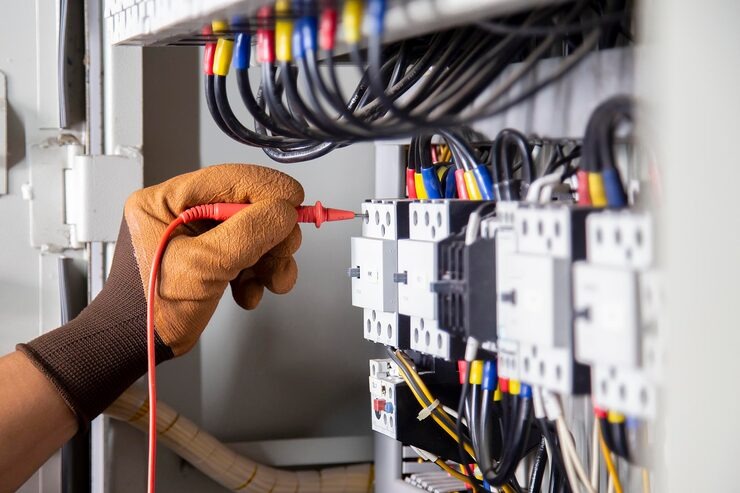
We also still run into Federal Pacific Stab-Lok and Zinsco panels in homes that had electrical work done in the 60s and 70s. Both brands have documented breaker failure issues. If you’ve got one of these panels and knob and tube feeding it, that’s not a maybe-someday project. That’s the combination that actually starts fires.
What the Work Involves
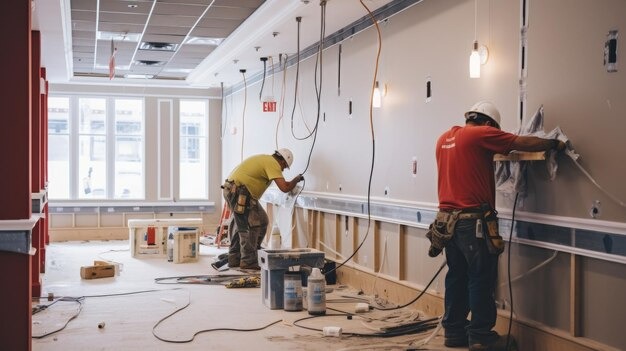
A full rewire means every circuit in the house gets replaced with modern copper NM cable, sized correctly for the load it’s carrying, run to a new panel with the amperage your house actually needs. For most Newburyport homes that means moving from 60 or 100 amp service to 150 or 200 amp, depending on square footage and what’s running: electric range, central air, an EV charger down the line.
Here’s what actually happens. The utility, National Grid in this area, has to de-energize the service before any panel work starts and reconnect it once the new equipment passes inspection. That part isn’t on us, and it’s usually scheduled a day or two out. Brandon’s crew handles everything on your side of the meter: pulling old wire out of walls and ceilings where access allows, running new circuits, setting the new panel, and testing every outlet, switch, and fixture before it goes back together.
Power is out for the house during the active work, typically for the day the panel gets swapped, sometimes longer on a full-house rewire depending on how much of the old wiring has to come out of finished walls. We talk through what rooms lose access and when, so you’re not planning around guesswork.
What It Costs
Rewiring costs run {PRICE_LOW} to {PRICE_HIGH} for most Newburyport homes, and the spread is wide because the variables are real. A cape with open basement and attic access to run new wire costs a lot less than a three-story federal with finished ceilings and plaster walls that have to be opened and patched. Panel size matters too: a straightforward 100 to 200 amp upgrade is a different job than pulling every circuit in a 3,000 square foot house.
Age and construction type move the number most. Balloon-frame construction, common in older Newburyport homes, gives an electrician a clear run from basement to attic in the wall cavities, which keeps labor down. Additions and renovated sections with insulation packed into the walls slow the job considerably. Brandon gives you a real number after he’s actually seen the wiring, not a phone estimate.
How Long It Takes
A panel upgrade alone, without a full rewire, usually wraps in a day, sometimes two if the utility reconnection gets scheduled out. A full-home rewire is a longer project: expect anywhere from three days to two weeks depending on square footage, how much wall and ceiling access you’re giving us, and whether we’re coordinating around finished plaster that needs an opening-and-patching plan.
Occupied homes take longer than empty ones, and that’s normal. We work room by room so you’re not living without power or water heat in the whole house at once, but a rewire is disruptive by nature. We tell you upfront which weeks are the noisy ones.
Permits and Inspection
Rewiring and panel work require a permit through the Newburyport building department, and the finished work gets inspected before the panel is energized. This isn’t optional and it isn’t paperwork for its own sake. An inspector checks that circuits are sized correctly, that grounding and bonding are done right, and that the panel itself meets current code. That inspection is also what separates a licensed electrician’s work from a handyman’s: the permit record shows exactly who pulled it and that it passed.
Brandon pulls the permit, schedules the inspection, and is on site when the inspector shows up. If you’re buying or selling a Newburyport home with old wiring, that permit history is often the thing an insurance company or a buyer’s inspector asks about directly. [EXTERNAL LINK: Massachusetts Electrical Code (527 CMR 12) reference, for homeowners who want to see the actual code requirements behind the permit]
Common Questions
How do I know if my Newburyport home has knob and tube wiring?
Look for ceramic tube-and-knob fittings in an unfinished basement or attic, and cloth-covered wire instead of the plastic-jacketed cable used today. If your house was built before the 1950s and hasn't had a documented rewire, there's a good chance some of it is still in the walls even if parts were updated over the years.
Can I just upgrade the panel without rewiring the whole house?
Sometimes, yes. If the existing branch circuits are in decent shape and sized correctly, a panel upgrade alone can solve capacity problems. Brandon checks the condition of the existing wiring before recommending which route makes sense, since an oversized panel feeding old, undersized wire doesn't solve the underlying risk.
Will insurance companies ask about my wiring type?
Many will. Knob and tube wiring and Federal Pacific or Zinsco panels are flagged by a number of homeowners insurance carriers, and some won't write or renew a policy until they're addressed. A permitted rewire with inspection sign-off is usually what resolves that.
Does a rewire mean my walls get torn open?
Not entirely, but expect some opening and patching, especially around switch and outlet boxes and in finished ceilings without attic access. Homes with open basements and attics let us fish a lot of new wire through existing cavities with minimal drywall work.
Do I need to be out of the house during the rewire?
Most homeowners stay in the house. Power gets shut off in sections as we work, and we coordinate the panel swap day, which is when the whole house loses power for several hours, around your schedule.
Reach Out for Home Rewiring
If your Newburyport home still has its original wiring, or you’re not sure what’s behind the walls, call {PHONE} and describe what you’re seeing: flickering lights, breakers that trip for no clear reason, warm outlets, or a panel with a brand name you don’t recognize. Brandon will walk you through next steps and get a real look at the house scheduled.
Contact information
Talk to Brandon
Brandon is the licensed electrician at Belfiore. He grew up on the North Shore, so he’s seen the same knob and tube and the same Federal Pacific panels in a hundred houses like yours. He’ll look at what you’ve got, tell you straight whether it needs a full rewire or just a panel upgrade, and explain what’s driving the number before any wire comes out of the wall.