Generator Installation and Connection in North Reading, MA
Generator Installation and Connection in North Reading
Most of North Reading was built out after the war and into the 60s and 70s, on lots big enough that the power line to the house runs a good distance from the pole. That distance matters when the wind picks up. A tree limb or a branch on the line a quarter mile away can put your whole street in the dark for a day or more, and the original 100 amp or 150 amp service panel in your basement was never built with a backup power source in mind.
A standby or transfer-switch generator setup changes that. It is electrical work, done to code, tied into your existing panel so the house switches over cleanly instead of running extension cords through a window during a nor’easter.
Why North Reading Homes Need This
North Reading sits far enough inland to avoid direct coastal flooding, but it still takes the brunt of North Shore storm systems – heavy wet snow in winter, downed limbs from summer thunderstorms, and the kind of prolonged outages that come from tree-heavy overhead lines rather than underground service. Outages here tend to run longer than in denser towns closer to the substations, simply because the utility has more line and more trees to clear before your street gets attention.
At the same time, these houses are adding load. A finished basement with a sump pump, an EV charger in the garage, a heat pump handling part of the heating and cooling. All good upgrades, but every one of them is now something you lose the moment the power drops. A generator sized correctly is what keeps the sump pump running during the storm that’s most likely to flood your basement in the first place.
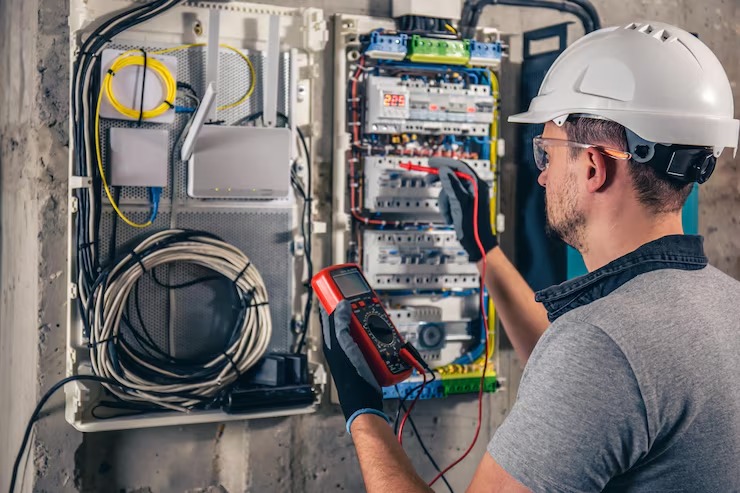
Some of the older homes in town still have knob and tube wiring in unfinished sections, or a panel that was upgraded once in the 80s and never touched since. Before we talk generator size, we look at what the panel is actually rated for and whether it needs attention on its own before we add a transfer switch to it.
What the Work Involves
Brandon starts with a load calculation, not a generator brochure. What do you actually want to keep running – the whole house, or the essentials: heat, well or sump pump, refrigerator, some lighting and outlets? That answer decides between a smaller portable-connection setup with a manual transfer switch and a larger automatic standby unit that starts itself.
On install day, the power gets shut off at the main breaker while the transfer switch is wired in next to your existing panel. That part of the work is a matter of hours, not days. If you’re adding an automatic standby unit, there’s also a concrete pad, gas or propane line sizing, and an exterior disconnect to run.
The utility company owns the meter and the service drop, so any change that affects their equipment – like adding a second point of connection – gets coordinated with them separately from the electrical work Brandon does inside the panel. He’ll tell you upfront if your job needs that step or not.
When it’s done, everything gets tested under load: the transfer switch, the breakers feeding it, and the shutoff sequence, so you know it actually works before the first real outage tests it for you.
What It Costs
A manual transfer switch setup for a portable generator generally runs {PRICE_LOW} to {PRICE_HIGH} in North Reading, depending on how far the switch has to sit from your panel and how many circuits you want on it. A full automatic standby system costs more once you add the generator unit itself, the gas line, and the pad, and the range widens a lot based on whole-house versus essential-circuits sizing.
What moves the number: panel condition (a Federal Pacific or Zinsco panel needs replacing before anything else gets added to it), how many circuits you want backed up, and whether gas or propane is already run to a usable point near the install location. Brandon gives you the number after he’s looked at the panel and asked what you actually want covered, not before.
How Long It Takes
A manual transfer switch install is typically a single day of onsite work. An automatic standby system takes longer start to finish, mostly because of the permit and inspection cycle and any gas line work, but the actual electrical connection is usually one to two days on site. Weather and the town’s inspection schedule are the two things that stretch a timeline beyond that.
Permits and Inspection
Generator installation is permitted electrical work in Massachusetts, full stop. A permit gets pulled before the job starts, and a licensed inspector signs off on the transfer switch, the wiring, and the disconnect once it’s in. This isn’t optional paperwork – it’s what separates a licensed electrician’s work from someone running a generator off an extension cord with a backfeed plug, which is both against code and dangerous to utility workers on the line. [EXTERNAL LINK: Massachusetts Board of State Examiners of Electricians – licensing and code reference, to show homeowners what licensed electrical work is required to meet]
Common Questions
Can I use a portable generator without a transfer switch?
You can run one with a cord to specific appliances, but backfeeding it into your panel without a transfer switch is against code and dangerous to utility crews working on the line during an outage. A manual transfer switch is a modest cost that makes a portable generator safe and legal to use.
What size generator do I actually need?
It depends on what you want covered. Essentials like heat, refrigerator, sump pump and some lighting need less capacity than a whole-house setup. Brandon runs a load calculation on your actual panel rather than guessing off a chart.
Does my old panel need to be replaced first?
If you have a Federal Pacific or Zinsco panel, yes, that gets addressed before a transfer switch goes in. Those panels have known breaker failure issues and aren't a safe base for additional load.
Do I need a permit for a generator installation?
Yes. It's permitted electrical work in Massachusetts and gets inspected once installed. Any electrician doing it without pulling a permit isn't doing it the right way.
How long will my power actually be off during the install?
For most manual transfer switch jobs, a matter of hours during the panel connection. Automatic standby systems may need a slightly longer shutoff window depending on how the disconnect and switch are wired in.
Reach Out for Generator Installation
If you’re tired of losing power every time a storm rolls through North Reading, call {PHONE} and set up a time for Brandon to look at your panel. We work across North Reading and the rest of the North Shore, and every generator job gets pulled and inspected the right way.
Contact information
Talk to Brandon
Brandon is the licensed electrician at Belfiore. He’ll walk your panel with you, ask what you actually need to keep running when the power goes out, and tell you straight whether your existing service can take a transfer switch as-is or needs an upgrade first. No sales pitch on a generator size you don’t need.