
Bathroom Plumbing Remodeling for Amesbury Homes
A lot of Amesbury’s older homes near downtown and the mill district still run on the galvanized supply lines and cast iron drain stacks they were built with, and a single, undersized bathroom was standard for houses put up before the 1950s. When a remodel opens the walls up, what’s actually running through them often turns out to matter more than which fixtures go back in.
Bathroom Plumbing Remodeling in Amesbury
What Amesbury homes typically have
Housing near downtown and the old mill district tends to run older, Victorians and mill-era doubles mostly, and a lot of them were built with a single full bathroom that’s never been touched since. Capes and colonials further out are a mixed bag, some updated, some still running the supply and drain lines they had when the house first went up.
The plumbing behind an untouched bathroom is usually galvanized supply pipe, which corrodes from the inside and gradually restricts flow even when nothing looks wrong on the surface, paired with a cast iron drain stack that can still be sound or can be scaled up and slow depending on age and upkeep. Water heaters in these homes are often the original 40-gallon tank, sized for a single low-flow shower, not a double vanity and a rain shower head added during a remodel.
Most of the town is on municipal water, though some of the more outlying properties still rely on private wells. On a well system, water quality and filtration are worth addressing as part of the remodel plan, not as something to deal with after new fixtures start showing mineral buildup or staining.
What the work involves
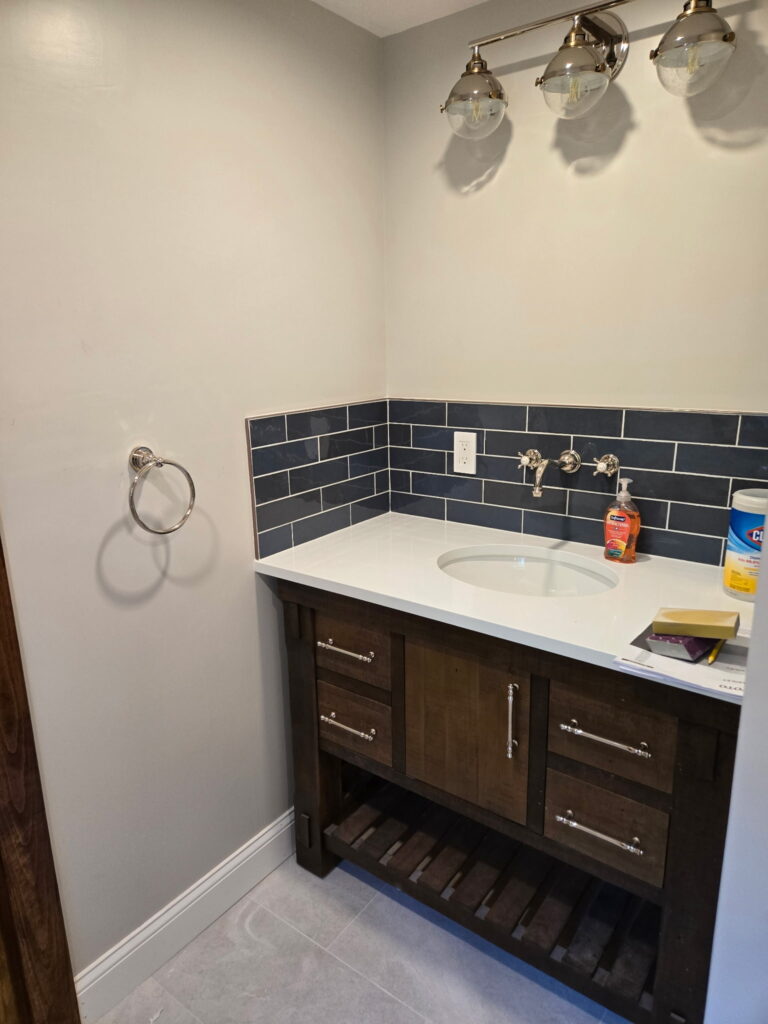
Before anything gets torn out, Chris shuts down and isolates the water to the bathroom and checks what the existing supply and drain lines are made of and where they run. That tells him whether a fixture can be repositioned along the same wall with a straightforward tie-in, or whether the drain and vent need to be rerouted to support a new layout.
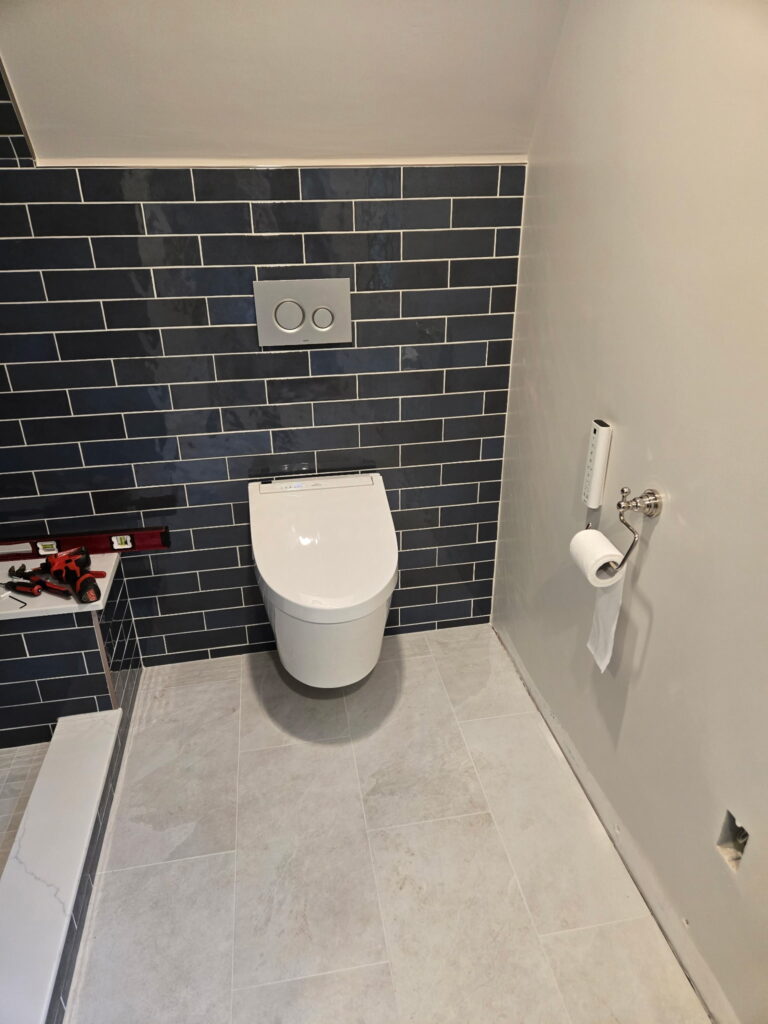
Moving a toilet, shower, or vanity to a new spot in the room isn’t just a supply line question. Each fixture needs a vent path to the outside air for the drain to work correctly, and relocating a fixture usually means relocating or extending that vent too. This is one of the most common things that gets missed in a remodel planned around tile and fixtures without a plumber involved from the start.
If the remodel includes a tankless water heater or a higher-capacity tank to support a bigger shower or soaking tub, that gets sized against the home’s existing gas or electric service, not just against the new fixture’s flow rate.
Repair or replace
Not every bathroom remodel needs all-new plumbing, and Chris will say so plainly when that’s the case. If the supply lines feeding the room are copper or PEX and in decent shape, and the fixtures aren’t moving, updating the shutoff valves and supply lines at each fixture is often enough. Full repiping makes sense when the existing line is galvanized and showing reduced pressure, or when the layout is changing enough that new runs are needed anyway.
The cast iron drain stack gets the same honest look. A section that’s sound, draining well, and not showing signs of scale buildup or leaks can often stay in place even when the wall around it is opened up for the remodel. Replacement makes more sense when there’s visible corrosion, a drain that’s chronically slow with nothing caught in the trap to explain it, or when the new layout needs a different drain path than the old one can support.
What it costs
How long it takes
A bathroom where fixtures stay in their current spots and the plumbing just gets updated typically takes a day or two of plumbing work. A full layout change with fixtures moving and vent runs rerouted usually adds several more days, and the plumbing schedule has to line up with the other trades, since walls generally can’t close until the rough-in passes inspection.
Common Questions
Can I move my toilet or shower to a different spot in the bathroom?
Do I need to replace all my pipes just because I'm remodeling?
Will I be without water during the remodel?
What if my bathroom is on well water?
Talk to Chris
If you’re planning a bathroom remodel in Amesbury and want to know what’s actually behind your walls before you pick fixtures, Chris can take a look and give you a straight answer on what needs replacing and what doesn’t. Call Belfiore Home Services at 978-637-5418.
Contact information
Reach Out for Bathroom Plumbing Remodeling
Call us at 978-637-5418 or contact us for your free quote.