EV Charger Installation in North Andover, MA
A lot of North Andover’s housing stock, especially around the historic center, was built with 60 or 100 amp electrical service and a panel that never expected anything bigger than a window air conditioner. Now homeowners are buying a Tesla, an Ioniq, or an F-150 Lightning and asking their panel to do something it was never sized for. Adding a Level 2 charger to a house like that is not a plug-and-go job. It usually starts with a look at the whole electrical service, not just the spot in the garage where the charger will hang.
Why North Andover Homes Need This
North Andover is a mix. You’ve got colonial-era and early-1900s homes near the center with original or partially updated wiring, plenty of solid post-war construction from the 1950s and 60s, and newer builds and additions out toward the edges of town where remodel demand has been steady for years. Each of those brings a different problem to an EV charger install.
In the older homes we still find knob-and-tube segments in walls that were never fully rewired, cloth-insulated conductors that have gone brittle, and original 60 amp services that were adequate in 1955 and are not adequate now with central air, an electric range, and a Level 2 charger all drawing from the same panel. Some of these houses also still have Federal Pacific Stab-Lok panels, which have a documented history of breakers that don’t trip when they should. That is not a panel we add a 50-amp EV circuit to without a serious conversation first.
In the post-war and modern stock, the service is usually 100 or 200 amp, which is often enough headroom for a charger circuit without a full panel upgrade. But if the house has also picked up central air, a heat pump, or a finished basement with baseboard heat since it was built, that headroom can be smaller than it looks on paper. We do a load calculation before we promise you anything, not after.
What the Work Involves
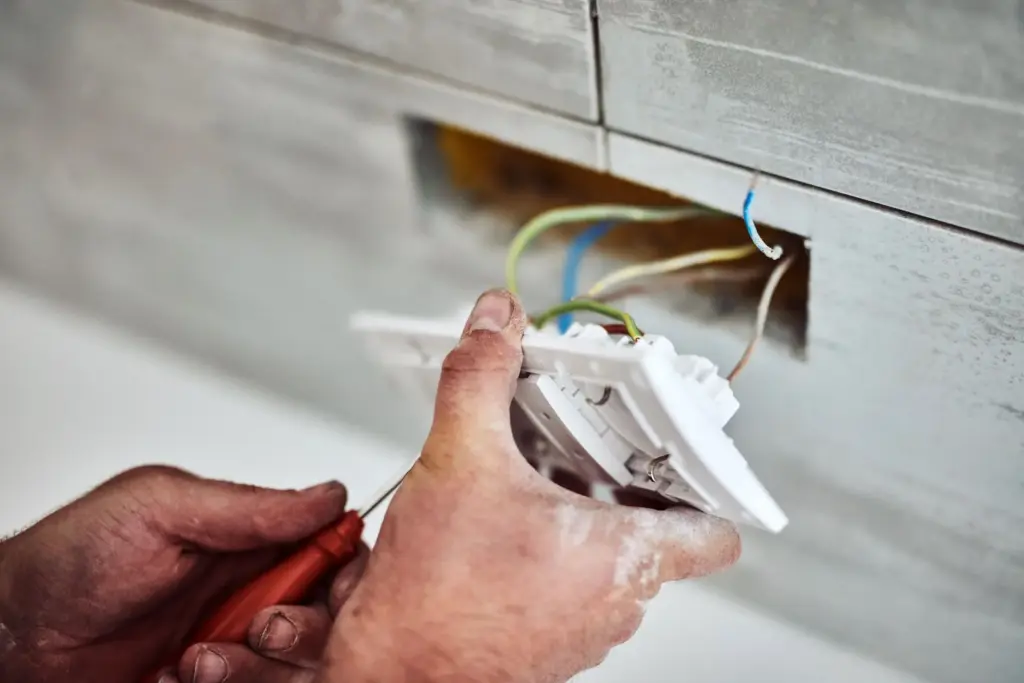
A standard Level 2 install runs a dedicated 240V circuit from your panel to the charger location, usually in the garage or on an exterior wall near where you park. For most residential chargers that means a 40 or 50 amp breaker and 6 or 8 gauge copper wire, sized to the charger’s actual draw plus the code-required continuous load margin. Brandon will check the charger’s nameplate amperage against your service before running anything, because guessing here is how you end up with a breaker that nuisance-trips or, worse, one that doesn’t.
The power in your house goes out for the time it takes to land the new breaker in the panel, typically well under an hour, not all day. If your existing service can’t support the added load, the job grows to include a panel upgrade or a full service upgrade, which is a separate conversation and a separate scope. That part involves National Grid or your utility coordinating the service line and meter work on their end. We handle everything from the meter socket inward: panel, wiring, conduit if it’s an exterior run, and the charger connection itself. Once it’s landed, we torque every termination to spec and test the circuit under load before we call it done.
What It Costs
A straightforward Level 2 charger circuit on a panel with available capacity generally runs {PRICE_LOW} to {PRICE_HIGH}. What moves that number: how far the charger is from the panel, whether the run is through finished walls or an open basement, whether we’re going through a slab or exterior wall, and whether your existing panel has an open breaker slot or needs a subpanel or upgrade first. Houses with FPE or Zinsco panels, or anything under 100 amps, almost always need panel work done before the charger circuit makes sense, and that adds to the scope. We give you a real number for your house before any work starts, not a phone estimate.
How Long It Takes
A charger circuit on a panel with room for it is usually a half-day to a full day of work. If a panel upgrade is part of the job, plan on a full day for the panel itself, sometimes two if there’s exterior conduit or a longer run involved. Utility coordination, when a service upgrade is needed, is the part that can add calendar time rather than labor time. That scheduling is on the utility’s timeline, not ours, and we’re upfront about that instead of promising a date we don’t control.
Permits and Inspection
This work gets a permit and a town inspection, every time. Massachusetts requires an electrical permit for new circuits and panel work, and North Andover’s inspector signs off before the circuit is energized for use. That’s the difference between a licensed electrician and someone off a listing app running a wire through your garage. We pull the permit, we’re there for the inspection, and you get a signed-off job on file, which matters when you sell the house and the buyer’s inspector asks about it. [EXTERNAL LINK: Massachusetts electrical code (527 CMR 12) for homeowners who want to see the actual permitting requirement]
Common Questions
Do I need a panel upgrade to add an EV charger?
Not always. If your panel is 100 amp or larger and has an open breaker slot with capacity left after your existing loads, a dedicated circuit is often enough. Homes with 60 amp service, or older Federal Pacific and Zinsco panels, usually need panel work first.
Can I install a Level 2 charger myself?
You can buy the charger yourself, but the circuit that feeds it has to be installed by a licensed electrician and permitted through the town. Unpermitted 240V work is a real safety issue and can also cause problems with insurance and resale.
Does it matter which charger brand I buy - Tesla, ChargePoint, Grizzl-E?
The circuit requirements come down to the charger's amperage draw, not the brand name. Brandon sizes the breaker and wire to your specific charger's nameplate, whichever brand you've chosen.
What if my house still has knob-and-tube wiring?
How much does this cost in North Andover specifically?
Reach Out for EV Charger Installation
North Andover is the western edge of where we work out of Salem, so we’re straightforward about scheduling here rather than promising a same-hour arrival. We do get out this way regularly for EV charger work, panel upgrades, and remodel-driven electrical, and we plan the trip so your job gets a proper block of time, not a rushed visit squeezed between two closer calls. Reach out and we’ll find a slot that works.
Contact information
Talk to Brandon
Brandon’s the licensed electrician in the family. He left union work to run this side of the business and he’s the one who’ll look at your panel, run the load calculation, and tell you straight whether your house needs just a circuit or something bigger. No sales pitch, no upsell to a service you don’t need. Call {PHONE} and tell him what charger you’re installing and he’ll walk you through what your house actually requires.