Gas Line Installation and Repair in Peabody, MA
A lot of Peabody’s housing stock was built long before gas ranges, gas dryers, and gas-fired boilers were standard, which means the gas piping in these homes has usually been added, extended, or patched together over decades. Between older black iron pipe, undersized branch lines, and heating equipment that’s been swapped out two or three times without anyone re-checking the gas sizing, small gas problems here tend to hide bigger ones.
Gas Line Installation and Repair in Peabody
Chris and the plumbing side of Belfiore handle gas line work across Peabody, from a single new line for a range or dryer to full re-piping when a house is switching a boiler or adding a tankless water heater. Gas work is licensed work. Every line gets sized, pressure-tested, and inspected the way the state requires, not just tightened up and left. That matters more in a city with as much older piping as Peabody has, where the person who did the last hookup may not have pulled a permit at all.
What Peabody Homes Typically Have
Peabody’s neighborhoods run from pre-1940 single and multi-family homes near downtown to mid-century capes and colonials further out toward the Lynnfield and Danvers lines. In the older sections, it’s common to find a mix of original black iron gas pipe with newer flexible connector runs added on for a stove or dryer that was installed after the fact. Heating varies block by block. Plenty of homes still run steam or hot water boilers that were converted from oil to gas at some point, and that conversion is exactly where sizing problems tend to show up years later.
Gas availability itself isn’t uniform across the city. Most of central and eastern Peabody has gas service on the street, but there are pockets, especially toward West Peabody, where oil heat is still the norm and a gas conversion means bringing a new service in from the street, not just running interior piping. If you’re not sure which situation your street falls into, that’s the first thing we check before quoting anything.
What the Work Involves
Every job starts with a load calculation. We add up the BTU demand of every appliance the line will feed, current and planned, then size the pipe diameter and run length to match. Undersized lines are the most common issue we find in Peabody’s older two and three families, usually because a line built for a stove got a dryer, a gas fireplace, and a boiler added onto it over the years without anyone recalculating.
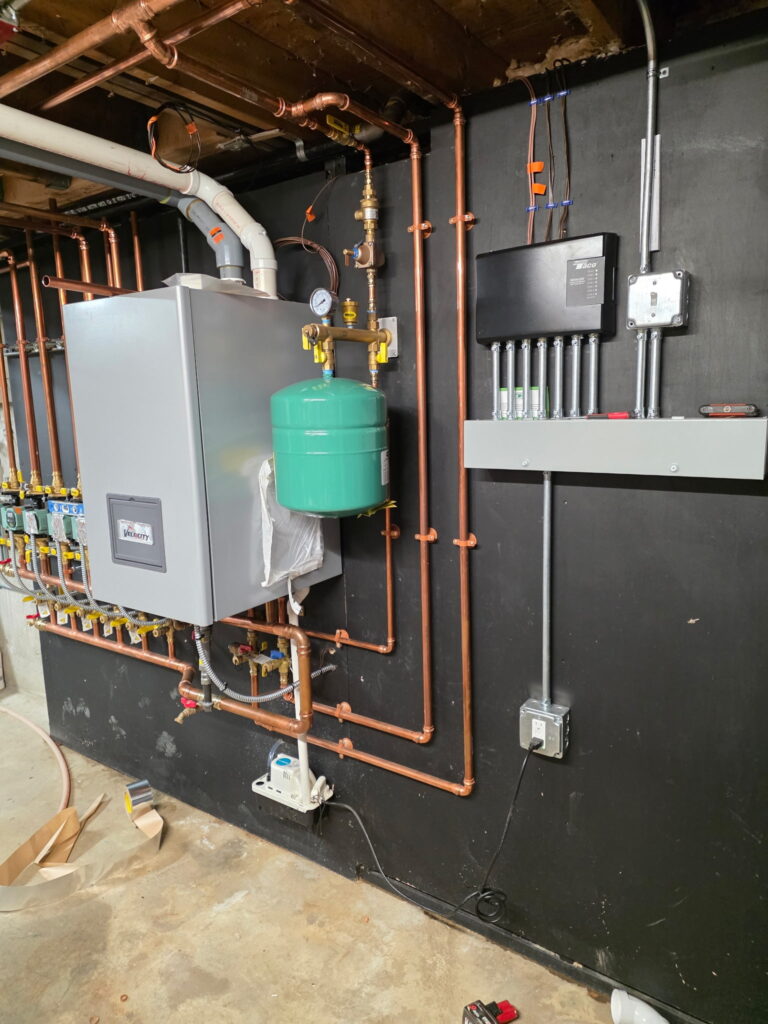
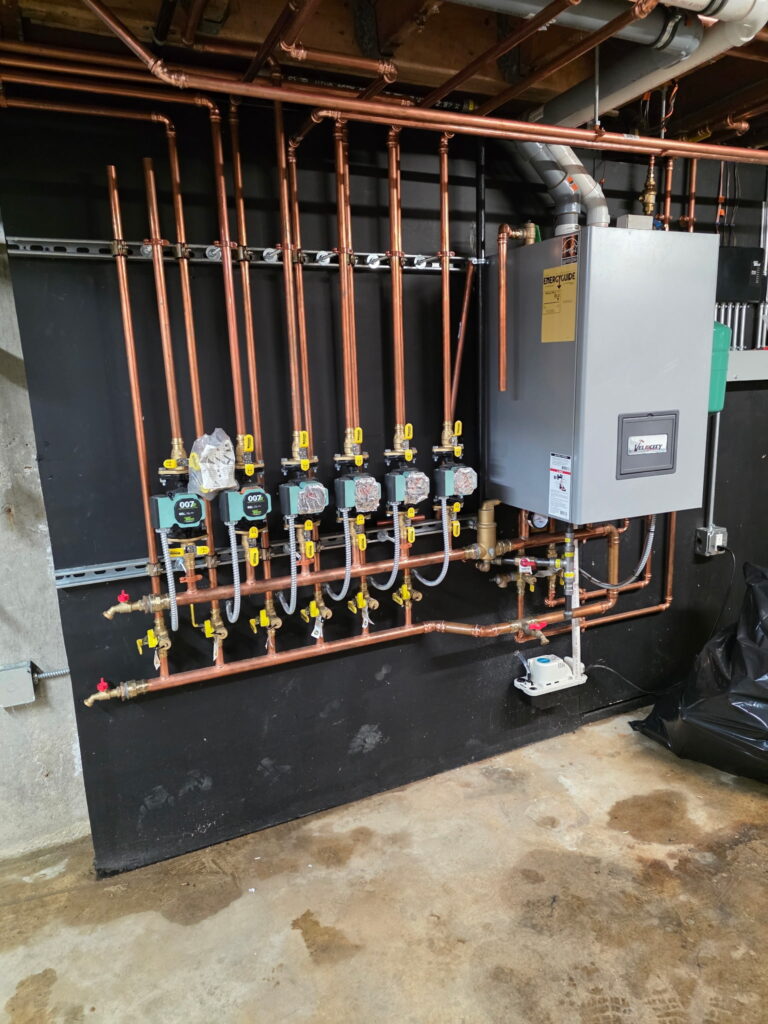
For a straightforward appliance hookup, most of the work is confined to one room and doesn’t touch your heat or hot water. For a boiler or water heater tie-in, the job is bigger: the old line gets pressure tested, new black iron or CSST gets run to code, and the appliance gets connected with a proper shutoff and drip leg. Venting gets checked at the same time. A gas appliance that vents into a chimney shared with an old oil system is a common finding in this city’s older housing, and it needs to be corrected, not ignored. Depending on the scope, your heat or hot water may be down for part of a day. We tell you that up front, not after we’ve started.
Repair or Replace
Most gas line calls in Peabody are repairs, not replacements, and we’ll tell you that straight. A corroded fitting, a bad union, a connector that’s the wrong type for the appliance, these get fixed in place. If your line pressure-tests clean and the pipe is sized correctly for what it’s feeding, there’s no reason to touch the rest of the run just because it’s old.
Full replacement makes sense when the existing line is undersized for current or added appliances, when black iron shows real corrosion rather than surface rust, or when a boiler or tankless conversion changes the load enough that patching the old run isn’t a safe option. We’ve walked away from jobs where a homeowner expected to need a full re-pipe and it turned out to be one bad fitting. That’s the call we’d rather make, even if it’s the smaller job.
What It Costs
Gas line pricing depends on run length, pipe material, whether we’re working inside finished walls or an open basement, and whether the job needs a new gas meter or service upgrade from the utility. A single appliance hookup in an accessible basement is a different job than running new pipe through two floors of a finished colonial. We give you a number for the actual scope of your house before any work starts, not a phone estimate based on square footage. Costs are {PRICE} and we’ll walk you through what’s driving them before you agree to anything.
How Long It Takes
A single appliance connection, like a gas dryer or range, is usually a same-day job. A boiler or tankless water heater tie-in that involves re-sizing an existing line typically takes a full day, sometimes into a second if venting work is needed too. If the job requires the utility to upgrade a meter or bring new service from the street, that piece is on the utility’s schedule, not ours, and we’ll tell you that timeline as soon as we know it so you’re not left guessing.
Common Questions
Do I need a permit for gas line work in Peabody?
Yes. Any new gas line, extension, or appliance conversion needs a permit and inspection under Massachusetts gas fitting code. We pull the permit and schedule the inspection as part of the job, so you're not left trying to sort that out yourself after the fact.
Is gas service available everywhere in Peabody?
Not uniformly. Most of central and eastern Peabody has gas on the street, but some areas, particularly toward West Peabody, still run on oil. If gas isn't at your property line yet, converting means coordinating a new utility service before any interior piping work makes sense.
Can you convert my oil boiler to gas?
That's plumbing and heating work we handle regularly. It involves sizing a new gas line to the boiler's BTU input, decommissioning the oil tank and line, and correcting venting since gas boilers vent differently than oil systems. We'll walk the whole scope with you before quoting it.
How do I know if my gas line is undersized?
Common signs are a pilot light or burner flame that seems weak, appliances that don't reach full output, or a line that's had appliances added over the years without anyone recalculating the pipe size. A load calculation on-site tells us for certain.
Will my heat or hot water be off during the work?
Reach Out for Gas Line Installation and Repair
Belfiore is a Salem-based company working across Peabody and the rest of the North Shore. Every gas line job is done by licensed plumbers, permitted and inspected the way the state requires, no shortcuts because a house is old or a run is short. Call {PHONE} to set up a look at your gas line, whether it’s a new appliance, a boiler swap, or a repair you’ve been putting off.
Contact information
Talk to Chris
Chris handles the plumbing side of Belfiore and does the gas line estimates himself. If you’ve got a stove that needs hooking up, a boiler conversion you’re weighing, or just a line that’s making you nervous, call and describe what you’ve got. He’ll tell you plainly whether it’s a repair, a partial run, or something bigger, and what to expect before anyone shows up with tools.