
Electrical Troubleshooting and Repair in Nahant, MA
A lot of Nahant houses were wired for a different century of living. Small cottages built before or just after the Second World War got a 60 amp service and a handful of circuits, and that was plenty when the house had a refrigerator, a radio, and maybe a window unit. Now the same panel is asked to run central air, a range, a heat pump, and whatever the last owner added in the basement. Something eventually gives, and that is when you need a licensed electrician in the walls, not a guess.
Why Nahant Homes Need This
Nahant is a small peninsula and most of the housing stock reflects that: older construction, tight lots, and salt air that does not do any favors to anything mounted outside. Exterior panels, meter bases, and outdoor receptacles corrode faster here than they do a few towns inland, and that corrosion is one of the more common reasons we get called out for a service that is tripping, humming, or just plain dead.
Inside the house, the age of the wiring matters as much as the age of the roof. On the North Shore generally, and Nahant is no exception, we still find knob and tube wiring in ceilings and wall cavities, cloth-insulated conductors that have gone brittle, and 60 amp services that were adequate in 1955 and are not adequate now. Some homes still carry Federal Pacific or Zinsco panels, both of which have documented breaker failure issues and get flagged by inspectors and insurance companies alike. Because Nahant sits exposed on the water, outages during nor’easters and hurricanes are frequent enough that generator interlock and transfer switch work is one of the more common add-ons we get asked about while we are already in the panel for something else.
What the Work Involves
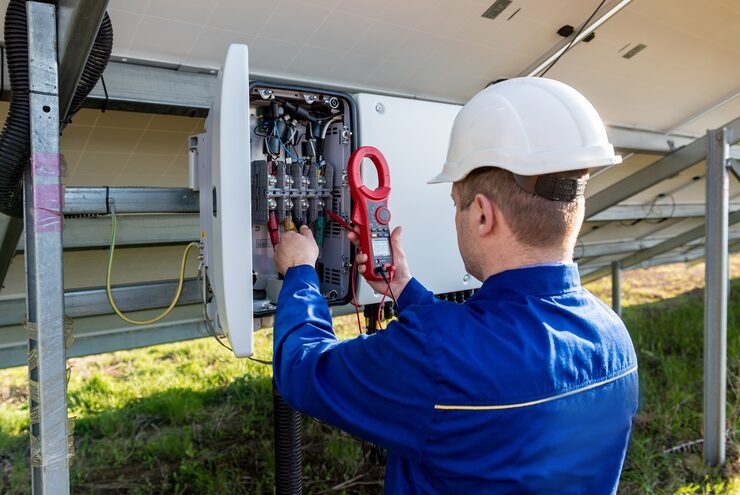
Troubleshooting starts with finding the actual fault, not just replacing the part someone thinks is bad. Brandon traces the circuit, checks the panel for signs of arcing or heat damage, and tests devices and connections along the run. Common calls we see in Nahant include flickering lights tied to a loose neutral, breakers that trip under load because the wire gauge does not match the breaker size, GFCI and AFCI outlets that keep tripping near kitchens and bathrooms, and dead circuits caused by a failed connection in an old junction box.
For anything beyond a simple swap, power to the affected circuit or the whole panel gets shut off for safety. Most repairs keep the outage down to an hour or two. A panel-level repair or a service upgrade is a different scale of job: the utility has to disconnect and reconnect power at the meter, which is outside our control on timing, while everything from the meter base inward, wiring, breakers, grounding, is our work and our responsibility. We coordinate the utility scheduling as part of the job so you are not the one on hold with National Grid.
What It Costs
A straightforward troubleshooting call, diagnosing and fixing a tripping breaker or a dead outlet, generally runs {PRICE_LOW} to {PRICE_HIGH}. That range moves based on how long the fault takes to find, whether the wiring is modern romex or older cloth and knob and tube that has to be handled more carefully, and whether we are working in an open basement or fishing wire through finished plaster walls in one of Nahant’s older cottages. A panel repair or partial rewire runs higher, and we will not quote it over the phone sight unseen. What we can do is give you a number before any work starts, once Brandon has actually looked at the panel and the circuit.
How Long It Takes
Most single-issue troubleshooting calls, a tripping breaker, a dead circuit, a bad outlet, get diagnosed and fixed in one visit, often within two to three hours. Jobs that involve opening walls to trace old wiring, or that turn up a Federal Pacific panel that needs more than a spot repair, take longer and sometimes require a second visit once parts are confirmed. We will tell you upfront if a job looks like a same-day fix or a multi-visit project once we have eyes on it.
Permits and Inspection
Electrical repair work in Massachusetts is permitted and inspected, and that is not paperwork for its own sake. Panel work, circuit additions, and service changes all require a permit pulled by a licensed electrician, and the completed work gets signed off by a local inspector before it is considered closed. That inspection step is the difference between work you can trust and work done off the books by someone without a license. Brandon pulls the permit and handles the inspection as part of the job, not as an add-on.
Common Questions
Do I need a permit for electrical repair in Nahant?
Yes. Massachusetts requires a permit for most electrical repair work beyond simple device swaps, and the finished work has to pass inspection. A licensed electrician pulls the permit as part of the job.
What is Federal Pacific or Zinsco panel, and why does it matter?
These are older panel brands with documented breaker failure issues, meaning breakers can fail to trip during an overload. Many insurers and inspectors flag them, and replacement is usually recommended if you have one.
Can you fix knob and tube wiring instead of replacing it?
In some cases a section can be repaired or isolated, but knob and tube has no ground and its insulation degrades with age. Brandon will tell you honestly whether a repair makes sense or whether that section needs to come out.
Why does my power go out so often in Nahant?
Nahant's exposure to coastal storms means more frequent utility outages than towns further inland. That is also why generator interlock and transfer switch installations come up often here.
How do I know if my panel is undersized for my house?
Signs include breakers that trip under normal use, warm or buzzing panels, and an inability to add circuits without removing something else. A licensed electrician can check your service size against your actual load.
Reach Out for Electrical Repair
If you are dealing with a breaker that will not stay reset, a flickering circuit, or a panel you are not sure is safe anymore, call {PHONE}. We work across Nahant and the rest of the North Shore, and we will walk you through what we find in plain language, not jargon meant to sell you something you don’t need.
Contact information
Talk to Brandon
Brandon is the electrician at Belfiore. He left union work to run the electrical side of the family business, and troubleshooting old Nahant wiring, corroded exterior panels, and undersized services is a regular part of that work. If something in your house is tripping, buzzing, or just not working right, he can talk through what he is seeing and what your options are before anything gets scheduled.