Electrical Service Upgrades in Reading, MA
Reading filled in mostly after the war, with a good stretch of colonials and capes from the 1950s and 60s sitting on bigger lots than you’ll find closer to Boston. Those houses came standard with 60 amp, sometimes 100 amp electrical service, because nobody was running a heat pump, an EV charger and a finished basement home theater off the same panel back then. Now everybody’s trying to.
Why Reading Homes Need This
Walk through a typical Reading remodel today and the load adds up fast. A heat pump condenser for the addition. A 240-volt EV charger in the garage. A finished basement with its own sub-panel. None of that was in the plan when the house was wired, and a 60 or 100 amp service just doesn’t have the headroom.
Some of what we find in Reading’s older housing stock is more than a capacity problem. Cloth-insulated wiring from the 1950s has brittle insulation that cracks with age. Federal Pacific Stab-Lok panels, common in this era of construction across the North Shore, have breakers that don’t reliably trip under fault conditions. Zinsco panels have a similar reputation for breakers that fuse in the closed position. If your panel is one of these, a service upgrade is the point where we replace it, not just add capacity around it.
What the Work Involves
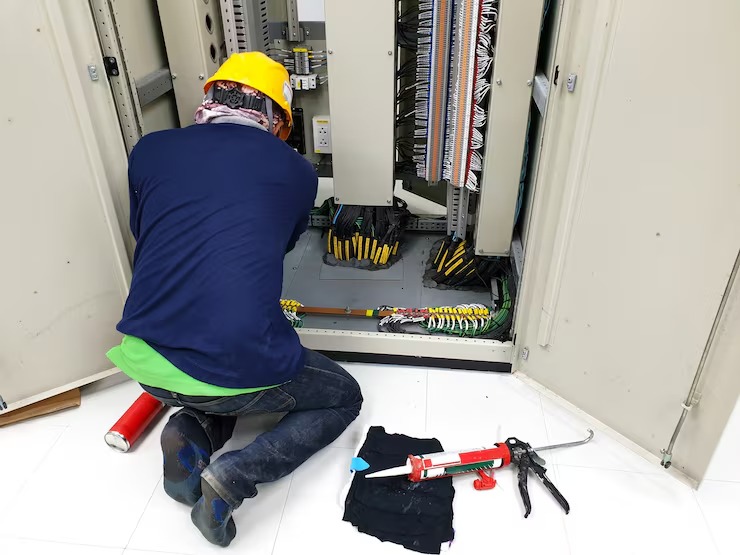
A service upgrade touches three things: the utility drop, the meter, and the panel. The drop and meter socket are partly a National Grid or Reading Municipal Light Department matter, depending on which side of town you’re on. Brandon coordinates the utility side, pulls the permit, and does the physical work on your side of the meter: new mast, new meter socket if needed, new panel sized to 100, 150 or 200 amps depending on what you’re adding.
Power to the house is off for the swap itself, typically a matter of hours, not the whole day. The utility has to de-energize the drop before anyone touches the mast or meter, and re-energize it once the new equipment passes inspection. Everything downstream of the panel, your breakers, your dedicated circuits, gets landed and labeled as part of the same job.
What It Costs
A straightforward 100 to 200 amp service upgrade in Reading runs in the range of {PRICE_LOW} to {PRICE_HIGH}. Where you land depends on whether the mast and weatherhead need replacing, how far the meter is from the panel location, whether the utility requires new service conductors, and whether we’re relocating the panel as part of the job versus swapping it in place. A house with a Federal Pacific panel that also needs a full rewire of a few circuits costs more than a straight swap on modern wiring.
How Long It Takes
Most Reading service upgrades are a one-day job on site, sometimes two if the panel is being relocated or the mast position is changing. The bigger variable is scheduling the utility. National Grid and RMLD both have their own queue for disconnect and reconnect, and that can add a few days to a couple weeks depending on the season. We build that into the timeline up front so there are no surprises.
Permits and Inspection
This work is permitted through the Town of Reading and inspected by the state electrical inspector before the utility will reconnect power. That inspection is not a formality. It’s the check that catches undersized conductors, poor grounding, or a panel that isn’t rated for the load you’re putting on it. [EXTERNAL LINK: Massachusetts Electrical Code (527 CMR 12) reference for service and panel requirements] Anyone offering to skip the permit is offering you an uninsured, uninspected electrical panel in your house. Brandon pulls the permit on every service upgrade, no exceptions.
Common Questions
How do I know if my Reading house needs a service upgrade instead of just a panel swap?
If your panel is rated 60 or 100 amps and you're adding an EV charger, heat pump, or other large 240-volt load, you need more capacity than the panel can be upgraded to hold on its own. That means new service size, not just a new panel box.
Is a Federal Pacific or Zinsco panel actually a fire risk?
Both brands have a documented history of breakers that fail to trip under overload or fault conditions. It's common enough in North Shore housing built in that era that we treat it as a straightforward reason to replace the panel during a service upgrade, not just something to flag and leave.
Who handles the utility side of the upgrade, me or the electrician?
Brandon coordinates directly with National Grid or Reading Municipal Light Department for the drop and meter work. You don't have to call the utility yourself, but the utility's schedule for disconnect and reconnect is outside our control.
Can I stay in the house during a service upgrade?
Yes. Power is off for a few hours during the swap itself, not the full day, and we schedule around your routine as much as the utility's timeline allows.
Do I need a permit for a service upgrade in Reading?
Yes. This work requires a permit through the Town of Reading and a state electrical inspection before the utility will reconnect power. It's not optional and it's not something a licensed electrician would skip.
Reach Out for Electrical Service Upgrades
If you’re adding an EV charger, a heat pump, or finishing a basement in Reading and your panel is original to the house, call {PHONE}. We’ll walk you through what your current service can handle and what it takes to get you to 200 amps.
Contact information
Talk to Brandon
Brandon left the union to do this work under the family name, and service upgrades are the job he gets asked about most often in a town like Reading, where the housing stock and the new load people want to add don’t match anymore. He’ll look at your existing panel, tell you straight whether it needs a full upgrade or just a swap, and give you a number before anything gets scheduled.