
Ceiling Fan and Light Fixture Installation in Peabody, MA
A lot of Peabody’s housing stock went up between the 1900s and the 1940s, back when a ceiling light was one bare bulb on a pull chain and nobody was running a fan, a remote control, and a dimmer off the same box. Now homeowners want a fan in every bedroom and a real fixture over the dining table, and the electrical box up there was never built to carry the load or hold the weight.
Why Peabody Homes Need This
Peabody has a strong mix of older single-family homes and converted two and three families, and that mix shows up the moment you take a ceiling fixture down. It’s common to find an old ceramic light box with no ground, sometimes fed by cloth-insulated wiring or actual knob and tube still doing its job forty years past when it should have been replaced. None of that is rated to hold a 15 to 25 pound fan spinning at speed, and none of it has a ground conductor for a modern fixture that needs one.
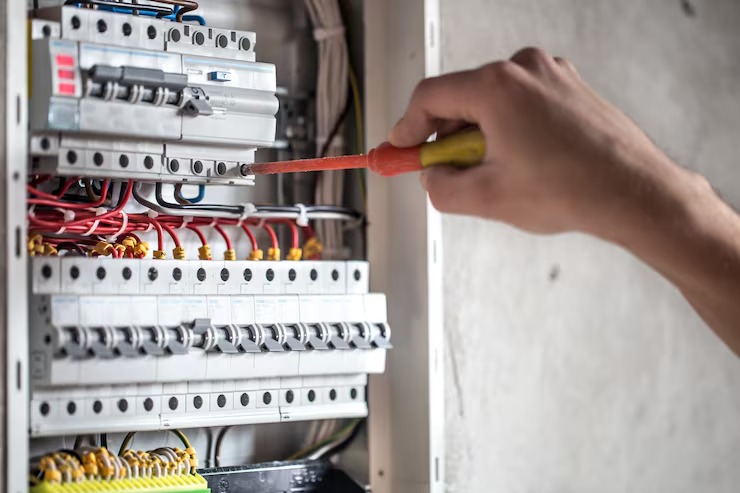
Add to that the fact that a lot of these houses are still running on 60 or 100 amp services, sometimes behind an old Federal Pacific or Zinsco panel. Those panels have a known history of breakers that don’t trip reliably under fault conditions. Before Brandon puts a new fan or fixture on a circuit like that, he’s checking what panel is feeding it and whether the circuit itself can handle another load, not just whether the wire reaches the ceiling.
What the Work Involves
The panel gets shut down at the main, not just the one breaker, because most of these older boxes don’t have room to work safely with adjacent circuits still hot. Power is usually out for the room, sometimes the whole house depending on the panel age, for the length of the job, typically under two hours for a straight swap.
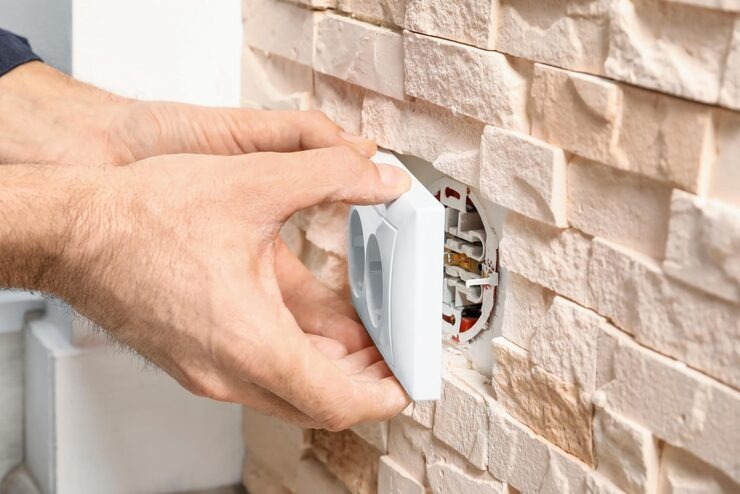
From there Brandon opens the existing box and checks three things: is there a ground conductor, is the box itself fan-rated (a plain light box is not built to take the torque and vibration of a spinning fan), and is the wire gauge correct for the circuit’s breaker size. If the box isn’t fan-rated, it gets swapped for one that’s rated and properly braced to a joist or a fan brace bar, not just screwed to drywall. If there’s no ground, that gets addressed before anything goes back together, because a fixture without a ground path is a shock hazard the day something inside it fails.
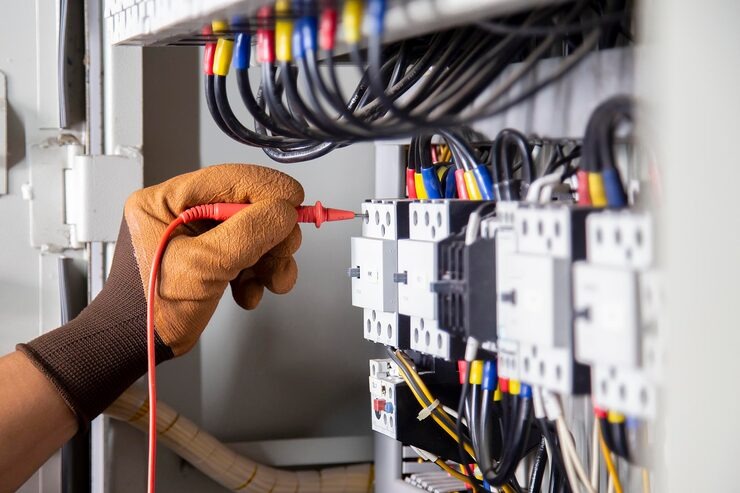
Once the new fixture or fan is mounted and wired, Brandon tests the circuit under load, checks the switch or remote pairing, and confirms nothing is warm or loose at the connections before he closes it up. If it’s a straightforward swap on a sound box and circuit, it’s usually a one-visit job. If the box needs to be replaced or the circuit needs to be run back further, that’s the same visit too, it just takes longer.
What It Costs
A straight fan or fixture swap on an existing, sound box usually runs in the {PRICE_LOW} to {PRICE_HIGH} range. What moves that number: whether the existing box needs to be replaced with a fan-rated one, whether there’s a ground conductor to add, how far the fixture is from an accessible attic or joist bay for bracing, and whether you’re adding a wall switch or dimmer where there wasn’t one before. Multiple fixtures on the same visit usually cost less per fixture than calling separately, since the panel is already shut down and Brandon’s already on site.
How Long It Takes
Most single fan or fixture installs are done in one visit, often in an hour or two once the panel’s shut down and the old fixture’s out. Jobs that turn up knob and tube behind the box, or a ceiling with no accessible attic above it, run longer because Brandon has to fish new cable through finished wall or ceiling rather than just landing wires in an existing box. He’ll tell you which situation you’re in before he starts cutting anything open, not after.
Permits and Inspection
Fixture and fan installation that involves new wiring, a new box, or a new switch location is permitted work under Massachusetts electrical code, and it gets inspected by the local building department. A straight swap of a fixture for a fixture on an existing, code-compliant box generally doesn’t require a permit, but anything beyond that does. Brandon pulls the permit when the job calls for one and schedules the inspection, because that’s what separates a licensed electrician’s work from a handyman’s. If the wiring in your ceiling fails inspection later when you go to sell, you want to know that now, not during a home inspection contingency.
Common Questions
Can I install a ceiling fan myself if there's already a light fixture there?
Sometimes, but only if the existing box is fan-rated and properly supported, and the wiring includes a ground conductor. In a lot of Peabody's older homes, neither of those is true, which is exactly why it's worth having Brandon check before you buy the fan.
Do I need a permit to swap out a light fixture?
A like-for-like fixture swap on a sound, existing box usually doesn't need one. Adding a new box, new wiring, or a new switch does. Brandon will tell you which category your job falls into before starting.
What if my house still has knob and tube wiring?
It's common in Peabody's pre-1940 housing. Knob and tube can't be spliced into modern fixture wiring safely, so that circuit typically needs to be extended or replaced back to a junction point before a new fan or fixture goes up.
How much weight can a ceiling box hold?
Can you install multiple fans or fixtures in one visit?
Reach Out for Ceiling Fan and Light Fixture Installation
If you’re adding fans for the summer, replacing a builder-grade fixture, or finally taking down something original to the house, call {PHONE}. Brandon will walk through what’s likely behind your ceiling based on the age of the house and give you a straight answer on scope before scheduling the visit.
Contact information
Reach Out for Ceiling Fan and Light Fixture Installation
Peabody’s older homes have earned their electrical quirks honestly, one renovation and one add-on at a time. Getting a fan or fixture installed right the first time, on a box and circuit that can actually support it, means you’re not troubleshooting a wobble or a warm switch plate six months from now.
Talk to Brandon
Brandon's the licensed electrician at Belfiore. He grew up in these houses too, so he's not guessing when he tells you a 1920s two-family in Peabody is going to have a ceramic box and cloth wire behind that dining room fixture. Call and describe what you're trying to hang and where, and he'll tell you honestly whether it's a quick swap or a bigger job before he ever shows up.