Electrical Panel Upgrades in Andover, MA
A lot of Andover housing stock was built with 100 amp service at a time when nobody was running a heat pump, an EV charger, and a double oven off the same panel. Now you’re adding all three, plus a finished basement with its own circuits, and the panel that was fine in 1985 is out of headroom.
Why Andover Homes Need This
Andover has a wide spread of housing ages, and the panel question depends heavily on which part of town you’re in. The historic centre and the streets near the Old Town Hall have homes old enough to have started on knob and tube, then been upgraded once, maybe twice, without ever really being sized for what a modern household draws. The post-war neighborhoods further out often carry 100 amp panels that were standard for their era but leave nothing in reserve once you add central air, an EV charger, or a hot tub.
Renovation demand in Andover is strong, and that’s exactly what exposes an undersized panel. You don’t notice a 100 amp service is tight until you’re pulling permits for a kitchen remodel with a new range and a microwave drawer, plus a heat pump water heater in the basement, and Brandon’s load calculation comes back showing you’re already close to capacity before any of that gets added. At that point the panel upgrade isn’t optional, it’s the thing that has to happen first so the rest of the project can get inspected and closed out.
We also still find Federal Pacific Stab-Lok and Zinsco panels in this area. Both were installed widely across the North Shore through the 1960s and 70s, and both have documented breaker failure issues that insurers and inspectors take seriously. If you’ve got one of these panels and you’re planning any addition of load, that’s not a capacity conversation anymore, it becomes a condition conversation, and we’ll tell you straight if that’s what we’re looking at.
What the Work Involves
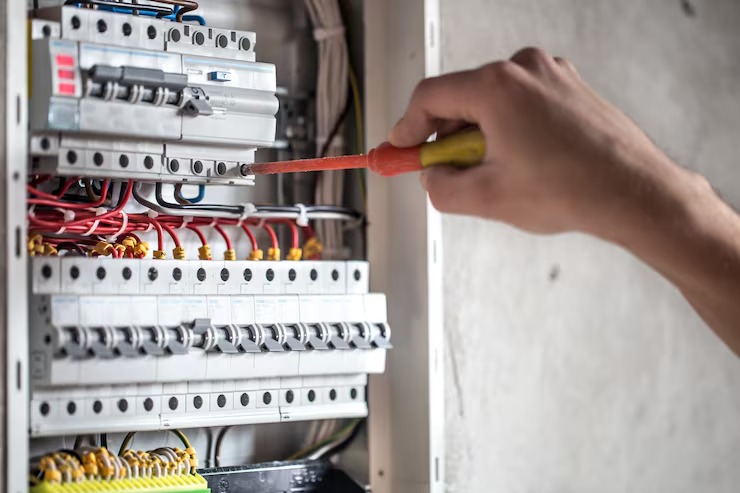
A panel upgrade means swapping the panel enclosure and breakers for a unit with more capacity, typically moving from 100 amp to 150 or 200 amp service depending on what you’re feeding. Brandon starts with a load calculation, not a guess, adding up your existing circuits plus whatever new equipment is going in, whether that’s an EV charger, a heat pump, or a hot tub.
The utility has to pull the meter before any work starts, since the panel is fed directly off the meter base. That’s a scheduled shutoff, not something we can do on our own timeline, so we coordinate it with National Grid ahead of the job. Once the meter’s pulled, power is off to the house, usually for a matter of hours rather than all day, while the old panel comes out, the new one goes in, circuits get transferred and labeled, and everything gets torqued to spec.
If your existing service drop, mast, or meter base can’t support the higher amperage, that’s utility-side work and it gets flagged separately. We’ll tell you upfront if that’s the case rather than discovering it mid-job.
What It Costs
Most panel upgrades in Andover run between {PRICE_LOW} and {PRICE_HIGH}. Where you land in that range depends on the amperage jump, whether the existing wiring and grounding meet current code or need work alongside the panel, how accessible the panel location is, and whether the service drop or meter base needs utility involvement. A straightforward 100 to 200 amp swap in an easily accessible basement panel costs less than a job where we’re also correcting grounding, relocating the panel, or dealing with a Federal Pacific unit that needs the branch circuits re-terminated. Brandon gives you a firm number after he’s seen the panel and run the load calculation, not a phone estimate.
How Long It Takes
The physical swap is usually a single day’s work once the utility has scheduled the meter pull. Power to the house is out for part of that day, not the whole thing. The part that takes longer is scheduling, since the utility coordination and the town inspection both run on their own timelines, so plan on a project window measured in days to a couple of weeks from first call to final sign-off, not a same-day turnaround.
Permits and Inspection
Panel work in Massachusetts requires a permit and an inspection, full stop. Andover’s inspectional services department has to sign off before the utility will reconnect permanent power, and that inspection checks grounding, bonding, breaker sizing, and labeling against the Massachusetts Electrical Code. This is one of the clearest ways to tell a licensed electrician from someone working off the books: unpermitted panel work shows up at resale, complicates insurance claims, and in some cases has to be torn out and redone before a home can close. [EXTERNAL LINK: Massachusetts Board of State Examiners of Electricians electrical code reference, for the code standard the inspection is measured against]
Common Questions
Do I need a panel upgrade or a panel replacement?
Upgrade is about capacity, adding amps for new equipment. Replacement is about condition, swapping out a failing or obsolete panel like a Federal Pacific Stab-Lok even if you're not adding any load. Brandon can tell you which situation you're in during the same visit.
Will I lose power during the upgrade?
Yes, for part of the day. The utility has to pull the meter before we can work, which cuts power to the house until the new panel is in and reconnected. We schedule it so it's a matter of hours, not an overnight outage.
Is 100 amp service actually a problem in Andover?
It depends on what's on it. A 100 amp panel can be fine for a smaller home with gas heat and no big electrical additions planned. It becomes a problem the moment you add an EV charger, a heat pump, or a major kitchen remodel with electric cooking, which is a very common combination in Andover renovations.
What if my panel is a Federal Pacific or Zinsco?
Does the town need to inspect this work?
Reach Out for Electrical Panel Upgrades
If you’re planning a remodel, an EV charger, or a heat pump anywhere in Andover, call {PHONE} before the rest of the project gets designed around a panel that can’t carry it. We work across Andover regularly, though it sits at the far edge of our North Shore coverage, so scheduling a firm date up front matters more here than it does closer to Salem.
Contact information
Talk to Brandon
Brandon’s the one who’ll walk your panel, run the actual load numbers, and tell you whether you need 150 amps or 200, or whether what you’ve got is a Federal Pacific that needs to come out regardless of what you’re adding. He left union work to run electrical for the family business, and panel calls like this are a big part of why.