
Water Filtration and Water Softener Installation in Marblehead, MA
Marblehead’s housing stock runs old, and old pipe means old water problems. Between homes on town water fighting chlorine taste and hard scale, and the handful of properties still on private wells dealing with iron, sediment, or hardness straight from the source, filtration here is rarely a nice-to-have. It is usually the thing standing between you and a water heater or set of fixtures that fail years early.
Water Filtration and Water Softener Installation in Marblehead
Chris and the plumbing crew install water filtration and softener systems across Marblehead, from Old Town to the Neck to the newer construction off Tedesco Street. The work ranges from a simple point-of-use filter under a kitchen sink to a whole-house softener and sediment setup that treats every fixture in the house. On the Neck and other tight-lot properties, equipment placement takes some planning. Basements are often small, low, and already crowded with an oil tank or an old boiler, so we look at the space before we quote anything.
What Marblehead Homes Typically Have
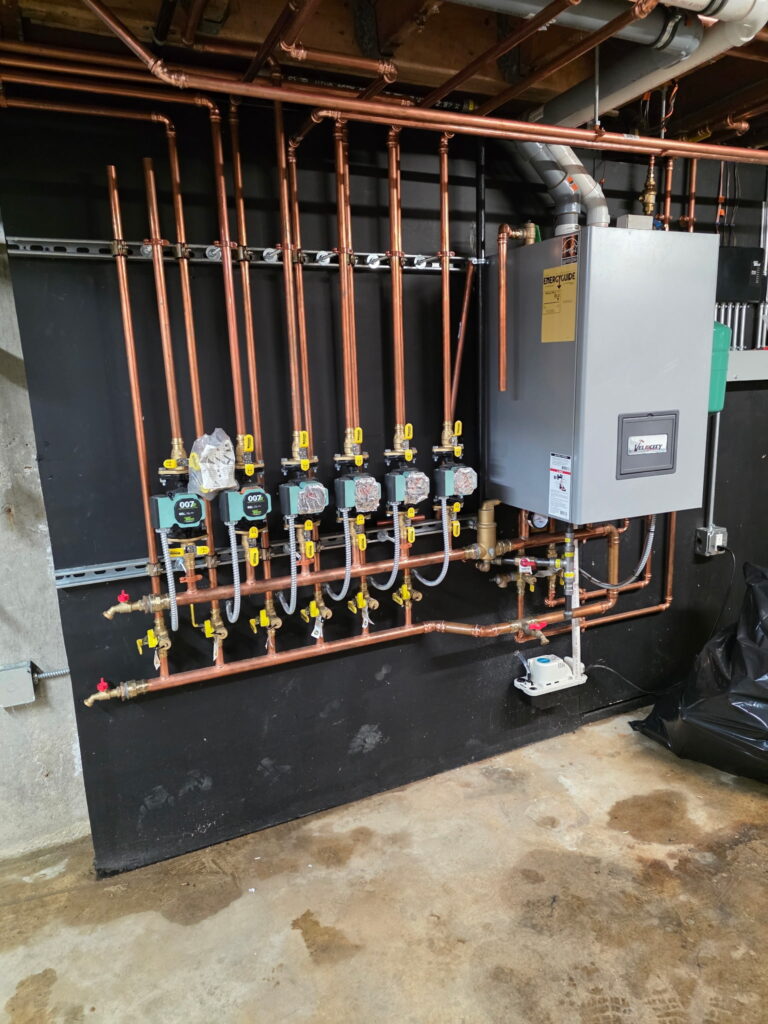
A lot of Marblehead’s housing predates 1900, and it shows in the plumbing. You’ll find galvanized supply lines still in place in some of the older sections, cast iron drains, and water heaters undersized for the household they’re serving. Heating is mostly steam and hot water boilers, oil-fired in a good share of the older homes since natural gas isn’t run down every street here the way it is in some inland North Shore towns. That matters for filtration too, because an oil-fired system with hard water scaling inside a heat exchanger loses efficiency fast and doesn’t recover it without descaling or replacement.
Most of Marblehead is on town water through the local water department, but there are still properties, especially further from the harbor, on private wells. Well water here commonly needs iron and sediment filtration before a softener will even work properly, since iron fouls softener resin over time. Town water customers are usually dealing with a different problem: chlorine taste and odor, plus scale from naturally hard water working its way through old galvanized pipe and shortening the life of everything downstream, water heaters especially.
What the Work Involves
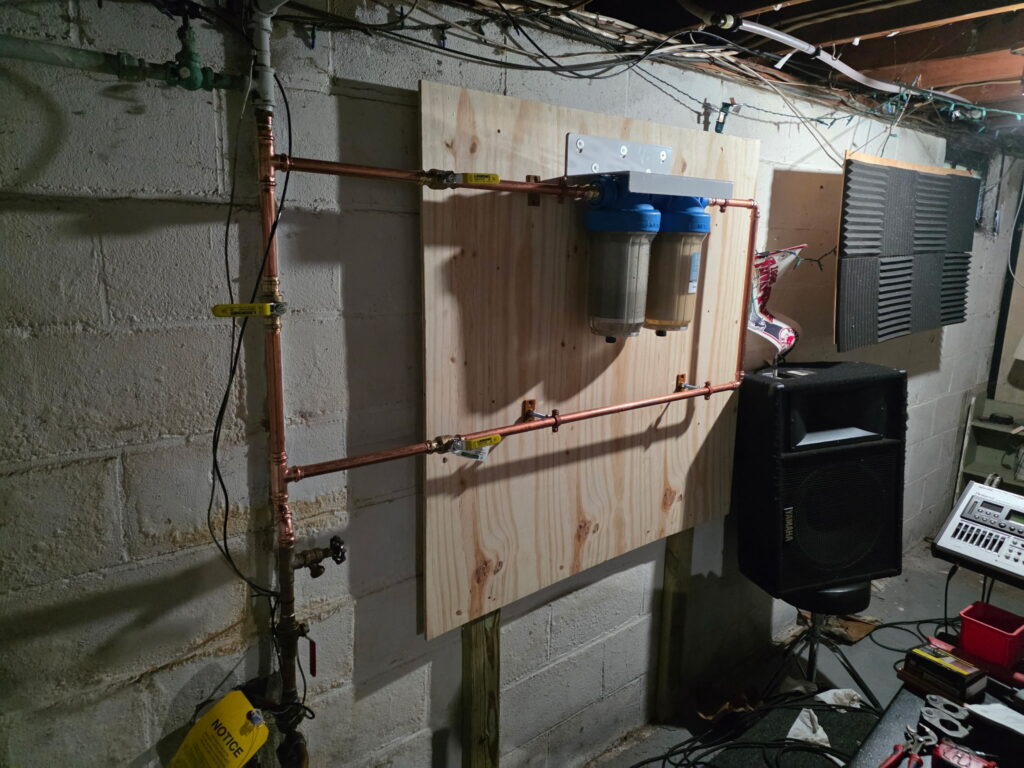
A whole-house softener or filtration install starts at the main water line, usually where it enters the basement or crawlspace. We shut off the water, cut into the main, and set the system with a bypass valve so you can service or bypass it later without shutting the whole house down. For a softener, that means a mineral tank, a brine tank, and a control valve set to regenerate on a schedule matched to your water hardness and household size. For sediment or iron filtration, it’s usually a pre-filter housing or a backwashing filter tank set ahead of the softener.
On well systems, we test the raw water first. Iron content, hardness, pH, and sediment load all change what equipment makes sense. Skip that step and you end up with a softener that clogs in six months. Drain and vent requirements are minimal for filtration work compared to a boiler swap, but backwashing filters do need a drain line run to a floor drain or sump, and that routing can be the trickiest part of the job in an older Marblehead basement with limited headroom. Most installs take the house off water for a few hours at most, not days.
Repair or Replace
Not every system needs to come out. If your softener is regenerating on schedule and just needs a new control valve, a resin recharge, or a brine tank cleaned out, that’s a repair, and it’s usually the right call if the unit is under ten years old and otherwise sound. Iron filters with fouled media can often be cleaned or the media replaced without swapping the whole tank.
Where we recommend replacement: resin tanks that have channeled or cracked, control valves that are obsolete and can’t get parts, or a system that was undersized for the house from day one and has never kept up. If you’re on a well with heavy iron and running a softener that was never built to handle it, patching that setup again isn’t worth the money. We’ll tell you which situation you’re in and why, not just quote a new system by default.
What It Costs
Cost depends on what you’re treating and what the house needs. A basic sediment filter setup is on the lower end. A full whole-house softener with iron filtration ahead of it, common on Marblehead wells, costs more because it’s two systems working together. Salt-based versus salt-free softeners also price differently, and salt-free units don’t need a drain connection, which can matter in a tight basement. We’ll walk the specifics with you and give you the number for your house, not a range pulled from a brochure. Expect a figure in the {PRICE_RANGE} territory once we’ve seen the water test and the space.
How Long It Takes
A straightforward whole-house softener or filter install typically runs a half day to a full day, including cutting into the main line, setting the bypass, and running the drain connection. Well systems that need a sediment or iron filter ahead of the softener take longer since there are two units to plumb in. Water is off for the working portion of the install, usually a few hours, and we walk you through the settings, salt loading, and regeneration schedule before we leave.
Common Questions
Does Marblehead have hard water?
Much of the town's water, whether from the town supply or a private well, runs moderately to significantly hard. Combined with older galvanized pipe still found in parts of Marblehead, that hardness accelerates scale buildup in water heaters and fixtures faster than in newer construction.
Are many Marblehead homes on well water?
Most of Marblehead is served by the town water department, but there are still private wells in use, particularly in outlying sections. Well water here often carries iron and sediment that needs filtering before a softener will work reliably.
Will a water softener help my old boiler?
Yes, if your heating system uses domestic hot water or has a heat exchanger exposed to hard water, softened water reduces scale buildup and helps the system hold its efficiency longer. It won't fix an already-scaled boiler on its own, but it slows the problem going forward.
Do I need a permit for a water softener install in Marblehead?
Whole-house filtration and softener systems tied into the main water line typically require a plumbing permit through the town. We handle that as part of the job so you're not left chasing paperwork.
How do I know if I need a filter, a softener, or both?
Reach Out for Water Filtration and Water Softener Installation
Belfiore Home Services is a Salem-based, family-run plumbing and electrical company working across Marblehead and the rest of the North Shore. Call {PHONE} to set up a water test and get a straight answer on what your system needs, no upsell, just what the water is actually doing to your house.
Contact information
Talk to Chris
Chris runs the plumbing side of the business and has seen what Marblehead’s water and pipe combination does to a house over a few decades. If you’re getting chalky glasses, a water heater that’s scaling out early, or you just moved into an older place on the Neck and want to know what you’re working with, get a water test done before you buy anything. That’s the honest starting point, and it’s what tells us whether you need a softener, an iron filter, both, or neither.