
Water Heater Repair in Hamilton, MA
Hamilton is a town of big lots and old bones. A lot of the housing stock here is farmhouse-era or built out during the estate-lot boom of the mid-1900s, and the mechanical systems inside those houses show it. It is common to find an ageing hot water boiler doing double duty, a water heater that was undersized for the house the day it was installed, and well water leaving scale and sediment behind on everything it touches.
Water Heater Repair in Hamilton
When your water heater is short-cycling, leaking from the bottom, or just not keeping up with two showers and a load of laundry, you want someone to look at the actual unit before quoting you a new one. Chris handles the plumbing side of Belfiore Home Services, and on a water heater call in Hamilton the first thing he is doing is figuring out whether this is a part or a whole system.
A lot of the units we see out here are ten, twelve, fifteen years old, sitting in a basement or a mechanical room that was built for a smaller house or a different era of hot water demand. Some can be brought back to full function with a repair. Others are past the point where that makes sense. We tell you which one you have and why, not just what it will cost either way.
What Hamilton Homes Typically Have
Hamilton’s housing mix runs older than a lot of the North Shore. You have got colonial and farmhouse-style homes going back decades, plus larger estate-style properties built on subdivided farmland from the 1980s and 90s. Heating systems reflect that age. Oil-fired boilers are common, especially further from the center, and a fair number of homes still run cast iron radiators off a boiler that was installed before anyone was thinking about combi units or on-demand hot water.
Gas availability is not uniform across town. Some streets have natural gas mains, others do not, which means oil delivery and propane are both still in regular use for heat and sometimes for the water heater itself. If gas is not on your street, that changes what repair or replacement options make sense, and it is something we check before we talk options, not after.
A meaningful share of Hamilton properties are on private wells rather than town water, particularly on the larger lots and longer driveways out toward the edges of town. Well water brings iron, manganese, and hardness into the picture. On a water heater, that shows up as sediment buildup in the tank, a shortened lifespan on the heating element or burner, and sometimes a rotten-egg smell if the anode rod is reacting with the water chemistry. Filtration on a well-water home is not an add-on we push. It is often the difference between a water heater lasting eight years or eighteen.
What the Work Involves
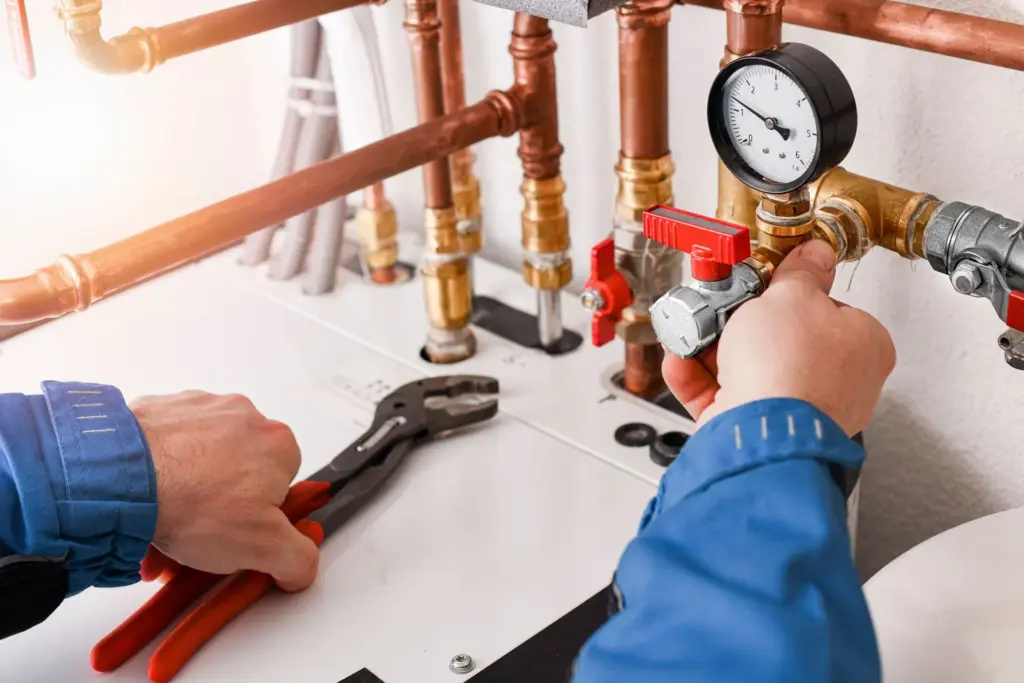
A water heater repair visit starts with draining the tank partially or fully, depending on what we are working on. If it is a gas unit, we check burner assembly, thermocouple or igniter, and venting. Venting matters more than people think. An older Hamilton basement with a masonry chimney may have a water heater and a boiler sharing a flue that was sized for equipment that is no longer there. If the draft is wrong, that is a safety issue before it is ever a repair issue.
On electric units we are looking at the heating elements, thermostat, and the wiring feeding the unit. Most residential electric water heaters run on a 30-amp double-pole breaker with 10-gauge wire, and if that breaker has been tripping or the wire looks undersized for the unit installed, that gets flagged.
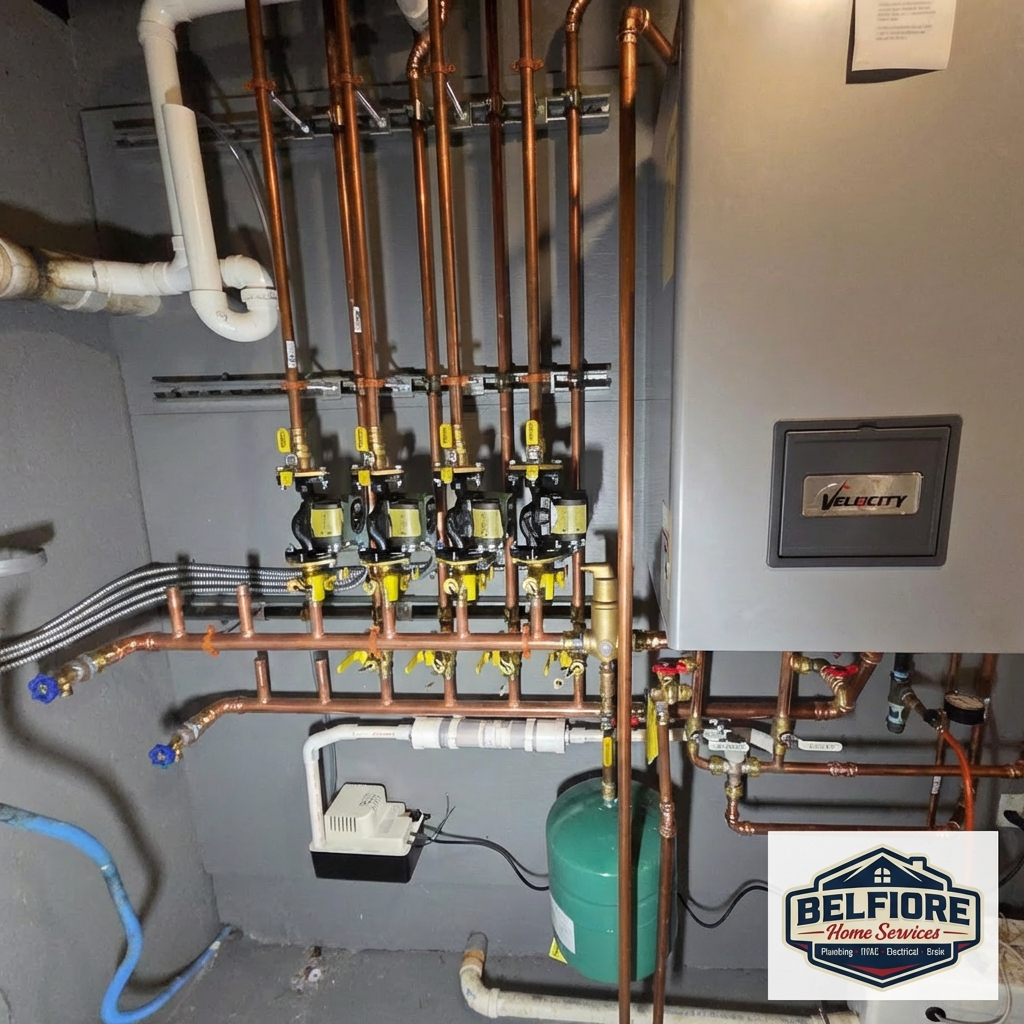
For gas line work, sizing matters. A water heater added to a system that already runs a boiler and a range needs the branch line checked to make sure it can deliver enough gas volume at the right pressure. Undersized gas lines are a common finding in older Hamilton homes where equipment has been added or upgraded over the years without anyone rechecking the whole system.
Most repair visits leave you without hot water for a few hours, not a few days. If parts need to be ordered, we tell you that up front and give you a real timeline, not a guess.
Repair or Replace
This is the section most companies skip, and it is the one that matters most. If your water heater is under ten years old and the problem is a failed thermocouple, a bad heating element, a faulty thermostat, or a leaking fitting rather than the tank itself, repair is usually the right call. Those are straightforward, contained fixes.
Replacement makes more sense when the tank itself is leaking, when the unit is well past ten to twelve years old and starting to show a second or third issue, or when the water heater was undersized for the house from the start and you are constantly running out of hot water no matter what we fix. On well-water homes, we also weigh how much sediment has built up in the tank, because a tank that is half full of scale is not going to respond well to a patch repair.
Chris will tell you straight when a repair is worth doing. If it is not, we will tell you that too, and explain why, in plain terms, before you spend money on a fix that will not hold.
What It Costs
Cost depends on what is actually wrong. A thermocouple or igniter replacement is a small, contained job. A heating element swap on an electric unit is similar. Gas valve replacements, venting corrections, or work that involves upgrading a gas line to meet current sizing requirements cost more because there is more labor and material involved. We look at your specific unit and give you a number before any work starts, not an estimate that changes once we are elbow-deep in your mechanical room.
How Long It Takes
Most straightforward repairs, a bad element, a failed thermostat, a leaking fitting, are same-visit fixes. You will have hot water back within a few hours. If a part is not something we carry on the truck, we will let you know the wait time honestly rather than guess. Venting corrections or gas line sizing work can take longer, sometimes a half day, because there is more system to check and correct properly.
Common Questions
Is it worth repairing an older water heater or should I just replace it?
It depends on what is broken, not just how old the unit is. A ten-year-old tank with a failed thermocouple or heating element is usually worth fixing. A tank that is leaking from the body itself, or one that has already had two or three issues, usually is not. We will tell you which situation you are in.
Does well water affect water heater repairs in Hamilton?
Yes. Well water carries more sediment, iron, and hardness than town water, which builds up inside the tank and shortens the life of heating elements and anode rods. On well-water homes we check for sediment buildup as part of any repair visit, and filtration is often worth discussing.
My street does not have natural gas. What are my options?
A lot of Hamilton is on oil heat or propane rather than natural gas. That affects what water heater setup makes sense for your home, and we factor it into any repair or replacement conversation rather than assuming gas is available.
How long will I be without hot water during a repair?
Most repairs are same-visit work, meaning a few hours without hot water while we drain, repair, and refill the tank. If a part needs to be ordered, we will give you an honest timeline rather than a guess.
Do you work on both gas and electric water heaters?
Reach Out for Water Heater Repair
If your water heater is leaking, not producing enough hot water, or making noises it did not used to make, do not wait for it to fail completely on a cold morning. Call {PHONE} and we will get a plumber out to your Hamilton home to diagnose it properly. If it is a repair, we will fix it. If it is not, we will tell you why and walk you through what replacement looks like.
Contact information
Talk to Chris
Chris runs the plumbing side of Belfiore Home Services, and he is the one who will look at your water heater, tell you what is actually wrong with it, and lay out your real options. This is a Salem-based company and we work across Hamilton regularly, so we know the mix of oil, gas, propane, and well water you are dealing with here. Call {PHONE} and describe what is happening. We will tell you what we think it is before we ever get in the truck.