
Ceiling Fan and Light Fixture Installation in North Andover, MA
A lot of North Andover homes were built before central air was standard, which means bedrooms and sunrooms lean on ceiling fans to move air in July and August. Many of those same rooms still have a builder-grade fixture box from the 1970s or 80s, or nothing but a switched outlet where a fan should go. If you’re planning a remodel or just tired of window units, the wiring underneath the ceiling matters more than the fan you pick.
Why North Andover Homes Need This
North Andover runs from the historic town center, with its older colonials and capes, out to newer construction near the Berry Corners and Sutton Pond areas. The older housing stock is the part that needs a careful look before a fan or fixture goes in. Homes from before the 1960s often still have cloth-insulated wiring or, in some cases, remnants of knob and tube in ceiling runs that were never touched during later renovations. Some of these houses are still running on 60 amp electrical services, which was fine for a few lamps and a refrigerator but was never sized for a ceiling fan with a light kit, a remote receiver, and everything else on that circuit.
We also see the older generation of panels out here – Federal Pacific Stab-Lok and Zinsco panels turn up in North Andover often enough that we check for them as a matter of course. Neither brand is manufactured anymore because of known breaker failures, and if you have one, it’s worth a conversation before we add load to that panel, even something as modest as a ceiling fan.
On the other end of town, the post-war and modern homes usually have adequate service size, but open-concept remodels and finished basements mean fans and fixtures are going into rooms that didn’t exist as living space when the house was built. That’s new wire, new boxes, and sometimes a new circuit, not just a fixture swap.
What the Work Involves
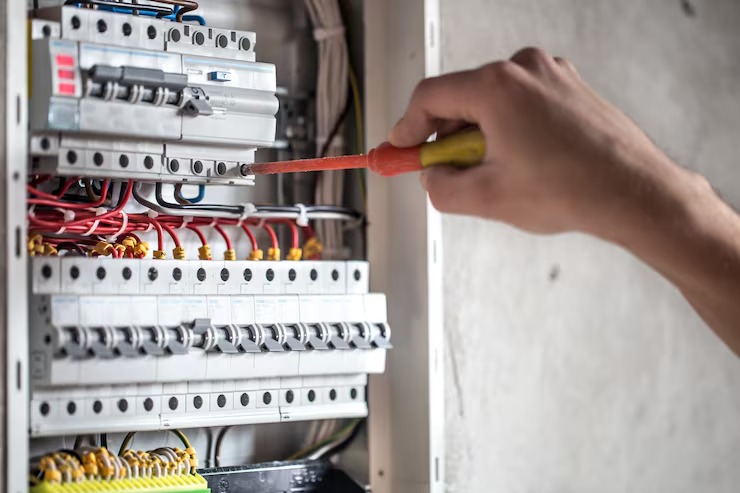
Every job starts the same way: the power to that circuit gets shut off at the panel, not just the switch, before anyone touches the wiring. For a straight swap – old light fixture out, ceiling fan in – the power is usually off for under an hour. That covers checking the existing box, upgrading it to a fan-rated ceiling box if it isn’t already one, and confirming the wire gauge and grounding are correct for the new load.
Fan-rated boxes matter. A standard light fixture box is not built to carry the weight and vibration of a spinning fan, and a fan that comes loose from an undersized box is a real hazard, not a theoretical one. If your ceiling doesn’t have solid framing where you want the fan, that’s an extra step – either a brace bar that spans between joists or a direct mount to a joist, depending on what’s up there.
If we’re adding a switch leg for separate fan and light control, or running a new circuit because the existing one is already loaded with other rooms, that’s more involved. It can mean fishing wire through finished ceiling and wall cavities, which sometimes means a small amount of drywall work, patched but not painted, that’s on you or your painter afterward. National Grid or Eversource, whichever serves your part of North Andover, isn’t involved for this kind of work unless we’re also upgrading your main service size – that part is entirely on our side.
What It Costs
A straight ceiling fan swap on an existing fan-rated box, ladder access, no wiring changes, typically runs in the {PRICE_LOW} range. Add a new switch leg, a brace-bar box installation in a ceiling with no existing fixture, or a run through finished space, and you’re closer to {PRICE_HIGH}. Light fixture installation alone, without a fan, is usually on the lower end of that range unless it’s a heavy chandelier that needs additional ceiling support.
What moves the price: ceiling height and whether we need scaffolding instead of a ladder, whether the existing box is fan-rated, how much wire has to be fished versus reused, and whether the room is on a circuit that already needs attention for other reasons. Multiple fans installed on the same visit usually cost less per fan than one-off trips. Brandon will give you a firm number after seeing the ceiling and the panel, not a phone estimate.
How Long It Takes
One fan on an existing fan-rated box: often 30 to 60 minutes of actual work. A fixture-to-fan conversion with a new box and brace bar: usually 1 to 2 hours. A new switch leg or a run to a room with no existing ceiling wiring can run half a day depending on ceiling access and how far the wire has to travel. If you’re having several fixtures done at once – common in a North Andover kitchen or bedroom remodel – we’ll block out the time up front so you’re not guessing.
Permits and Inspection
Straightforward fixture and fan swaps on existing wiring generally don’t require a permit. New circuits, new switch legs, or any work that adds load beyond what’s already there does, under Massachusetts electrical code. When a permit applies, we pull it, the town inspector signs off on the finished work, and you get a paper trail showing licensed work was done and inspected. [EXTERNAL LINK: Massachusetts Board of State Examiners of Electricians licensing lookup – lets homeowners verify any electrician’s license before hiring]. That paper trail matters if you sell the house later or if an insurance adjuster ever asks who did the electrical work.
Common Questions
Can I install a ceiling fan myself if I already have a light fixture there?
You can, but the box matters more than the wiring. Most existing fixture boxes are not rated to hold a fan's weight and vibration. If the box isn't fan-rated, it needs to be replaced before a fan goes up, and that's the part most DIY installs miss.
Do I need a bigger electrical panel just to add a ceiling fan?
Usually not. A single fan is a small load. The panel becomes relevant if your service is already at 60 amps with an older Federal Pacific or Zinsco panel and you're adding several fans, switch legs, or other new circuits at the same time.
How do I know if my North Andover home has knob and tube or cloth wiring?
If your house was built before the 1960s and hasn't had a full rewire, it's worth checking. We can tell fairly quickly once we open a ceiling box or look in the panel and basement runs.
Can you install a fan where there's no existing electrical box at all?
Do you install smart or remote-control ceiling fans?
Reach Out for Ceiling Fan and Light Fixture Installation
We’re a Salem-based company and we work across the North Shore, North Andover included. It’s a longer drive out from Salem than some of our closer towns, so we schedule these visits rather than promising a same-hour arrival – but the work itself is the same licensed job whether it’s five minutes from our truck or forty. Call {PHONE} to set up a time that works for your house.
Contact information
Reach Out for Ceiling Fan and Light Fixture Installation
Whether it’s one fan in a primary bedroom or a full round of fixtures through a remodel, the goal is the same: a fan that’s mounted securely, wired correctly for the load, and signed off if the work required it. That’s the difference between a fixture that lasts and one that rattles loose in a few years.
Talk to Brandon
Brandon handles the electrical side of the business and does this kind of work regularly across North Andover. If you're not sure whether your ceiling can take a fan, or you're staring at a panel with breakers you don't recognize, describe what you've got and he'll tell you plainly what's involved before anyone shows up.