
Home Rewiring in Andover, MA
Home Rewiring in Andover
Andover has a lot of housing stock from before 1960, plenty of it in the historic center and along the older streets branching off Main Street, and a fair amount of it still carrying wiring that was never meant to run a modern kitchen, a heat pump, and a home office at the same time. If your house has a mix of outlets that don’t work, breakers that trip when you run the microwave and a space heater together, or a panel that looks like it hasn’t been touched since the Nixon administration, that’s not bad luck. That’s a service that was sized for a different era of living.
Why Andover Homes Need This
Andover’s housing runs two directions. You’ve got the older center of town, with colonials and capes built with 60 amp services, cloth-insulated wire, and in a good number of cases actual knob and tube runs still live in the attic or behind plaster walls. Then you’ve got the post-war and newer stock further out, which is often on 100 amp service that was fine in 1975 but is thin by today’s standard, especially once you add central air, an EV charger, or a finished basement with its own circuits.
Knob and tube isn’t automatically dangerous, but it has no ground, it doesn’t like being wrapped in modern insulation, and most insurers in Massachusetts will flag it or decline coverage outright once they see it on an inspection report. Cloth wiring gets brittle with age and the insulation cracks. A 60 amp panel simply can’t support the load a remodeled Andover kitchen puts on it: a range, a dishwasher, a microwave, and small appliance circuits all pulling at once. We also still run into Federal Pacific and Zinsco panels in this age of home, both of which have a documented history of breakers that fail to trip when they should. That’s the kind of thing worth fixing before it becomes the reason a fire starts, not after.
What the Work Involves
A full rewire means running new copper conductors, properly gauged for each circuit, from a new panel out to every outlet, switch, and fixture in the house. On a 60 amp knob and tube service that usually means a jump to 200 amp, which gives you headroom for the range, the dryer, central air, and whatever gets added down the road, an EV charger included.
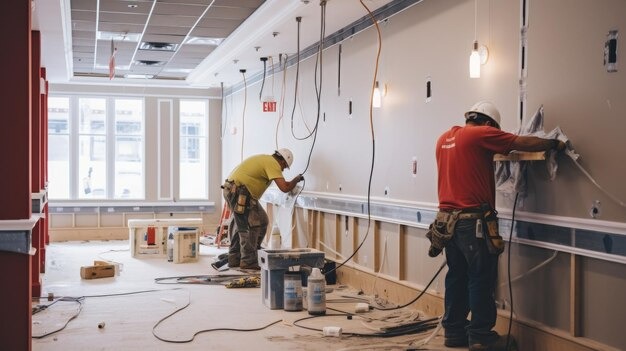
Here’s how the sequence actually goes. The utility, National Grid in most of Andover, has to disconnect and later reconnect service at the meter, and that scheduling is on their timeline, not ours. Once power is off, we open walls and ceilings where needed to fish new wire, replace old cloth or knob and tube runs entirely rather than patch them, and land everything at a new panel with breakers sized correctly for each circuit, whether that’s 15 amp for lighting, 20 amp for kitchen small appliance circuits, or 30 to 50 amp for a range or dryer.
Power is out for the working portion of the house for the bulk of a work day, sometimes longer on a full whole-house job, and we plan around that with you rather than surprise you the morning of. When the rough wiring is in, the local inspector checks it before we close up walls. Once it passes, we finish covers, plates, and fixtures, and the town does a final inspection before the job is signed off.
What It Costs
A whole-home rewire in a house Andover’s size and age typically runs {PRICE_LOW} to {PRICE_HIGH}, and the spread is wide because the variables are real. A single-story cape with an accessible attic and basement is a different job than a three-story colonial with finished ceilings on every floor and plaster walls that need patching after. Panel size matters too. Going from 60 amp knob and tube straight to a 200 amp service with new grounding is more work than upgrading an existing 100 amp setup that just needs the branch circuits redone.
Other things that move the number: how much of the house has finished walls that need to be opened and repaired, whether the attic and basement are easy to work in or tight and finished, and whether you’re adding capacity for things like a heat pump, an EV charger, or a hot tub while the walls are already open. We’ll walk the house with you and give you a number based on what’s actually there, not a phone estimate.
How Long It Takes
Most whole-home rewires in Andover run three to seven working days, depending on square footage and how much of the house needs new wire versus how much can be reused. A smaller cape with an open attic and basement can move faster. A larger colonial with finished ceilings on multiple floors, where we’re patching drywall or plaster behind us, takes longer, and you should plan for some rooms to be without power for stretches during the work, not just at the very end.
Permits and Inspection
Rewiring work in Andover requires an electrical permit through the town, and it gets inspected, both rough-in before walls close and final once everything is finished and live. That’s Massachusetts law, not a formality we’re adding on. It also means a town inspector, someone with no stake in the job, is checking Brandon’s work before it gets covered up. If a contractor tells you a permit isn’t necessary for a rewire, that’s a sign to find someone else. Unlicensed and unpermitted wiring is common enough on the North Shore that insurance companies specifically ask about it, and it’s the first thing that gets flagged during a home sale inspection.
Common Questions
Is knob and tube wiring illegal in Massachusetts?
It's not automatically illegal, and existing knob and tube can sometimes stay in place if it's in good condition and not covered by insulation. The bigger issue is usually insurance: many carriers won't write or renew a policy on a home with active knob and tube, which pushes most Andover homeowners toward a rewire whether or not the wiring itself is currently working.
Do I have to move out of my house during a rewire?
Most homeowners stay in the house. Power gets shut off room by room or for the working portion of the house during the day, and we coordinate timing so you're not without power overnight unless the job specifically requires it.
Will my walls need to be repaired after a rewire?
In most cases, yes, some drywall or plaster opening is needed to fish new wire, and we patch those areas before we leave. Homes with accessible attics and basements need less wall opening than homes where the only path for new wire is through finished ceilings.
How do I know if my panel is a Federal Pacific or Zinsco?
Both brands are printed on the panel cover and breakers, and Brandon can identify them in a couple of minutes during a walkthrough. If you've got one of these panels, it's worth having it looked at even if you're not planning a full rewire yet.
Can I add an EV charger or heat pump circuit during the rewire?
Yes, and it's often the smart time to do it. Adding a dedicated 240-volt circuit while the panel is already being upgraded and walls are open costs less than coming back for it as a separate job later.
Reach Out for Home Rewiring
Andover is on the western edge of where we work, so we’re upfront that we’re not going to be at your door in twenty minutes. We schedule these jobs in advance because a rewire isn’t a same-day fix, it’s planned work done right. Call {PHONE} and we’ll set up a time to come look at the panel and the wiring and talk through what your house actually needs.
Contact information
Talk to Brandon
Brandon is the electrician here, he’s the one who’ll walk your attic and basement, look at your panel, and tell you straight what’s original, what’s been patched over the years, and what actually needs to come out. He left union work to run electrical for the family business, and a rewire like this is exactly the kind of job that’s worth a licensed set of eyes rather than a guess.