
Ceiling Fan and Light Fixture Installation in Lynnfield, MA
Most of Lynnfield went up in the postwar boom and the ranch and colonial waves that followed through the 70s and 80s, on lots big enough that central air and finished lower levels came later, as add-ons. A lot of those houses still have the ceiling boxes and switch legs the original builder put in, sized for a single bulb fixture, not a fan or a heavier modern light. If you’re finally swapping that dining room chandelier or adding a fan to the family room over the garage, the box and wiring behind the plaster or drywall matter as much as the fixture you picked out.
Why Lynnfield Homes Need This
Lynnfield’s housing stock is old enough that we still run into some real issues once we open a ceiling box. Homes built before the mid-1960s can still have knob and tube wiring feeding upstairs bedrooms, and cloth-insulated conductors that have gone brittle are common in houses that haven’t been rewired since they were built. Add to that the number of Lynnfield homes still running a 60 amp or 100 amp electrical service from an era when nobody was running a fan, a fridge, central air, and a home office off the same panel, and you start to see why a simple fixture swap sometimes turns into more.
The bigger pattern in this town is what people are adding now. Lynnfield’s larger lots and detached garages make it a natural fit for EV chargers, and a lot of homeowners here are also finishing basements or adding heat pumps, all of which pull load the original panel was never built to carry. A ceiling fan install is often the first time in years an electrician is actually inside the wall cavity, and it’s a good moment to flag whether the box, the wire gauge, and the breaker feeding that circuit are actually up to code.
What the Work Involves
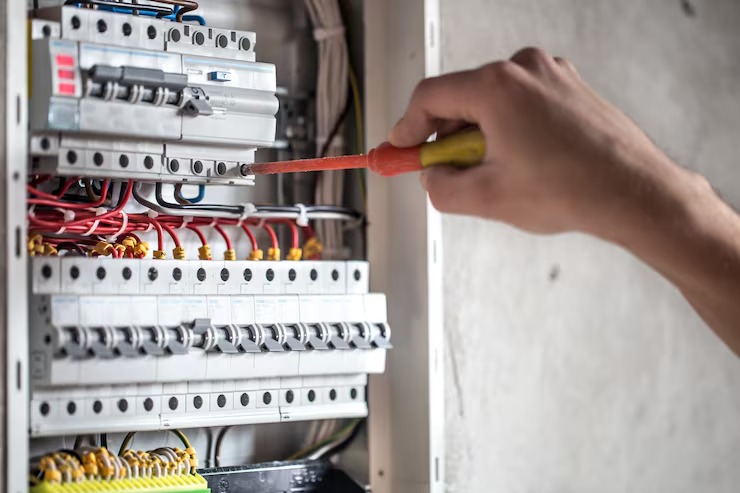
Brandon shuts off the circuit at the panel before touching anything, not just the switch. For a straight fixture swap where the existing box is rated for a fan (look for a stamp inside the box, usually 50 lbs static or a fan-rated marking), the job is quick: disconnect the old fixture, confirm the box and mounting bracket can handle a fan’s dynamic load, wire in the new unit with proper wire nuts, and test it.
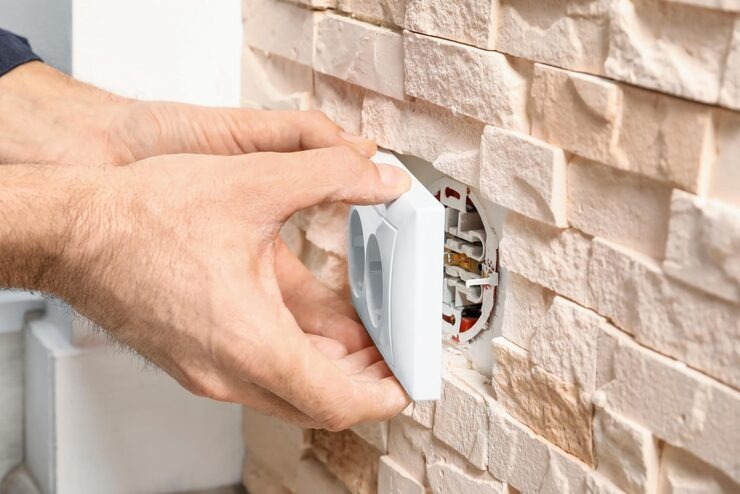
Where it gets more involved is when the existing box is a flat pancake box meant for a light, not a fan. Ceiling fans move air and vibrate, and a box that isn’t rated for that will eventually work loose from the joist. In that case we install a fan-rated box, sometimes with a brace bar that spans between joists if there’s no framing directly above the fixture location. If you’re adding a wall switch to control fan speed and light separately where there wasn’t one before, that means fishing new cable, which is more time but doesn’t usually mean opening walls in a finished ceiling if we can run it through the attic.
The power to that circuit is out for the duration of the work, typically under an hour for a straight swap. The utility isn’t involved at all for fixture work like this. It’s entirely inside the house, on the electrician’s side of the meter.
What It Costs
A single ceiling fan or light fixture swap on an existing, properly rated box runs {PRICE_LOW} to {PRICE_HIGH} in most Lynnfield homes. What moves that number: whether the box needs to be replaced or upgraded to fan-rated, whether we’re fishing new switch wire, ceiling height and access, and how many fixtures you’re doing at once. Multiple installs on the same visit usually cost less per fixture than scheduling them separately, since the first one covers most of the setup time.
If we open the box and find aluminum wiring, knob and tube, or a breaker that’s clearly undersized for the load, we’ll tell you before doing anything further and give you a real number for the fix. We don’t add work you didn’t ask for without walking you through it first.
How Long It Takes
One fixture on a fan-rated box is usually 45 minutes to an hour, start to finish. Add a new switch or a box upgrade and plan for two to three hours. If you’re doing several rooms in one visit, or if attic access is tight and cable has to be fished a longer run, we’ll give you a realistic window before we start rather than a guess.
Permits and Inspection
Electrical work in Massachusetts is regulated, and fixture and circuit work is no exception. A straight like-for-like fixture swap generally doesn’t trigger a separate permit, but any work that involves new wiring, a new box, or a new switch leg is permitted through the local building department and inspected before it’s closed up. That’s not paperwork for its own sake. It’s the difference between a licensed electrician’s work and what a handyman pulls out of a truck. Belfiore pulls permits when the work requires it and schedules the inspection, so there’s a record that the job was done to code, which matters when you sell the house.
Common Questions
Can I install a ceiling fan on an existing light fixture box myself?
Only if that box is rated for a fan, which most older light boxes are not. A box rated for a static light fixture can fail under the weight and vibration of a fan, and if the circuit or box isn't correct, it's also not something a home insurer will look kindly on after a problem. It's worth having an electrician check the box before you buy the fan.
Does Lynnfield require a permit for a ceiling fan installation?
A direct swap of one fixture for another on an existing, properly rated box usually doesn't need a permit. Anything involving new wiring, a new box, or a new switch does get permitted and inspected, and Belfiore handles that as part of the job.
Why did my ceiling fan install turn into a bigger job?
Usually it's the box. A lot of Lynnfield homes have flat pancake boxes meant for a light fixture, not a fan, and those need to be swapped for a fan-rated box, sometimes with a brace bar. Older wiring, aluminum conductors, or an undersized breaker can also add work, and we'll always explain it before proceeding.
How many ceiling fans can I install at once?
Will installing a fan affect other electrical work I'm planning, like an EV charger?
Reach Out for Ceiling Fan and Light Fixture Installation
If you’ve got a fixture picked out, a fan you’re ready to hang, or a room that’s had a bare bulb hanging from a box for longer than you’d like to admit, call {PHONE}. We work across Lynnfield and can usually get a look at the job and a straight answer on what it’ll take within a few days.
Contact information
Reach Out for Ceiling Fan and Light Fixture Installation
For reference on box ratings and what’s required for fan support, the National Electrical Code sets the standard electricians in Massachusetts work from. [EXTERNAL LINK: NEMA/NFPA overview of the National Electrical Code, referenced for box and fixture support requirements] is a useful starting point if you want to see what the code actually requires before we’re standing in your living room.
Talk to Brandon
Brandon is the electrician at Belfiore, and he's the one who'll open the box, look at what's actually behind your ceiling, and tell you straight whether it's a quick swap or something that needs more work. If you're weighing a fan install against bigger plans for the house, an EV charger or a panel upgrade down the line, that's a conversation worth having up front rather than fixture by fixture.