Gas Line Installation and Repair in Ipswich, MA
Ipswich has a lot of houses where the heating system predates the gas line running to the street. Steam boilers, converted coal furnaces, water heaters sized for a family that hasn’t lived there in decades. When a gas line needs work in a house like that, the fitting is only half the job. The other half is figuring out what that line actually needs to feed, now and for whatever you’re replacing it with next.
Gas Line Installation and Repair in Ipswich
Chris handles the plumbing side of Belfiore Home Services, and gas fitting is licensed work, full stop. There’s no version of this job that’s a DIY project or a handyman favor. A gas line has to be sized correctly for the BTU load of every appliance on it, pressure tested, and signed off before it’s buried or boxed in behind a wall. We do that work across Ipswich the way it’s supposed to be done: sized right, tested, and documented.
This isn’t a trade where you want the cheapest bid. It’s a trade where you want the license checked and the paperwork filed. That’s the whole pitch.
What Ipswich Homes Typically Have
Ipswich has one of the largest concentrations of First Period and colonial-era housing on the North Shore, and it shows in the mechanical systems. A lot of these homes still run old steam boilers or converted gravity-hot-water systems, some of them decades past their efficient service life. Water heaters are often undersized for the house, especially where additions or finished basements have added fixtures without anyone touching the water heater.
Gas availability itself is not uniform here. Parts of Ipswich are on natural gas mains, and parts of town, especially out toward the more rural edges near Topsfield and the Great Neck side, run on oil or propane because gas was never extended to the street. That single fact changes everything about a boiler or tankless water heater conversion. Before we talk options, we confirm what’s actually available at your address. We won’t quote you a gas conversion if gas isn’t there to convert to.
Well water is common enough in the outer parts of town that it’s worth mentioning even on a gas page. It doesn’t change the gas fitting itself, but if you’re replacing a water heater at the same time, well water with iron or sediment changes what fixtures and connections we recommend.
What the Work Involves
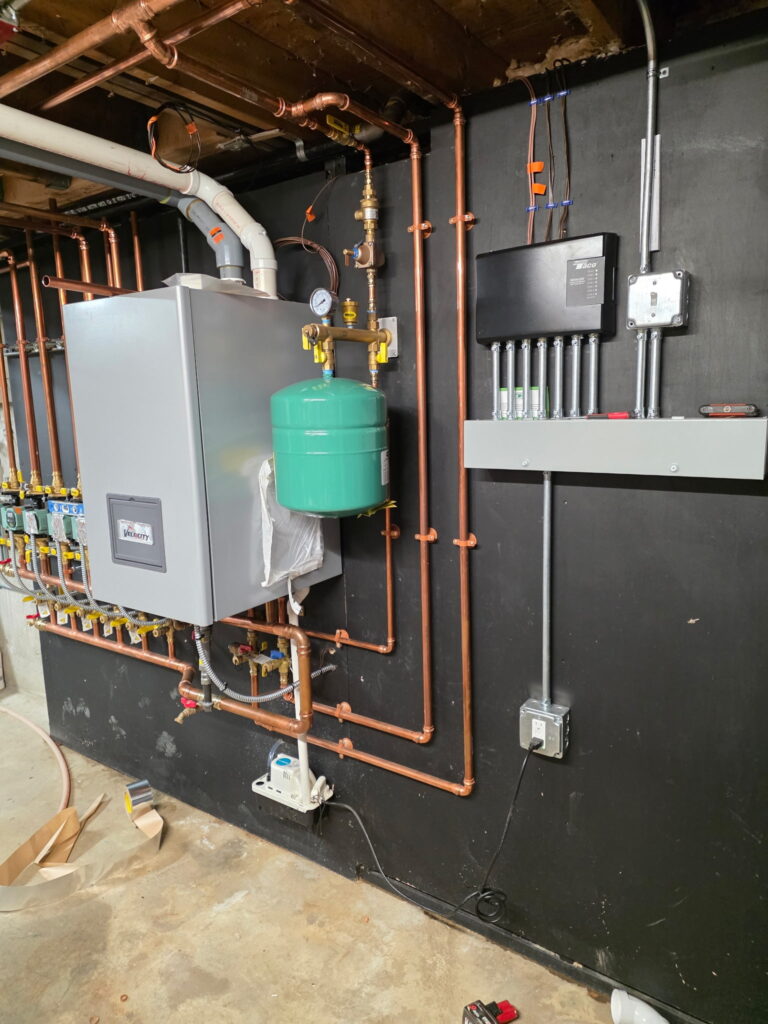
A gas line repair or new run starts with shutting down and depressurizing the section of line involved. If we’re extending a line to a new appliance, boiler, range, or generator, we calculate the total BTU demand of everything on that line and size the pipe accordingly. Undersized gas lines are one of the more common problems we find in older Ipswich houses. A line that was fine for a small gas range in 1975 is not fine once someone’s added a gas dryer, a tankless water heater, and a whole-house generator to the same run.
Every new or repaired section gets pressure tested before it’s connected to any appliance. Venting matters just as much as the gas itself. A boiler or water heater on a shared flue with other appliances needs to be checked for proper draft, especially in older homes where a chimney was sized for a different heating system entirely. If we’re pulling an old boiler and running a new appliance, we check whether the existing venting can handle the new unit or whether it needs to be relined.
For most repairs, you’re looking at a few hours without gas to the affected appliance. A full reroute or a new gas service for something like a generator or a boiler conversion is a longer day, and if the town requires an inspection, we schedule around that rather than skip it.
Repair or Replace
Most gas line calls in Ipswich are not full replacements. A cracked fitting, a corroded union, a line that was never sized right for one specific appliance, these are repairs, not reasons to redo the whole system. If the rest of your gas piping is in good shape and properly sized, we fix the section that’s failing and leave the rest alone.
Where we tell you to replace instead of repair: black iron pipe with visible corrosion along multiple sections, a system that was sized for appliances you no longer have and undersized for what you do have now, or a line that’s been patched more than once in the same area. If your boiler is on its last legs anyway, it’s worth talking about gas line capacity at the same time as the boiler decision, not as two separate visits down the road.
We’ll tell you flat out when a repair is the right call. That’s not the answer that makes the bigger invoice, but it’s the accurate one, and it’s the reason people call Chris back the next time something comes up.
What It Costs
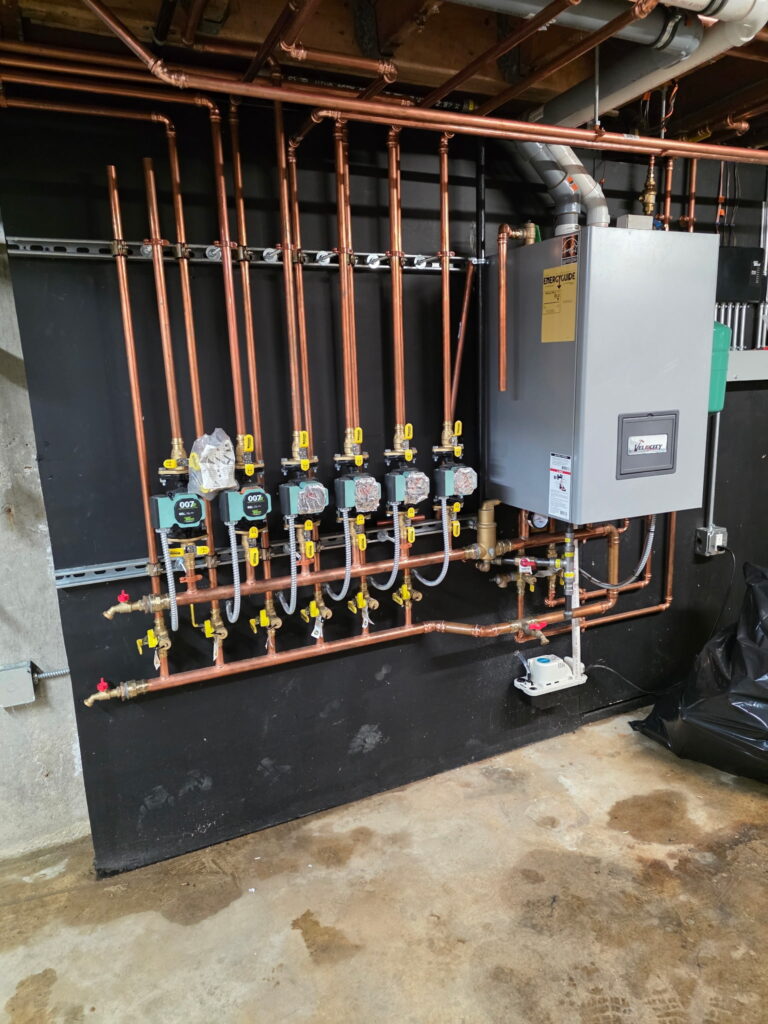
Gas line pricing depends on length of run, whether it’s exposed or has to be fished through finished walls or under a slab, and whether a permit and inspection are required, which in Massachusetts they generally are for any new gas work. A single fitting repair is a different scope than extending a line from the meter to a new generator pad on the far side of the house. We’ll give you a firm number in {PLACEHOLDER_PRICE} before we start, once we’ve seen the actual run and the appliances involved. We don’t do this over the phone from a description.
How Long It Takes
A straightforward repair, like a fitting or a short section of pipe, is usually a same-day job with a few hours of downtime on that appliance. New line installations, especially for a whole-house generator or a boiler conversion, take longer and may need a town inspection before the gas can be turned on and the appliance fired up. We’ll tell you the realistic timeline, including inspection scheduling, before we start rather than after.
Common Questions
Do I need a permit for gas line work in Ipswich?
Yes. Any new gas line installation or significant repair requires a permit and inspection in Massachusetts. We handle that paperwork as part of the job so you're not left tracking down the town on your own.
Is natural gas available everywhere in Ipswich?
No. Parts of town are on gas mains and parts still run on oil or propane because the gas line was never extended to that street. We confirm what's actually available at your address before quoting any conversion work.
Can you just repair a section of gas pipe instead of replacing the whole system?
In most cases, yes. If the rest of your gas piping is properly sized and free of corrosion, we repair the failing section and leave the rest alone. We only recommend full replacement when the pipe or its sizing genuinely can't support what's connected to it.
How long will I be without gas during a repair?
Most single-fitting repairs are a few hours. Larger jobs, like extending a line to a new generator or converting a boiler, take longer and may involve a town inspection before the gas gets turned back on.
Does well water in Ipswich affect gas line work?
Reach Out for Gas Line Installation and Repair
We work across Ipswich and the rest of the North Shore, from the old First Period homes near the town center to the newer construction further out. Call {PHONE} to get a licensed plumber out to look at your gas line, or to talk through a boiler or water heater project where gas availability is part of the decision.
Contact information
Talk to Chris
Chris runs the plumbing side of Belfiore Home Services and handles the gas fitting work himself. If you’ve got a line that’s acting up, an old boiler you’re wondering about, or a generator install you want quoted properly, call and describe what you’re seeing. He’ll tell you straight whether it’s a repair or a bigger job, and won’t pad the estimate to make it sound more urgent than it is.