
Boiler Installation and Replacement in Ipswich, MA
Ipswich has more old boilers per square mile than almost anywhere on the North Shore. Between the First Period houses near the center and the colonials scattered out toward the Rowley line, a lot of homes are still running steam or hot water systems that were sized for a different era, and a lot of water heaters in those same basements are quietly running on borrowed time.
Boiler Installation and Replacement in Ipswich
Chris handles boiler work for homeowners across Ipswich, from the historic district out to the farm properties off Linebrook Road. Some calls are straightforward swaps: same fuel, same location, a newer and more efficient unit going in where the old one sat for thirty years. Others take more thought, especially in older homes where the heating system was added or altered piecemeal over the decades and the new boiler has to work with radiators, baseboard, or a mix of both.
Either way, the goal on the first visit is the same: look at what you have, tell you honestly what shape it’s in, and lay out what a replacement would actually involve for your specific house.
What Ipswich homes typically have
Ipswich’s housing stock skews older than most of the North Shore, and it shows in the mechanical rooms. Steam boilers are still common in the antique housing near town, especially homes that have never converted to hot water heat. Out toward the newer subdivisions and the properties built from the 1960s on, cast iron and steel hot water boilers are more typical, often paired with baseboard radiation.
Fuel is the bigger variable. Natural gas runs down some of the in-town streets and along parts of Route 1A, but a large share of Ipswich, particularly the more rural sections, is oil-only or propane. That changes the whole conversation about what boiler makes sense, since an oil-fired replacement and a gas conversion are two different jobs with different costs and different lead times.
Water supply splits too. In-town properties are generally on Ipswich’s public water system, but plenty of outlying homes are still on private wells, which means water heater performance and boiler feed water quality both matter more here than they would in a fully sewered, fully public-water town.
What the work involves
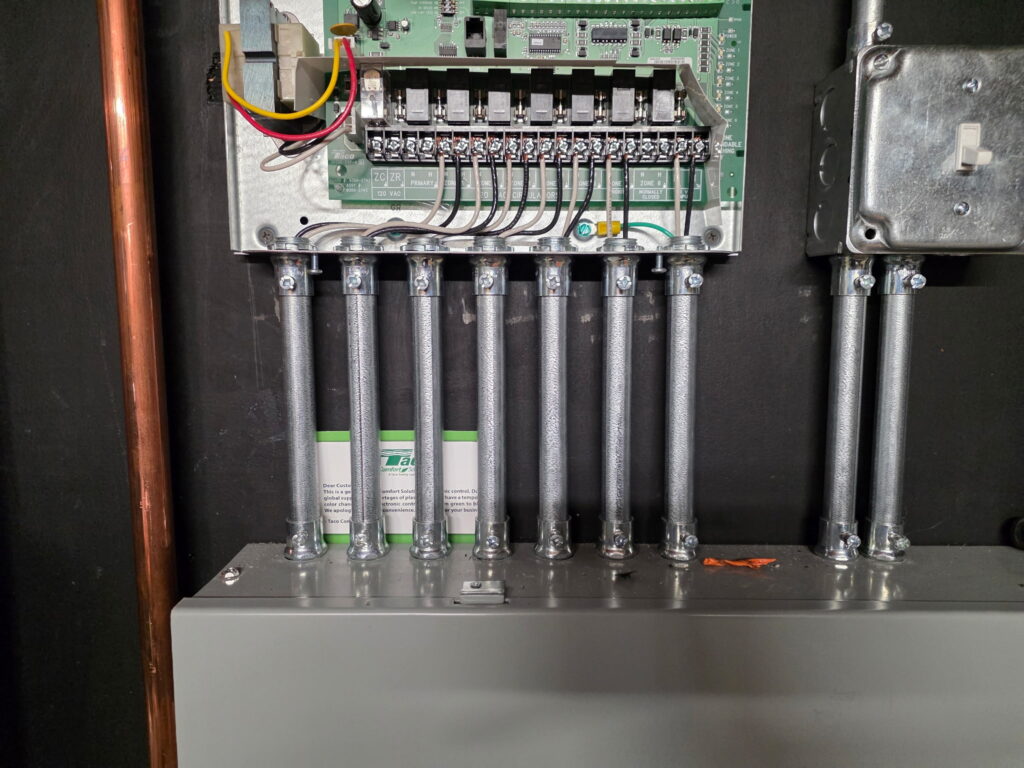
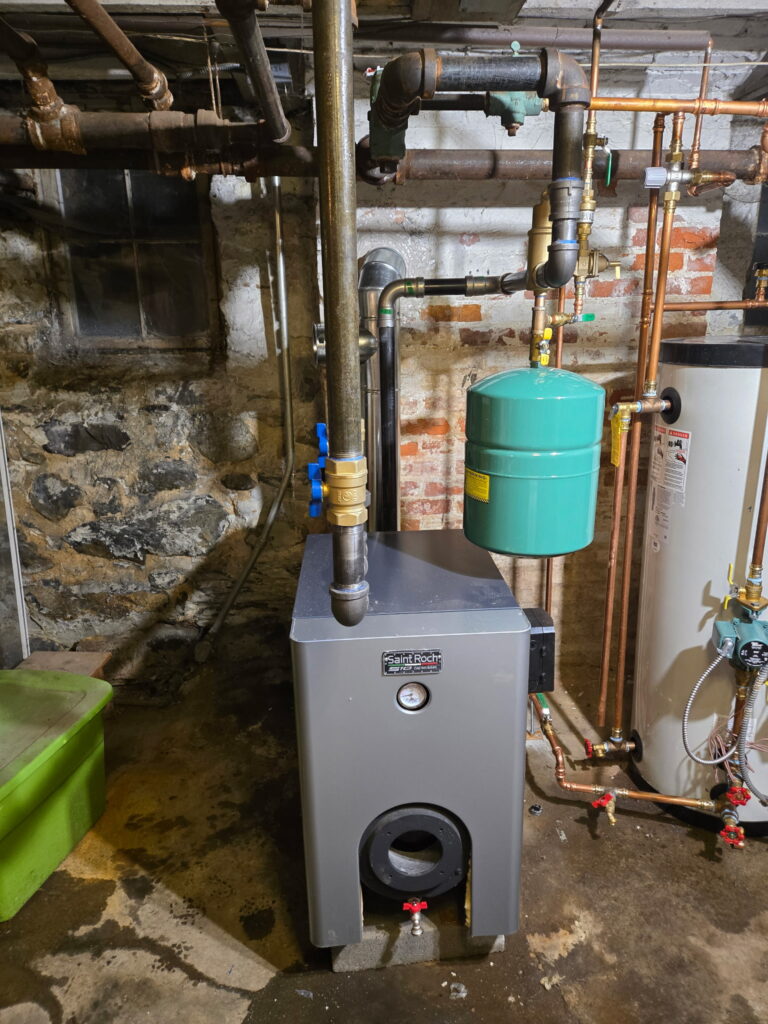
A boiler replacement starts with draining the existing system and disconnecting it from the near-boiler piping, the flue, and the gas or oil line. From there the scope depends on what’s changing. A like-for-like swap, same fuel type and same general output, is the simplest version: new boiler set on the existing pad or a new one if needed, near-boiler piping rebuilt to code, venting reconnected or replaced if the old flue won’t work with the new unit, and the system refilled, purged of air, and fired up.
Gas-fired installations need the gas line checked for proper sizing, since older Ipswich services were sometimes sized for a smaller appliance load than what’s actually running on the house now. Oil-fired systems need the tank inspected, the oil line checked, and the burner set and tested. Any conversion from steam to hot water, or a full fuel-type switch from oil to gas, is a bigger job that touches the venting, the near-boiler piping, and sometimes the radiation system itself.
Most single-boiler replacements take one full working day, and you’re without heat and hot water (if the boiler is a combi or has an indirect tank attached) for that stretch. Conversions and larger jobs can run two days.
Repair or replace
Not every boiler on its last legs needs to come out. If the heat exchanger is sound and the problem is a failed circulator pump, a bad zone valve, an aquastat, or an ignition control, that’s a repair, and it’s usually the right call even on an older unit. A cast iron boiler with no cracks and decent efficiency can run for a long time with the right parts swapped in.
Replacement makes sense when the heat exchanger itself is cracked or leaking, when the boiler is short-cycling because it’s badly oversized for the house, when efficiency has dropped to the point where fuel bills don’t make sense anymore, or when parts for a discontinued model are getting hard to source. Age alone isn’t the deciding factor. A well-maintained 25-year-old boiler can still be a reasonable candidate for repair, while a 12-year-old unit with a cracked block is not.
Chris will tell you straight which category your system falls into, and if a repair gets you several more good years, that’s what gets recommended.
What it costs
Boiler installation and replacement pricing depends on fuel type, boiler size, whether venting or gas line work is needed, and how much of the near-boiler piping has to be rebuilt to bring an older system up to current code. A straightforward like-for-like swap costs less than a fuel conversion or a steam-to-hot-water changeover. {PRICE} is the honest range to expect once Chris has seen the specific system, and every quote is written up before any work starts, with no surprise add-ons once the job is underway.
How long it takes
A standard boiler replacement, same fuel and same heating type, typically takes one day from drain-down to a fired-up, tested system. Jobs that involve a fuel conversion, a full re-pipe of the near-boiler section, or new venting run longer, usually into a second day. Scheduling around Ipswich’s older, harder-to-access mechanical rooms, some in stone-foundation basements with limited headroom, is factored into the estimate up front so there are no surprises on installation day.
Common Questions
Should I repair or replace my boiler in Ipswich?
If the heat exchanger is intact and the issue is a failed part like a circulator, zone valve, or aquastat, repair is usually the right call. Replacement makes more sense when the heat exchanger itself is cracked, the unit is badly oversized and short-cycling, or efficiency has dropped enough that fuel costs no longer make sense.
Is my Ipswich home on gas or oil heat?
It depends where you are. Parts of in-town Ipswich and stretches along Route 1A have natural gas service, but many outlying and rural properties run on oil or propane. Chris will confirm what's available at your address before recommending a fuel type for the new boiler.
How long will my house be without heat during a boiler replacement?
A standard same-fuel replacement usually takes one working day, meaning heat and hot water are out for that stretch. Fuel conversions or jobs requiring new venting or a full near-boiler re-pipe can take a second day.
Do older Ipswich homes need anything special for a boiler installation?
Many of Ipswich's older homes have stone-foundation basements with limited headroom, older gas services that may need to be re-sized, or radiation systems that were altered over the years. Chris accounts for all of this during the initial assessment rather than after the job has started.
Can a well-water home affect boiler performance?
Reach Out for Boiler Installation and Replacement
Call Belfiore Home Services at {PHONE} to schedule a boiler evaluation in Ipswich. Whether it’s a straightforward repair, a like-for-like replacement, or a bigger conversion, you’ll get a clear answer and a written quote before anything gets touched.
Contact information
Talk to Chris
If your boiler is acting up, or if it’s just old enough that you’re wondering how much longer it has, get it looked at before you’re stuck making the decision on the coldest night of the year. Chris will look at the actual system, tell you where it stands, and walk through the real options for your house and your fuel situation, no scripted upsell.