
Electrical Panel Upgrades in Newburyport, MA
Walk through downtown Newburyport and you’re looking at federal-era houses built decades before anyone imagined a heat pump, a range with a self-cleaning oven, or a car that plugs into the garage. Most of that housing stock was originally wired for 60 or 100 amps, sometimes less. The panel that was fine for a few lamps and an icebox in 1920 is not fine for the house that sits on that lot today.
Why Newburyport Homes Need This
Newburyport sits at the top of the North Shore, and it’s got some of the oldest, densest housing on our whole service map. That’s part of the town’s character and part of the problem. A lot of these homes still have some combination of knob and tube wiring in the walls, cloth-insulated circuits nobody’s touched since the last renovation, and an original 60 amp service that was never meant to run central air, an electric dryer, and a home office off the same panel.
We also still find Federal Pacific Stab-Lok panels in Newburyport basements, and the occasional Zinsco. Both were sold heavily in the mid-20th century, and both have a documented history of breakers that don’t trip when they should. That’s not a maintenance issue you patch. That’s a panel you replace or upgrade as part of the same job.
Add in what people are doing to these houses now: converting attics, adding heat pumps for a wing that used to be unheated, putting in an EV charger in a detached garage that predates the car by a century. None of that runs safely off a 60 amp panel, and a lot of it strains even a tired 100 amp service.
What the Work Involves
Brandon starts by looking at what you’ve got and what you’re trying to add. If the goal is more capacity for an EV charger, a kitchen remodel, or a heat pump, the question is whether your existing service and panel can carry the extra amperage or whether both need to move up, say from 100 amps to 150 or 200.
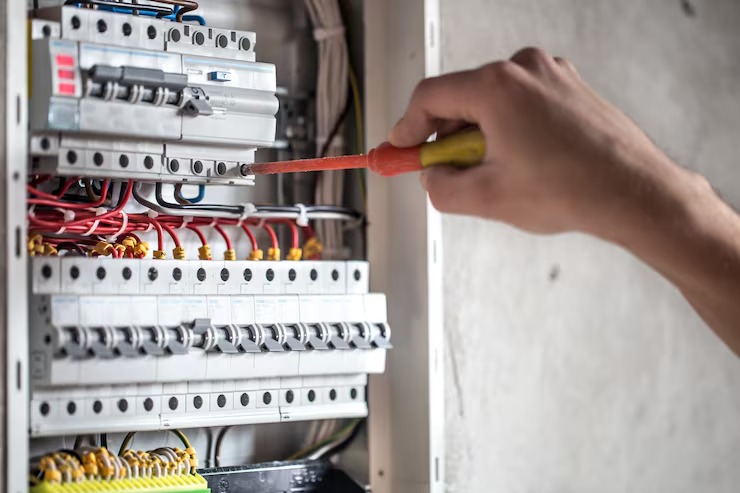
The panel swap itself usually means the power to your house is off for a few hours, not a few days. The utility disconnects power at the meter, Brandon removes the old panel, mounts the new one, and re-terminates every circuit, breaker by breaker. Wire gauge gets checked against the new breaker sizes as each circuit is landed, because a 20 amp breaker on 14 gauge wire is exactly the kind of shortcut that causes problems down the road.
If your existing service size is fine and you just need more circuits or a bigger panel with more open slots, that’s a simpler job and a shorter outage. If the utility drop, meter, or mast also needs to come up in capacity, that’s utility coordination on top of the panel work, and it adds time to the schedule since National Grid has to schedule their end.
What It Costs
Panel upgrades in Newburyport typically run {PRICE_LOW} to {PRICE_HIGH}. Where you land in that range depends on the amperage jump, whether the utility service and mast need upgrading alongside the panel, how much of your existing wiring has to be re-terminated to modern breaker sizes, and how accessible the panel location is. A basement panel with clear access is a different job than one buried behind finished walls in a 1790s house where nothing is square.
Brandon gives you the number after he’s seen the panel and talked through what you’re adding power for. No guessing over the phone, and no padding the estimate because the address is in a historic district.
How Long It Takes
A straightforward panel upgrade, where the service size to the house doesn’t need to change, is usually a single day of work, with the power out for a few hours during the actual swap. If the utility also has to upgrade the drop or the meter socket, plan for the job to stretch over more than one visit, since that step depends on the utility’s schedule and not ours. Brandon will tell you upfront which category your job falls into.
Permits and Inspection
Panel work is permitted in every Massachusetts city and town, Newburyport included. Brandon pulls the permit, does the work to current code, and the job gets inspected by the local electrical inspector before it’s closed out. That inspection is the difference between a licensed job and the unlicensed panel swaps that show up on inspection reports years later when a house gets sold. If you’re ever selling a Newburyport home with a permitted panel upgrade on file, that paperwork is worth having. [EXTERNAL LINK: Massachusetts Electrical Code (527 CMR 12) reference, for homeowners who want to see the actual code the work is inspected against]
Common Questions
How do I know if my Newburyport home needs a panel upgrade?
If your panel is rated 60 or 100 amps, if you're adding an EV charger or heat pump, or if breakers trip regularly under normal use, it's worth having Brandon take a look. A lot of Newburyport's older housing stock was built for a much smaller electrical load than we ask of it today.
Is a Federal Pacific or Zinsco panel actually a problem?
Both brands have a documented history of breakers failing to trip when they should, which is a safety issue, not just an age issue. If you have one of these panels, Brandon will talk through replacing it rather than working around it.
Will upgrading my panel mean rewiring the whole house?
Not necessarily. The panel and the wiring are separate questions. Some homes need only the panel and service size increased. Others, especially those with knob and tube still in the walls, need some rewiring alongside the panel work. Brandon will tell you which situation you're in after he's seen the house.
Does the utility need to be involved?
Reach Out for Electrical Panel Upgrades
If your Newburyport home is still running on a 60 or 100 amp panel and you’re planning an EV charger, a heat pump, or an addition, call Belfiore at {PHONE}. Tell Brandon what you’re adding, and he’ll walk you through what the panel needs to handle it.
Contact information
Talk to Brandon
Brandon is the electrician side of Belfiore. He’s licensed, he left union work to run the electrical side of the family business, and he’s the one who’ll actually be in your basement or attic looking at your panel. He’ll tell you straight whether you need a full service upgrade or just a panel swap, and he won’t sell you more amperage than the project calls for.