EV Charger Installation in Georgetown, MA
A lot of Georgetown’s housing stock dates back to a service size that made sense before anyone was plugging a car into the garage. Add a Level 2 charger to a 100-amp panel that’s already running a well pump, a boiler, and central air, and you’ve got a load calculation problem before you’ve got a charging problem.
EV Charger Installation in Georgetown
You bought the car, or you’re about to. Now you need a charger that actually works with the electrical service your house has, not the one you wish it had. Belfiore installs Level 2 EV chargers across Georgetown – hardwired units and NEMA 14-50 outlets, for Tesla, Ford, Rivian, Chevy, and every other brand that’s showed up on a North Shore driveway in the last few years. Brandon looks at your panel first, tells you what it can handle, and installs to code, not to guesswork.
Why Georgetown Homes Need This
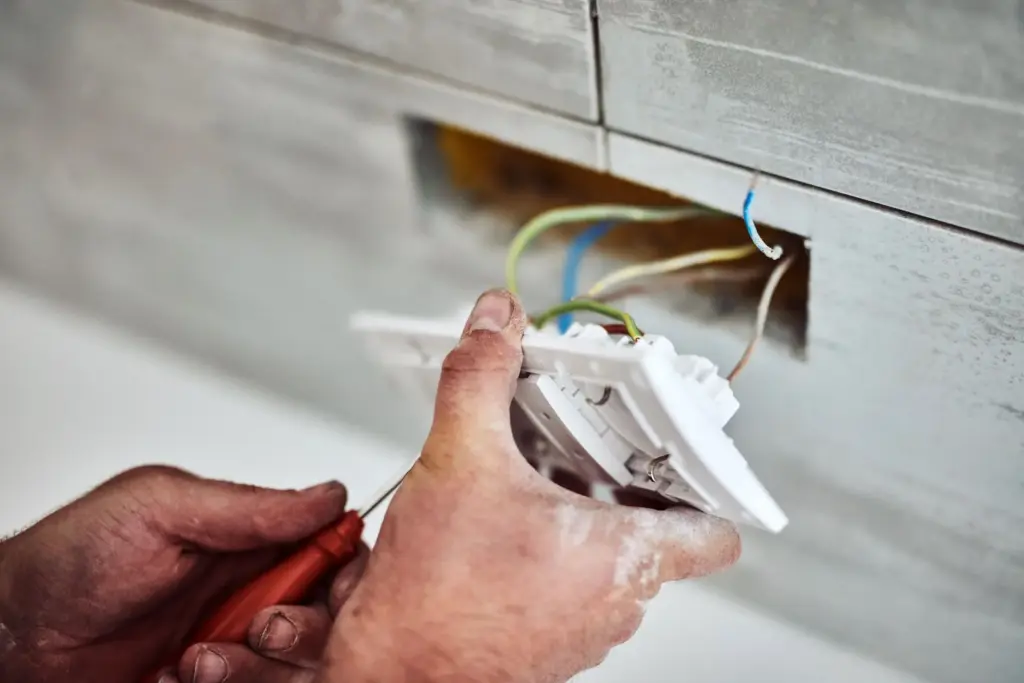
Georgetown is still a lot of well and septic properties on larger lots, with houses that were built or last rewired decades before anyone thought about EV charging as a household load. We still find 100-amp services out here, and on the older farmhouses and capes, occasionally a 60-amp service that’s never been touched since it was installed. Some of these homes still have cloth-insulated branch circuits in the walls, or a subpanel fed by wire that was never sized for a 40 or 50-amp charger circuit on top of everything else.
Georgetown also loses power for stretches when storms come through, more than towns closer to the coast with buried lines, which is why so many of these same homeowners are running a generator too. Adding an EV charger to a panel that’s already carrying a generator interlock, a well pump, and electric heat isn’t a plug-and-play job. It’s a load calculation, and sometimes a panel upgrade, before it’s a charger installation.
What the Work Involves
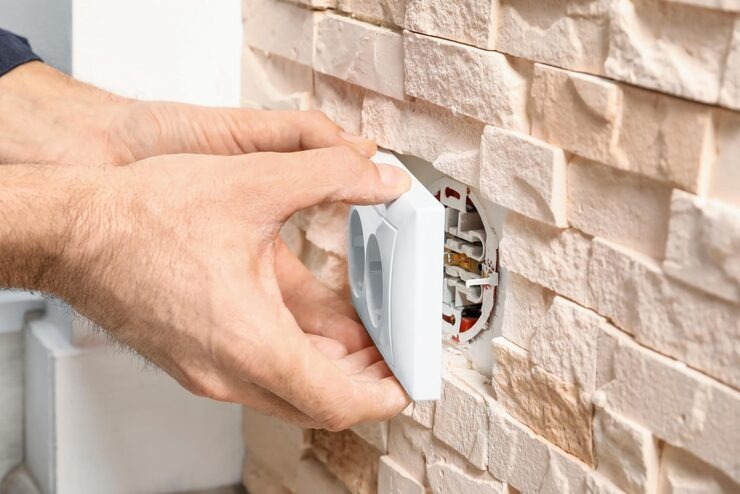
First, Brandon runs a load calculation on your existing panel. He needs to know what your service is rated for and what’s currently drawing on it before he can tell you if a 40, 48, or 60-amp charger circuit fits or if the panel needs work first.
If the panel has room, he’ll run a dedicated circuit from the panel to the charger location, usually 6-gauge or 8-gauge copper depending on amperage, terminate it on a breaker sized to the charger’s requirements, and either hardwire the unit or install a NEMA 14-50 outlet if you’re going with a plug-in charger. The power to that circuit is off for the duration of the work, but it doesn’t touch the rest of your house.
If the panel doesn’t have capacity, that’s a separate conversation about a panel upgrade or a load management device that lets the charger share capacity with the rest of the house without exceeding the service size. Either way, the utility isn’t involved unless your actual service size needs to increase, which is a different job with its own timeline.
What It Costs
A straightforward EV charger installation, where the panel has room and the run from panel to garage or driveway is short, typically runs {PRICE_LOW} to {PRICE_HIGH}. What moves that number: the length and difficulty of the wire run, whether you’re mounting the charger inside a garage or outside on an exterior wall, whether the panel needs a subpanel or load management device added, and whether your existing service turns out to need an upgrade before the charger circuit can go in at all. Brandon gives you the number after he’s seen the panel and the run, not before.
How Long It Takes
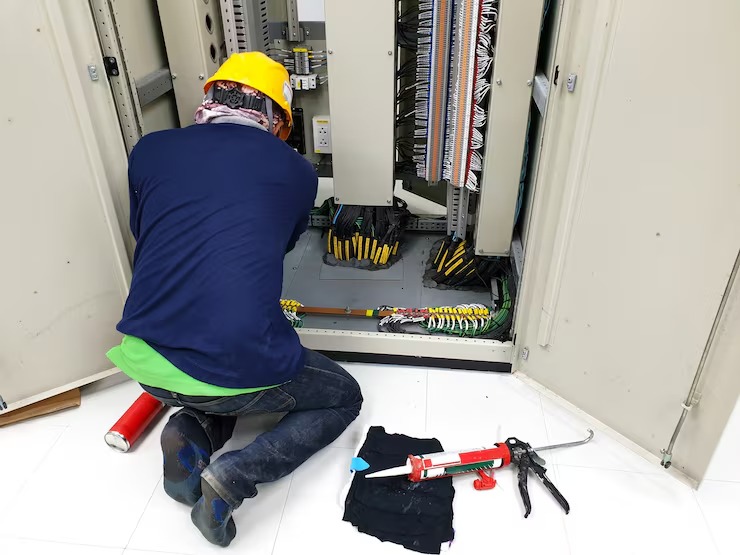
A standard installation with an existing panel that has capacity is usually a half-day job, done in one visit. If a subpanel or load management device is part of the plan, expect a full day. If the job uncovers a panel that needs to be upgraded first, that’s a second visit once the permit for that work is pulled and inspected, so plan on scheduling that as its own step rather than an add-on to the charger install.
Common Questions
Can my Georgetown home's electrical panel handle an EV charger?
It depends on your service size and what's already on the panel. A lot of Georgetown homes still have 100-amp services, and some older ones are down at 60 amps. Brandon runs a load calculation before recommending anything, since a well pump, electric heat, or a generator interlock can already be using up most of the available capacity.
Do I need a permit for a home EV charger in Massachusetts?
Yes. It's a dedicated electrical circuit and it falls under the same permitting and inspection rules as any other electrical work in the state. Belfiore pulls the permit and schedules the inspection as part of the job.
What's the difference between a NEMA 14-50 outlet and a hardwired charger?
A NEMA 14-50 outlet lets you plug in a portable Level 2 charger and move it if you switch vehicles or chargers later. A hardwired unit is wired directly to the circuit with no plug in between, which some manufacturers require for their full-speed charging rate or their warranty.
Can I add an EV charger if I already run a generator interlock?
How much does a panel upgrade add to the cost if my service isn't big enough?
Permits and Inspection
EV charger circuits are electrical work under Massachusetts code, and they get a permit and an inspection like any other new circuit. Brandon pulls the permit, does the work, and the local inspector signs off before the charger goes into regular use. That inspection is what separates a licensed installation from someone with a truck and a spool of wire – it confirms the breaker, wire gauge, and grounding are all sized correctly for the load, which matters more with EV circuits than almost anything else in the house because they run at or near full capacity for hours at a time. [EXTERNAL LINK: Massachusetts electrical code amendments (Mass.gov) – for homeowners who want to see the actual permitting and inspection requirements for residential electrical work]
Contact information
Reach Out for EV Charger Installation
If you’re ready to add a charger, or you just want to know what your panel can handle before you buy the car, call {PHONE}. Belfiore works across Georgetown and the rest of the North Shore, and we’re happy to walk through the panel with you before anything’s scheduled.
Talk to Brandon
Brandon’s the licensed electrician half of Belfiore. He’s the one who’ll look at your panel, run the numbers, and tell you straight whether your Georgetown home is ready for a charger or needs a step first. No sales pitch, just what the panel can actually support.