
Electrical Panel Replacement in Boxford, MA
A lot of Boxford homes were built when a house needed 60 amps to run a well pump, an oil burner, and a handful of lights. Now that same panel is being asked to carry a generator transfer switch, a heat pump, a workshop in the barn, and a kitchen full of appliances nobody had in 1965. When the panel underneath all of that is original, or one of the recalled brands from the 70s and 80s, replacement stops being optional.
Why Boxford Homes Need This
Boxford’s housing stock skews older and larger than most of the North Shore. Big lots, long driveways, a meaningful number of properties on well and septic. That combination shows up directly in the electrical panel: wells need dedicated, reliable circuits, and a lot of these homes still have the original 60 amp or 100 amp service that came with the house decades ago.
We still find knob and tube wiring feeding parts of these older farmhouses, along with cloth-insulated cable that’s brittle and unrated for modern loads. Panel brands matter too. Federal Pacific Stab-Lok panels and Zinsco panels were both installed heavily through this region in the 60s, 70s and into the 80s, and both have a documented history of breakers that fail to trip during an overload. That’s not a maintenance issue you fix by tightening a lug. It’s a reason to replace the panel.
Boxford also has one of the highest rates of standby generator interest we see anywhere on the North Shore. When you’re at the end of a long rural line, an outage here tends to run longer than one in a denser town closer to the substation. A generator needs a transfer switch and a panel that can actually support it, which is often the moment a homeowner finds out their existing panel is not up to the job.
What the Work Involves
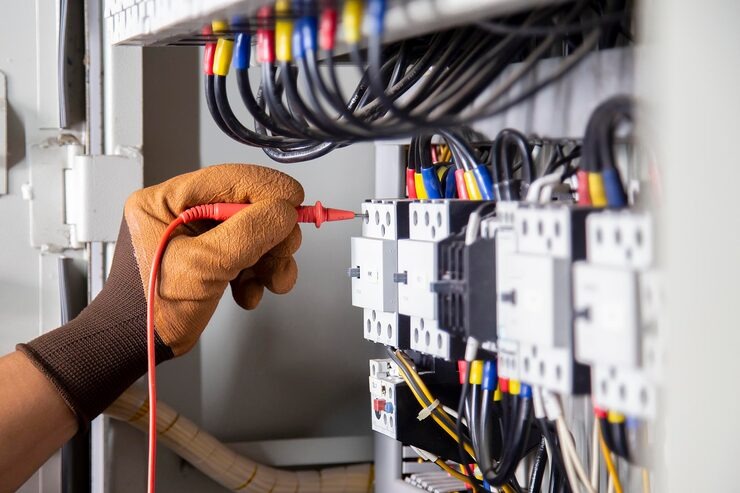
Panel replacement means pulling the old panel out and putting in a new one, sized correctly and built to current code, not just swapping in something the same size as what’s there. Brandon starts by mapping every circuit in the house so nothing gets mislabeled or missed during the swap.
The utility has to pull the meter before any work starts on the panel itself, since that’s the only way to kill power ahead of the service point. That part is coordinated with National Grid, not done by us. Once power is confirmed off, the old panel comes out, the new enclosure goes in, and every circuit gets landed on a new breaker matched to its wire gauge and load. Aluminum branch wiring, if it’s present, gets addressed at the connections rather than ignored.
Power is typically out for most of a working day. If knob and tube or cloth wiring feeds into the panel area, that gets discussed up front, because in some cases it makes sense to address the worst of it while the panel is already open, rather than closing the wall back up and revisiting it later.
What It Costs
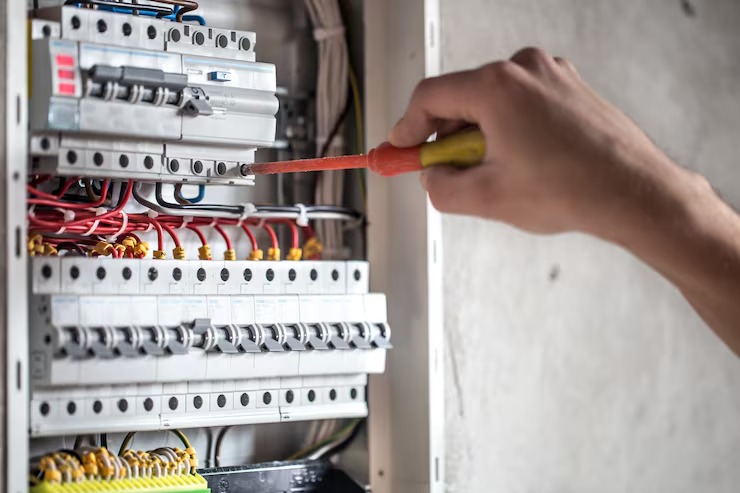
A straightforward replacement, matching the existing amperage with modern breakers, generally runs {PRICE_LOW} to {PRICE_HIGH}. What moves the number: the amperage of the new panel, whether the meter socket or mast also needs work, how many circuits have to be relabeled and re-terminated, and whether there’s aluminum wiring or knob and tube complicating the job. A generator-ready panel with a transfer switch built in costs more than a straight swap, but it’s a common enough request in Boxford that it’s worth pricing out at the same visit.
How Long It Takes
Most replacements are a single day of on-site work, start to finish, assuming the utility disconnect happens on schedule. Larger estate properties with subpanels in a barn, garage, or detached workshop can add a half day, since each of those needs to be traced and verified before the main panel comes down. Permitting and scheduling the town inspection usually adds a few business days on either end of the actual work.
Permits and Inspection
Panel replacement requires a permit in Massachusetts, and it gets inspected by the local electrical inspector before the panel is closed up and signed off. This isn’t paperwork for its own sake. It’s the mechanism that catches undersized wire, missing bonding, or a panel that isn’t rated for the load being asked of it. Brandon pulls the permit, schedules the inspection, and stands behind the work when the inspector shows up. That’s the difference between a licensed electrician and someone working off the books, and on a job that involves the main disconnect for your whole house, it’s not a place to cut a corner.
[EXTERNAL LINK: Massachusetts Board of State Examiners of Electricians – electrical permit and inspection requirements]
Common Questions
How do I know if I have a Federal Pacific or Zinsco panel?
Open the panel door and check the manufacturer name on the breakers or the inner cover. Federal Pacific panels usually say Federal Pacific Electric or FPE, and their breakers often have a distinctive red switch. Zinsco panels have breakers that plug directly onto the bus bar rather than bolting to it. If you're not sure, send Brandon a photo and he can usually tell right away.
Can I just replace the breakers instead of the whole panel?
No. With Federal Pacific and Zinsco panels, the problem isn't the breakers alone, it's the bus bar connection and the breaker design working together. Aftermarket breakers for these panels aren't a reliable fix and most licensed electricians won't install them.
Will my power be off all day during a panel replacement?
Plan on most of a working day. The exact window depends on when the utility can pull the meter and how many circuits need to be re-landed. Brandon will give you a realistic estimate before the day of the job so you can plan around it.
Does a panel replacement help if I want a generator later?
Is panel replacement covered by permits in Boxford?
Reach Out for Electrical Panel Replacement
If your Boxford home still has its original service, or you’ve been told you have a recalled panel, call {PHONE}. We’ll walk through what’s there now, what it would take to replace it, and how a generator or future additions factor into the sizing before any work starts.
Contact information
Talk to Brandon
Brandon is the licensed electrician at Belfiore. He left union work to run the electrical side of a family business, and panel replacements in older homes are a big part of what he does across Boxford and the rest of the North Shore. If you’ve got a Federal Pacific or Zinsco panel, or you’re just not sure what’s in your basement, he’ll look at it straight and tell you what he’d actually do.