
Outlet and GFCI Installation and Repair in Swampscott, MA
A lot of Swampscott houses were wired for a kitchen with one overhead light and maybe two outlets on a counter that never had to run more than a toaster. Now that same kitchen has a microwave, an air fryer, a coffee maker, and a phone charger all fighting for the same circuit. That gap between what the house was built with and what people actually plug in today is most of what brings us out here.
Outlet and GFCI Installation and Repair in Swampscott
Outlet and GFCI work covers a wide range, from swapping a cracked or scorched outlet for a new one, to adding GFCI protection in a kitchen, bathroom, garage, or outdoor space that never had it, to running new circuits for rooms that are short on outlets entirely. It is one of the most common calls we get in Swampscott, and it is often the first job that brings a homeowner here in touch with Belfiore before a bigger project comes up.
Why Swampscott homes need this
Swampscott’s housing stock skews older than a lot of the North Shore, with plenty of homes built well before grounded, three-prong outlets were standard. It is not unusual for us to find cloth-insulated wiring behind a wall, or a section of knob and tube still live in an attic or basement that was never fully removed during a past renovation. Some of these houses are still running on a 60 amp service that was adequate in 1955 and is not adequate now.
The coastal exposure adds its own wear. Salt air is hard on anything outdoor rated, and we regularly replace exterior outlets and covers that have corroded from years near the water. Add in the older panel brands that show up across this part of the North Shore, Federal Pacific and Zinsco among them, and you have a combination that makes outlet and GFCI work here more than a quick swap. It is often the first sign that a circuit, or the panel feeding it, needs a closer look.
Coastal storms also knock power out here more than most towns inland, which is why we get steady generator interest from Swampscott homeowners who want a transfer switch and a plan in place before the next nor’easter, not during it.
What the work involves
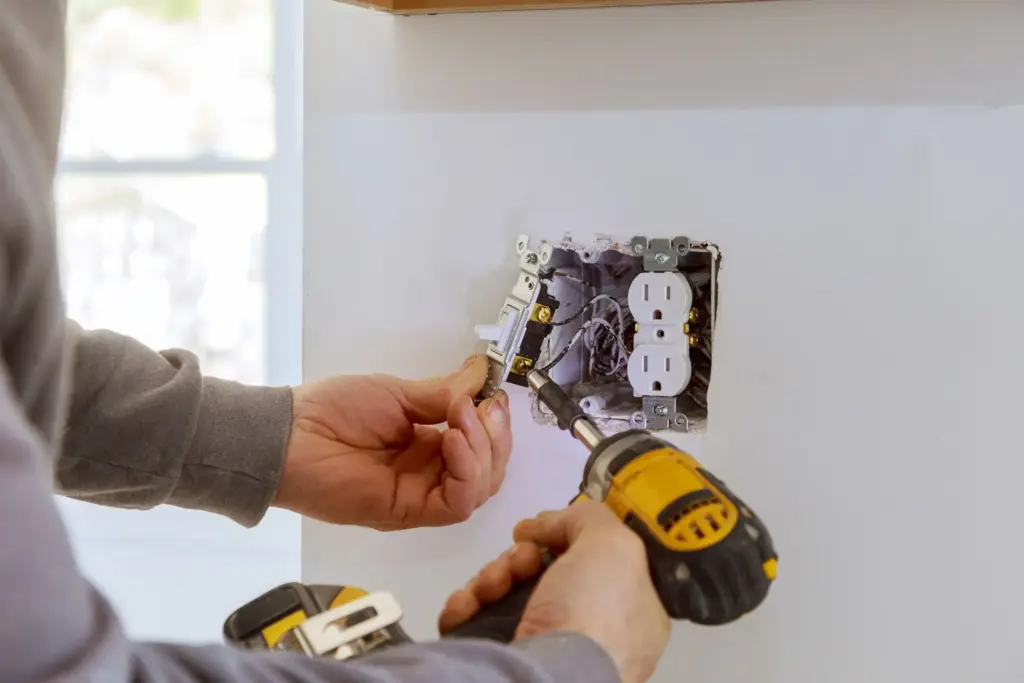
For a straightforward outlet swap or a GFCI addition, Brandon shuts off power at the breaker for that circuit only, not the whole house. Most single-outlet jobs have the power out for that circuit for under an hour. If we are tracing an ungrounded circuit back to its source, tying into an existing junction box, or adding a new run from the panel, that circuit stays off longer while the wire gets pulled and terminated properly.
GFCI protection is required by code in kitchens, bathrooms, garages, unfinished basements, and outdoor locations, and a lot of older Swampscott homes are missing it in one or more of those spots. We check whether a single GFCI outlet at the start of the circuit can protect the downstream outlets, or whether a GFCI breaker at the panel makes more sense given the wiring layout.
If your home is on knob and tube or has cloth wiring with no ground, we will tell you plainly what your options are: a ground-fault protected outlet that satisfies code without a full rewire, or a proper rewire of that circuit if the insulation is degraded. National Electrical Code requirements for grounding and GFCI protection are laid out by the National Fire Protection Association, and Massachusetts adopts NEC with state amendments [EXTERNAL LINK: NFPA National Electrical Code overview, for homeowners who want to see the underlying standard]. Anything the utility needs to touch, like a meter or service disconnect, gets coordinated separately and is not part of a standard outlet call.
What It Costs
A single outlet replacement or a GFCI swap in an existing box runs toward the lower end, roughly {PRICE_LOW}. Adding GFCI protection to several locations, running a new dedicated outlet, or tracing and correcting an ungrounded circuit in an older Swampscott home pushes toward {PRICE_HIGH}. What moves the number is mostly access: whether we are working in a finished wall with plaster and lath, whether the circuit is grounded already, and how many outlets need to be brought up to code on the same trip. We give you the number before anything gets opened up, not after.
How long it takes
Most single or double outlet jobs are done in one visit, often under two hours including the paperwork. Multi-outlet GFCI upgrades or new circuit runs typically take half a day. If we find knob and tube or an ungrounded run that needs more than a spot fix, we will stop, explain what we found, and give you a straight answer on what a full fix looks like and what it would take, rather than pushing ahead and surprising you on the invoice.
Permits and inspection
Electrical work in Massachusetts, including outlet replacement and GFCI installation, requires a permit pulled by a licensed electrician and a follow-up inspection by the local wiring inspector. Brandon pulls the permit and schedules the inspection as part of the job, not as an extra step you have to chase down. This is one of the clearest ways to tell licensed work from handyman work: an unpermitted outlet swap might look fine, but it was never checked against code, and it can complicate a home sale or an insurance claim later. Swampscott’s building department, like most on the North Shore, inspects this category of work routinely.
Common Questions
Why does my GFCI outlet keep tripping?
A GFCI trips when it detects a small imbalance in current, which can mean a genuine ground fault, moisture in the box, a worn-out GFCI device, or downstream outlets wired incorrectly. If it trips repeatedly and won't stay reset, that is worth having checked rather than just resetting it again.
Do I need a GFCI outlet in every room?
No. Code requires GFCI protection in specific locations: kitchens, bathrooms, garages, unfinished basements, outdoor outlets, and a few similar spots. Bedrooms and most living areas do not require it, though they do have their own code requirements around AFCI protection in many newer or renovated homes.
Can you add an outlet without opening up my whole wall?
Often, yes. If there is an accessible junction box nearby or we can fish wire through an existing wall cavity, we can add an outlet with minimal patching. Plaster and lath walls, common in Swampscott's older homes, sometimes need a bit more opening than drywall does.
Is my old wiring safe to leave alone if it's not causing problems?
Not necessarily. Knob and tube and cloth-insulated wiring can be functional for years and still be a fire risk if the insulation has degraded or it has been spliced incorrectly over time. We will tell you honestly whether what we find needs attention now or can be monitored.
Do you pull a permit for a single outlet replacement?
Reach Out for Outlet and GFCI Installation and Repair
Whether it is one outlet that stopped working or a whole room that needs GFCI coverage brought up to current code, Belfiore is a Salem-based company working across Swampscott and the rest of the North Shore. Call {PHONE} to get a straight read on the job and a number before anything gets opened up.
Contact information
Talk to Brandon
Brandon is the electrician at Belfiore, licensed and hands-on with every job that goes through the door. If you have a dead outlet, a GFCI that trips and won’t reset, or you are just not sure whether your kitchen circuits are up to what you are asking of them, call {PHONE} and describe what is going on. He will tell you straight whether it is a quick fix or something bigger, before anyone shows up at the house.