
Electrical Troubleshooting and Repair in Boxford, MA
A lot of Boxford homes were wired for a house that no longer exists. The farmhouse built in the 1960s or 70s with a 60 amp or 100 amp service was fine for a well pump, an oil burner, and a couple of lamps. It was never sized for a home office, a second refrigerator in the barn, and a generator standing by for the next storm. When something trips, hums, or just stops working, that gap between old wiring and new demand is usually where the problem lives.
Why Boxford Homes Need This
Boxford is low density, and that changes what breaks and how it gets fixed. Long driveways mean underground or overhead runs from the meter to the house that are easy to forget about until a connection corrodes. A meaningful share of properties are on well and septic, which means well pump circuits, pressure switches, and sometimes a separate sub-panel out at the pump house that nobody has looked at in years.
Outages also hit differently here. At the end of a rural line, a storm that knocks out power for two hours in Salem can mean two days in Boxford. That’s why generator demand in this town is the highest of any area we work in, and why so many of the panels we open up are already juggling a transfer switch or an interlock kit that was added later and not always correctly.
Age is the other factor. Older farmhouses and estate properties in Boxford commonly still have cloth-insulated wiring or knob-and-tube in sections of the house, especially additions and attics that were never fully re-wired. Some still run on Federal Pacific or Zinsco panels, both of which have known breaker failure issues that most electricians will flag the moment they open the panel cover. None of this means panic. It means the diagnosis has to be honest about what’s actually there before anyone talks about a fix.
What the Work Involves
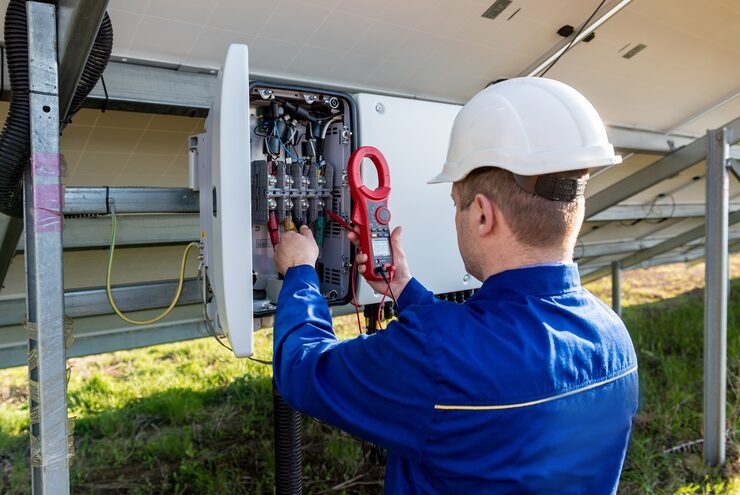
Every troubleshooting call starts the same way: find the actual fault before touching anything. Brandon checks the service entrance, the panel, and works outward – loose lugs, a neutral that’s not making good contact, a breaker that’s tripping on a legitimate overload versus one that’s just worn out. On a well and septic property, that often extends to the pump circuit and the pressure switch, since a “lights are flickering” call sometimes traces back there instead of the main panel.
Some repairs are quick and the power only needs to come off for the circuit involved, sometimes for a few minutes. Others require the main to be shut down, which the utility has to coordinate if the work touches the meter or service drop itself – that’s their equipment, not ours, and there’s a process for scheduling it. Once the repair is made, every circuit that was touched gets tested under load before Brandon calls the job done, not just checked with a light bulb and called good.
What It Costs
A straightforward diagnostic and repair – a bad breaker, a loose connection, a dead outlet circuit – typically runs {PRICE_LOW} to {PRICE_HIGH}. What moves that number is what’s actually found once the panel’s open. A single failed breaker is a different job than a Federal Pacific panel that needs several breakers replaced or a knob-and-tube run that needs to be isolated. Well pump circuit work and anything involving the service entrance also tends toward the higher end because of the added coordination with the utility. Brandon gives you the number before the work starts, not after, and if the scope changes once he’s inside the panel, he tells you why before doing anything more.

How Long It Takes
Most troubleshooting and repair visits are done in a single appointment, often two to four hours depending on how many circuits are involved and how accessible the wiring is. A property with a long run to a detached garage or barn, or a panel that needs several breakers swapped, can run longer. If the diagnosis turns into something bigger – a full panel replacement or a knob-and-tube removal – that gets scheduled as its own job with its own permit, rather than stretching the repair visit past what it was meant to cover.
Permits and Inspection
Electrical work in Massachusetts is permitted and inspected, and that includes repair work beyond a simple like-for-like swap. Brandon pulls the permit and the town inspector signs off before anything gets closed up behind drywall or a panel cover. This is one of the clearest ways to tell a licensed electrician from a handyman with a multimeter – unlicensed panel work is common enough on older properties, and it’s usually the thing that shows up during a home sale inspection or an insurance review years later. [EXTERNAL LINK: Massachusetts Board of State Examiners of Electricians licensing and permit requirements, to show homeowners what licensed work is actually required to include]
Common Questions
Do I need a permit for electrical repair in Boxford?
Yes. Massachusetts requires a permit for anything beyond swapping a like-for-like device, and Boxford's inspector signs off on the work before it's covered up. Brandon pulls the permit and schedules the inspection as part of the job, not as an add-on.
My house still has a 60 amp panel. Is that dangerous?
It's not automatically dangerous, but it's limiting. A 60 amp service was fine for a farmhouse with a furnace and a few lights. It won't support a modern kitchen, central air, and a generator interlock at the same time. Most insurers and lenders also flag it now, which pushes people toward an upgrade sooner than they planned.
What's the difference between troubleshooting and a repair?
Troubleshooting is the diagnostic part – finding the loose neutral, the failed breaker, the corroded splice in a junction box out near the barn. The repair is fixing what we find. Sometimes it's a ten-minute tightening job. Sometimes the diagnosis turns up knob-and-tube behind a wall and the conversation changes.
Can you work with our generator setup?
Yes. A lot of Boxford homes already have a generator or want one added, and that means coordinating the transfer switch, the interlock, and the panel itself. If your panel is undersized or outdated, we'll tell you before we start, not after.
Do you handle knob-and-tube wiring?
We evaluate it and tell you honestly what's live, what's abandoned, and what needs to come out. Full removal is a bigger project than a single repair call, but the first step is the same: find out what's actually behind your walls.
Reach Out for Electrical Repair
If something’s tripping, flickering, or just not working the way it should, call {PHONE}. We work across Boxford and the rest of the North Shore, and we’ll get a real diagnosis on the books rather than a guess over the phone.
Contact information
Talk to Brandon
Brandon is the licensed electrician at Belfiore. He left the union to work the family business alongside his twin brother Chris, who runs the plumbing side. On a Boxford call, that usually means he’s not just chasing a single loose wire – he’s looking at the whole picture: panel condition, generator readiness, well pump circuits, and whatever the last owner or contractor left behind. He’ll tell you straight what needs fixing now and what can wait.