
Dedicated Circuit Installation in Salisbury, MA
A lot of Salisbury homes are working off a panel that was sized decades ago for a house without central air, an electric range, or a car that plugs in overnight. When you add one of those loads to a shared circuit, you get tripped breakers, dimming lights, or worse. A dedicated circuit gives that appliance or piece of equipment its own wire, back to its own breaker, so it never has to compete for power with anything else in the house.
Dedicated Circuit Installation in Salisbury
We run dedicated circuits for the same reasons in almost every Salisbury house we walk into: someone bought a new appliance, is finishing a garage or shed, or wants an EV charger and the panel wasn’t built with any of that in mind. The circuit itself is a straightforward job for a licensed electrician. Getting it right means the correct wire gauge, the correct breaker, and a run that doesn’t overload whatever panel it’s tied into.
Why Salisbury Homes Need This
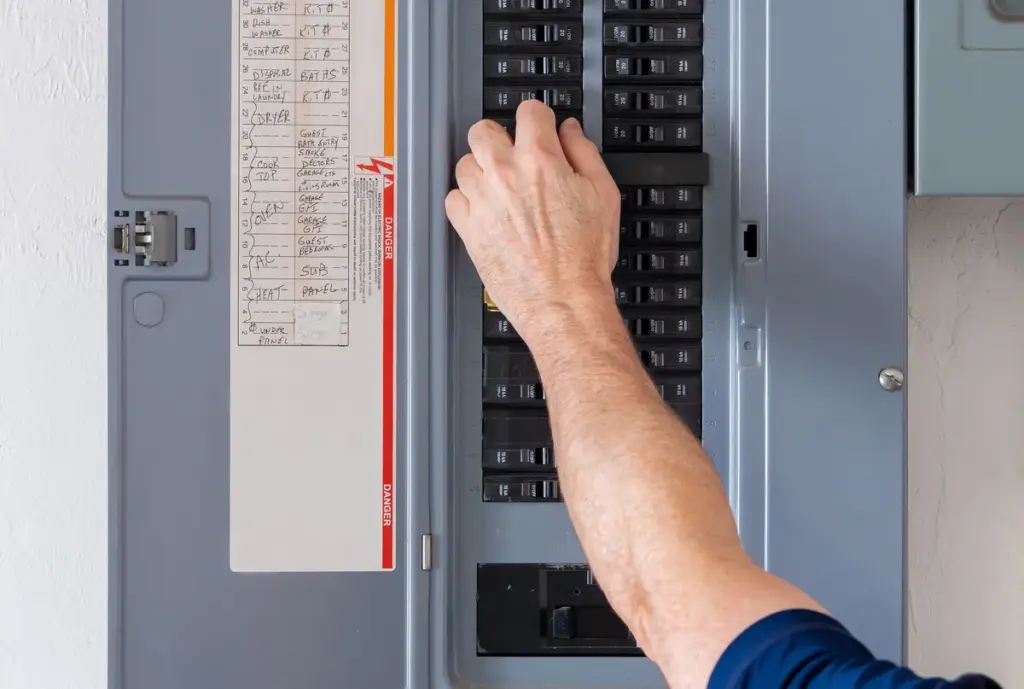
Salisbury sits at the northern edge of our service area, and the housing stock reflects it. You’ve got older beach cottages near the water that were wired for lights and a few outlets, mixed in with mid-century ranches and ongoing new construction closer to Route 1. It’s a more modest, more mixed town than Newburyport’s dense federal-era downtown, but the underlying electrical problem is the same one we see across the North Shore: original wiring and panels that were never sized for modern loads.
In the older Salisbury housing near the marsh and the beach, we still find 60 amp services, cloth-insulated wiring from decades back, and in some cases panels made by Federal Pacific or Zinsco that carry real safety concerns and get flagged during inspection more often than not. Adding a dedicated circuit to a panel like that isn’t just a wiring question, it’s a capacity question. Brandon checks what the panel can actually support before he runs a single wire, because a new 240-volt circuit for a range or an EV charger can push an undersized service past its limit.
What the Work Involves
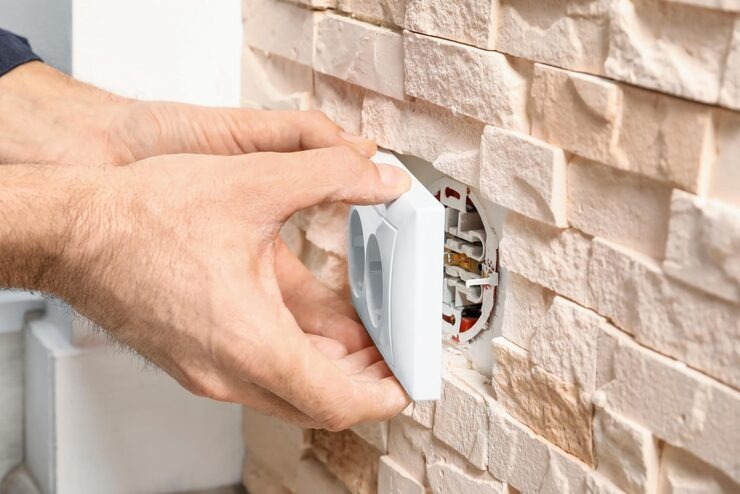
Every dedicated circuit starts with the panel. Brandon confirms there’s room for a new breaker and enough spare capacity on the service to carry the added load without tripping anything else. From there it’s a matter of running the right wire for the job: 12-gauge for a 20-amp circuit, 10-gauge for 30 amps, 6-gauge or heavier for a 40 or 50-amp range, dryer, or EV charger circuit. The wire gets run through framing, basement joists, or conduit depending on the house, terminated at a new breaker, and landed on a dedicated outlet or hardwired connection at the appliance end.
The power to that circuit, and sometimes the whole panel, has to be shut off while the connections are made. In most Salisbury homes that’s a matter of an hour or two, not a full day, and we tell you exactly what will be dark before we start so nobody’s caught off guard. The utility only gets involved if the job requires a service upgrade to support the new load, in which case the disconnect and reconnect at the meter is on their schedule, not ours. A standard dedicated circuit on an existing service doesn’t need utility involvement at all.
What It Costs
A basic dedicated circuit for something like a window AC, a sump pump, or a home office runs toward the lower end, typically {PRICE_LOW}. A 240-volt circuit for a range, dryer, or Level 2 EV charger costs more, especially if the run is long or has to go through finished walls or ceilings, and can land closer to {PRICE_HIGH}. What moves the number is wire length, whether we’re opening drywall or fishing through an open basement, and whether the panel has room or needs a subpanel or upgrade first. We give you the number before any work starts, not after.
How Long It Takes
Most single dedicated circuits are a same-day job, start to finish, including the power being off for the panel work. If the run is long, needs conduit outside, or the panel needs attention first, it can stretch to a second day. We’ll tell you which situation you’re in before Brandon starts pulling wire.
Common Questions
Can I just plug a new appliance into an existing outlet instead of running a dedicated circuit?
For small loads, sometimes. For anything drawing significant current, like a range, dryer, EV charger, or window AC unit, sharing a circuit means tripped breakers at best and a fire risk at worst. Code requires dedicated circuits for most major appliances specifically because they aren't safe to share.
Do I need a panel upgrade to add a dedicated circuit?
Not always. If your panel has open breaker slots and the service has spare capacity, a new circuit is a standalone job. If the panel is full or the service is undersized, like many of the older 60 amp services in Salisbury, the circuit work often has to wait on a panel or service upgrade first.
How much does an EV charger circuit cost compared to a regular outlet circuit?
An EV charger circuit runs at the higher end of the range because it's typically a 240-volt, 40 to 50-amp circuit with heavier wire, compared to a standard 120-volt, 20-amp circuit for something like a home office or window unit.
Will the power be off in the whole house during installation?
Is permitted electrical work actually inspected, or is that just paperwork?
Permits and Inspection
New circuit work in Massachusetts requires an electrical permit, and the finished job gets inspected by the local wiring inspector before it’s signed off. Belfiore pulls the permit and schedules the inspection as part of the job. This isn’t a formality we skip to save time. It’s the difference between work done by a licensed electrician and work done by whoever was available on short notice, and it’s the paper trail that matters if you ever sell the house or file an insurance claim. [EXTERNAL LINK: Massachusetts Board of State Examiners of Electricians licensing and permit requirements, to show homeowners what licensed electrical work is legally required to include]
Contact information
Reach Out for Dedicated Circuit Installation
If you’re adding an appliance, finishing a space, or putting in an EV charger anywhere in Salisbury, call {PHONE} and describe what you’re installing. Brandon can usually tell you what’s involved before he even sees the panel, and confirm it once he’s there.
Talk to Brandon
Brandon left union work to run the electrical side of this family business, and he’s the one who’ll look at your panel, tell you what it can handle, and lay out the real options if it can’t. No guessing over the phone about what a 1970s panel in a Salisbury cottage can or can’t take on.