
Ceiling Fan and Light Fixture Installation in Georgetown, MA
A lot of Georgetown’s housing stock dates back to farmhouses and capes built long before central air, let alone ceiling fans in every bedroom. The electrical service was sized for lamps and a refrigerator, not for a fan-light combo on a dimmer in every room of the house. If you’re adding fans this summer because the upstairs bakes in July, you’re not alone, and you’re probably about to find out your junction box wasn’t built for the job.
Why Georgetown Homes Need This
Georgetown sits far enough from the coast that it kept more of its rural character, and that shows up in the wiring. We still find cloth-insulated conductors and knob-and-tube segments in homes that have had two or three renovations since. A lot of these houses run on 60 amp or 100 amp services that were adequate in 1975 and are stretched thin now with central air, a hot tub, and a couple of space heaters in the mix.
Well and septic are common out here too, and that matters more than people expect. A well pump pulls a serious draw on startup, and if your panel is already tight, adding fan circuits without checking the math is how breakers start tripping for no obvious reason. Georgetown also loses power for real stretches when a storm comes through the interior of the county rather than skirting the coast, which is the same conversation we have in the estate towns about a generator transfer switch. A ceiling fan job is often the first time in years anyone has opened that panel up and looked at what’s actually in there.
What the Work Involves
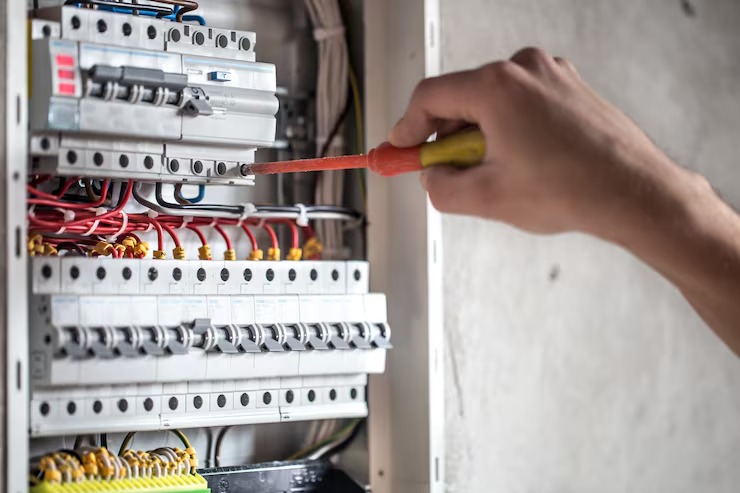
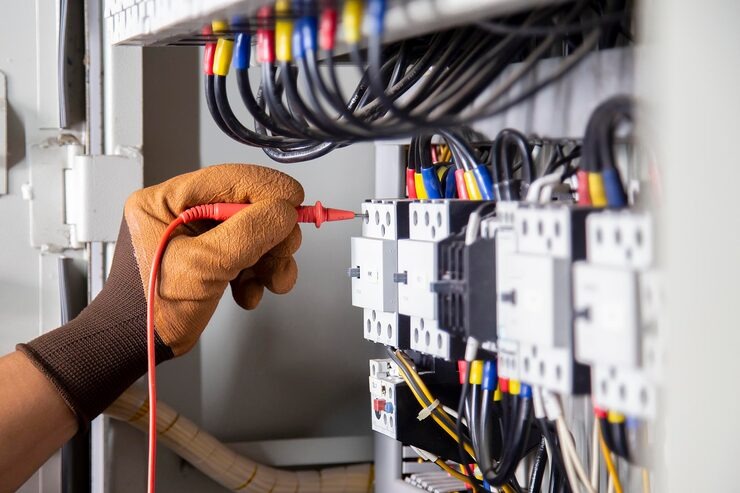
For a straightforward swap – replacing an existing light fixture with a fan-rated box – Brandon shuts off the circuit at the panel, confirms it’s dead with a meter, and gets to work. Power is typically out to that one circuit for under two hours. If the existing electrical box isn’t fan-rated, meaning it can’t support the weight and vibration of a spinning fan, that gets swapped for a proper fan-rated box secured to a joist or brace bar. That part is not optional. A fan hung from a standard light box can work loose over months of use.
If there’s no existing fixture at all, the job gets more involved. Brandon has to run a new circuit from the panel, fish cable through the attic or wall cavity, and cut in a new box, which takes longer and depends heavily on how the house is built. Post-and-beam framing, plaster ceilings, and finished basements all change how much cutting and patching is involved. The utility isn’t part of a fan install unless the panel itself needs more capacity – that’s a separate conversation about a service upgrade, not something that holds up a same-day fan job in most cases.
Every new circuit gets tested for proper polarity, grounding, and correct breaker sizing before Brandon calls the job done.
What It Costs
A single fan swap where the box is already fan-rated runs toward the lower end of {PRICE_LOW} to {PRICE_HIGH}. Add a new fan-rated box, a wall switch upgrade to a fan/light control, or multiple fixtures in one visit, and the number moves up. Running a brand-new circuit from the panel for a room that never had a fixture costs more than a swap, mostly because of the labor to fish cable through finished walls or ceilings. The other variable is access – a fan in a one-story cape with attic access above is a different job than one in a finished cathedral ceiling with no attic path at all. Brandon will give you the real number after he’s seen the ceiling and the panel, not before.
How Long It Takes
A basic fan swap with an existing fan-rated box is usually done in an hour to two hours, start to finish. Installing a new fan-rated box where a standard light fixture used to be adds maybe another hour for the bracing and patch work. A new circuit for a room with no existing fixture is a half-day job in most cases, sometimes longer if the framing makes the cable run difficult. None of this requires the whole house to lose power – just the circuit being worked on, and usually just for the active work window.
Permits and Inspection
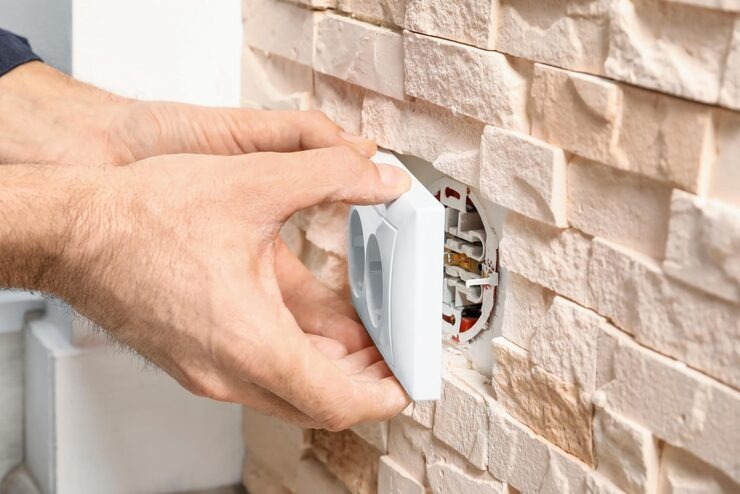
New circuit work and any job that involves opening up wiring beyond a straight fixture swap gets a permit through the town, and the finished work gets inspected before it’s signed off. That’s Massachusetts law, not a Belfiore policy, and it’s the line between a licensed electrician’s work and what a handyman pulls off Craigslist. Brandon pulls the permit, schedules the inspection, and the paperwork is yours to keep with the house. A straight one-for-one fixture swap on an existing fan-rated box generally doesn’t require a permit, but anything touching the circuit itself does.
Common Questions
Can any electrical box hold a ceiling fan?
No. Standard light fixture boxes are rated for a few pounds of static weight, not the ongoing vibration and load of a spinning fan. If the existing box isn't fan-rated, it gets replaced before the fan goes up, which is a safety issue rather than an upsell.
Do I need a permit just to swap a light for a fan?
In most cases, if you're using the existing fan-rated box and wiring without altering the circuit, no permit is needed. If the box needs replacing or new wiring is run, that work gets permitted and inspected under Massachusetts electrical code.
My house has knob-and-tube wiring. Can I still add a fan?
Often yes, but Brandon will want to look at the specific circuit first. Knob-and-tube can't be spliced into with modern cable the way newer wiring can, so the fan circuit usually needs to be run fresh rather than tied into the old system.
How much does it matter that I'm on well water?
Can you install a fan with a remote or smart control?
Reach Out for Ceiling Fan and Light Fixture Installation
If you’re ready to get fans up before the next heat wave, or you just want an honest look at whether your bedroom ceiling can handle one, call {PHONE}. We work across Georgetown and the rest of the North Shore, and we’ll tell you what the job actually needs before we start cutting anything open.
Contact information
Talk to Brandon
Brandon’s the electrician half of Belfiore, and ceiling fan work is often how he ends up in a Georgetown attic looking at the rest of the panel. If something looks off while he’s up there – an old fuse box, aluminum branch wiring, a double-tapped breaker – he’ll tell you plainly, not upsell you. Call and describe what you’re picturing for the room and he’ll tell you honestly whether it’s a one-hour job or something bigger.
Every Georgetown home has different ceiling heights, wiring setups, and style preferences, so picking the right fan or light fixture matters. Our team helps you weigh options like room size, airflow needs, and existing electrical capacity before installation begins.
- Guidance on fan size and blade span for your room
- Support fixtures that require additional bracing
- Compatibility checks with dimmer switches or smart controls
We make sure your new fixture fits your space and works safely from day one.