
Electrical Service Upgrades in Swampscott, MA
A lot of Swampscott’s housing stock went up between the 1900s and the 1950s, back when a house ran a stove, a radio and maybe a window unit off 60 amps. Now the same panel is asked to carry central air, an electric range, a hot tub near the seawall and a car charger in the driveway. The service was never sized for that load, and on older streets close to the water the drop and meter equipment have been fighting salt air for just as long as the wiring inside.
Why Swampscott Homes Need This
Swampscott has some of the highest-value real estate in our service area, and Chris has said it plainly: this is a town where people invest in the house properly instead of patching it. That means more additions, more high-load appliances, and more homeowners asking for a generator transfer switch after the last few winter storms knocked out power along the coast for days at a time.
The electrical reality underneath that investment is often older than the finished kitchen suggests. We still find 60 amp services on Beach Bluff Avenue and Puritan Road, cloth-insulated wiring in homes that haven’t been touched since the 1960s, and the occasional stretch of knob and tube tucked behind newer drywall. Panel brands matter here too. Federal Pacific Stab-Lok and Zinsco panels are both common across the North Shore’s older housing, and both have a documented history of breakers that fail to trip when they should. Neither is something we patch. A panel like that gets flagged and replaced as part of the upgrade, not worked around.
Next door in Marblehead the housing stock runs even older, into the 1700s and 1800s, and that work is genuinely a different animal – plaster walls, irregular framing, no real cavities to fish wire through. Swampscott’s mix skews a little newer on average, but the same salt exposure applies to anything mounted outside. Meter sockets, weatherheads and exterior disconnects corrode faster a half mile from the water than they do inland in Peabody or Danvers, and that corrosion is one of the more common reasons a service upgrade gets triggered here in the first place.
What the Work Involves
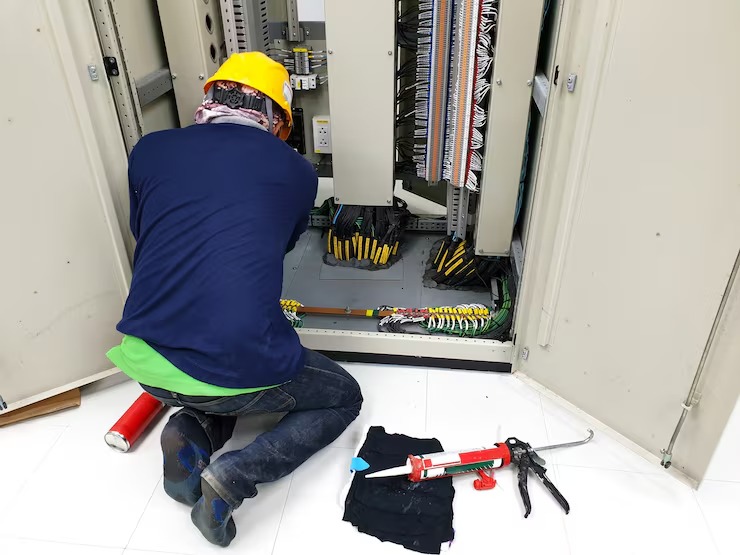
A service upgrade is the utility side of your electrical system – the drop or lateral, the meter, the mast, and the main disconnect – stepped up from whatever you have now, typically 60 or 100 amps, to 100 or 200 amps depending on what the house needs to run.
National Grid owns the wire coming to your house and the meter itself. Brandon’s job is everything from the meter base inward: sizing and running new service entrance conductors, installing a new meter socket and mast rated for the higher amperage, landing the new main breaker, and grounding the system to current code. National Grid has to disconnect service before the work starts and reconnect once the new equipment passes inspection – that coordination is scheduled ahead of time, not improvised on the day.
Power is out for the whole property during the swap, usually for most of a working day. On tight lots close to the water, where the mast has to clear a porch roof or the meter sits on a wall with limited access, that stretches the timeline a little. We tell you that upfront rather than after the truck shows up.
What It Costs
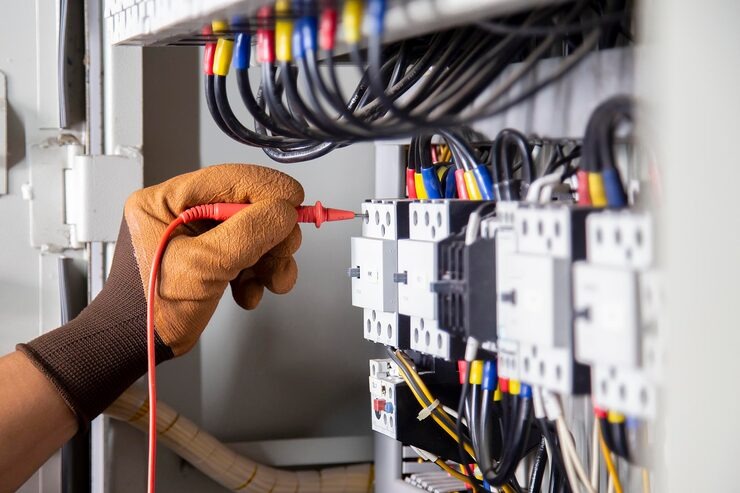
A straightforward 100 to 200 amp upgrade on a house with reasonable access typically runs {PRICE_LOW} to {PRICE_HIGH}. What moves that number: whether the mast needs to be relocated or raised for clearance, how far the meter is from the panel location, whether the existing panel and grounding also need replacing as part of the job, and whether National Grid requires any make-ready work on their side before they’ll reconnect. Coastal properties with corroded exterior equipment or difficult truck access for the utility crew tend to land at the higher end. Brandon gives you a firm number after he’s looked at the panel, the mast, and the meter location in person, not off a phone description.
How Long It Takes
The electrical work itself – new mast, meter socket, service conductors, panel connections – usually takes a single day. The full timeline depends on National Grid’s scheduling for the disconnect and reconnect, which we coordinate around the work rather than around our own calendar. Inspection by the local wiring inspector typically happens quickly once the rough work is done, and reconnection follows once it’s signed off. Plan on the power being out for that one day; plan on the full process, start to reconnection, taking a bit longer once utility scheduling is factored in.
Permits and Inspection
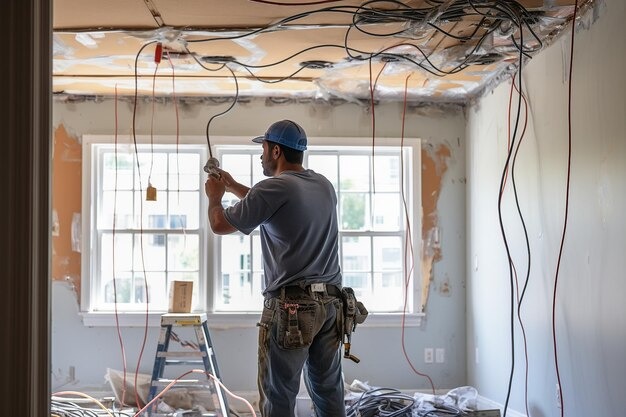
A service upgrade is not a job you do without a permit. Massachusetts requires a licensed electrician to pull an electrical permit for this work, and the local wiring inspector has to sign off before National Grid will reconnect power. That inspection checks the grounding, the bonding, the size and rating of the new equipment, and that everything is installed to the current edition of the Massachusetts Electrical Code. Brandon pulls the permit, schedules the inspection, and is on site for it. If a contractor offers to skip that step, that’s a sign to walk away, not a discount.
Common Questions
How do I know if I need 100 amps or 200 amps?
It depends on what the house runs. A smaller home with gas heat, a gas stove and no plans for a car charger can often stay comfortable at 100 amps. Add central air, an electric range, a heat pump, a hot tub or an EV charger, and 200 amps becomes the practical minimum. Brandon does a load calculation based on your actual appliances, not a guess.
Do I need a service upgrade if I just want a generator?
Not always. A portable or standby generator with a transfer switch can often work on your existing service size. But if your panel is already full or outdated – a Federal Pacific or Zinsco panel, for example – the generator install is a good time to handle both at once.
Is my Federal Pacific panel dangerous?
Federal Pacific Stab-Lok panels have a well-documented history of breakers that don't trip reliably during an overload. We don't repair or add to these panels. If you have one, replacing it is the recommendation, not a maintenance patch.
Who handles the power line and meter, you or the utility?
National Grid owns the drop or lateral wire and the meter itself, and they handle disconnecting and reconnecting service. Brandon handles everything from the meter socket inward – the mast, the conductors, the panel, and the grounding – and coordinates the timing with the utility so the outage is as short as possible.
Will the salt air affect my new equipment?
Exterior equipment near the water corrodes faster than it does inland. We use meter sockets, masts and hardware rated for that exposure, and it's worth checking exterior connections periodically even after the upgrade is done.
Reach Out for Electrical Service Upgrades
We work across Swampscott and the rest of the North Shore, and we’re a Salem-based company that knows this coastal housing stock from the inside. Call {PHONE} to get Brandon out to look at your panel, your meter, and your mast, and get a straight answer on what a service upgrade would take and cost for your specific house.
Contact information
Talk to Brandon
Brandon is the electrician half of Belfiore. He left union work to come back and run the electrical side of the family business, and service upgrades are some of the most technical work he does – they sit right at the boundary between what the utility owns and what a licensed electrician is responsible for. If you’ve got a Federal Pacific panel, a 60 amp service, or you’re just trying to figure out if your house can handle a generator or an EV charger, he’ll walk the panel and the mast with you and tell you straight what it needs.