
Home Rewiring in Rowley, MA
Home Rewiring in Rowley, MA
A lot of Rowley’s housing stock predates the electric dryer, the central air condenser, and the home office with three monitors and a space heater under the desk. Farmhouses and capes out toward the Ipswich River and the Route 133 corridor were often wired once, decades ago, for lights and a radio, then patched over the years as families added circuits wherever they could find room in the panel. If your house still has a 60 amp service, cloth-insulated branch wiring, or a mix of both, you are not dealing with a quirky old house problem. You are dealing with wiring that was never sized for the way the house is actually used now.
Why Rowley Homes Need This
Rowley sits in that stretch of the North Shore where old construction is the rule, not the exception. Farmhouses, converted barns, and mid-century capes on well and septic systems make up a good share of the town, and a lot of that housing still carries its original electrical bones under layers of later work. We regularly find knob and tube wiring still live in attics and wall cavities, cloth-insulated conductors that have gone brittle with age, and 60 amp panels that were adequate in 1955 and are not adequate now.
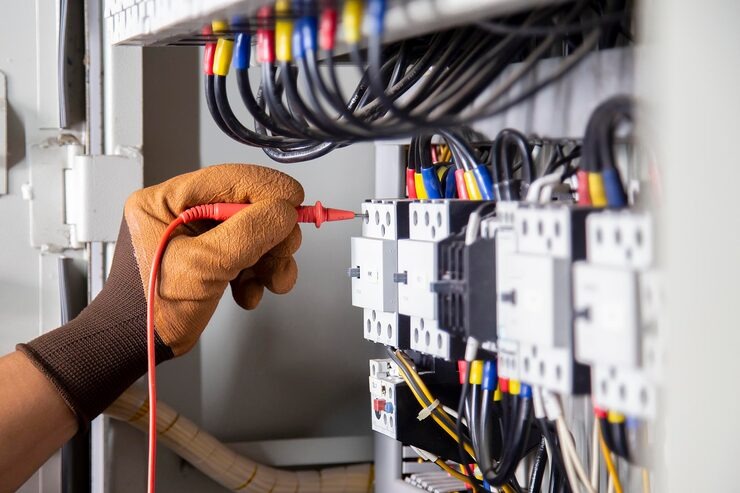
Older Rowley properties also turn up Federal Pacific and Zinsco panels from the 1960s and 70s, both known for breakers that fail to trip when they should. That is not a cosmetic issue, it is a safety issue, and it is one of the more common reasons a rewire gets scheduled after a home inspection flags the panel during a sale. On top of the age factor, Rowley’s rural stretches see the same long-outage pattern as the rest of the estate belt towns, which means whole-home rewiring often gets planned alongside a generator transfer switch, since both jobs mean opening up the panel and the main feed anyway.
What the Work Involves
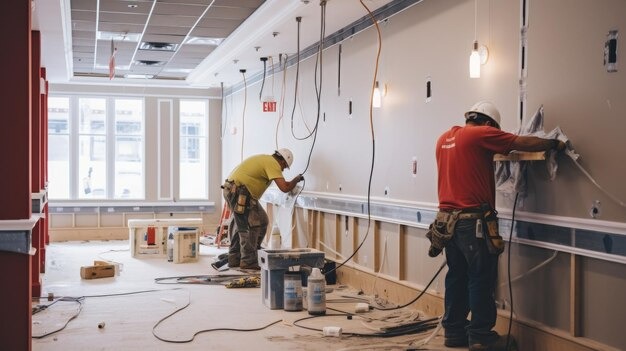
A full rewire means running new copper branch circuits from the panel to every outlet, switch, and fixture in the house, then retiring the old cloth or knob and tube wiring instead of leaving it dead in the walls. On an occupied home we typically work room by room so you are not without power in the whole house at once, though the areas under active work will be shut off for the day.
Some of the job is ours, and some belongs to the utility. Brandon’s crew handles the interior work: new circuits, new panel or panel upgrade, new devices, and coordinating the shutoff with National Grid before the service head and meter are touched. The utility handles reconnecting service at the weatherhead once our work passes inspection. Expect some cutting into plaster or drywall to fish wire through old stud bays, especially in a post-and-beam or balloon-framed house where the wall cavities were not built with future rewiring in mind. We patch what we open, though painting is on the homeowner’s side unless we’ve talked through otherwise.
What It Costs
A whole-home rewire in Rowley generally runs {PRICE_LOW} to {PRICE_HIGH}, and the spread is wide because the variables are real. Square footage matters, but so does the framing type, how much of the original wiring can be traced versus how much is buried behind finished walls, whether the panel itself needs replacing alongside the branch circuits, and how many fixtures, switches, and outlets you want added versus just replaced in place. A single-story cape with an accessible basement and attic is a different job from a two-story farmhouse with finished plaster ceilings on both floors. Brandon walks the whole house before quoting, because a phone estimate on a rewire is a guess, not a number.
How Long It Takes
Most whole-home rewires in a house Rowley’s size take several days to two weeks, depending on square footage and how much demolition and patching is involved. A smaller cape with an open basement to fish wire through moves faster than a farmhouse with additions from three different decades. We sequence the work so you keep power in the parts of the house we’re not actively rewiring that day, and we’ll walk through the schedule with you before the first wall gets opened.
Permits and Inspection
Rewiring work in Massachusetts requires a permit and a licensed electrician’s sign-off, full stop. Once the new circuits are run, the town’s electrical inspector checks the work before walls get closed up, and again after final connection. This isn’t paperwork for its own sake. It’s the difference between work a licensed electrician stands behind and work an unlicensed handyman did on a weekend with no one checking the panel connections or the grounding. Brandon pulls the permit, schedules the inspection, and handles the utility coordination as part of the job, not as an add-on. [EXTERNAL LINK: Massachusetts Board of State Examiners of Electricians licensing and permit info, to show homeowners what a licensed electrical permit actually requires]
Common Questions
How do I know if my Rowley home has knob and tube wiring?
The clearest sign is visible ceramic knobs and tubes in an unfinished attic or basement, usually with dark cloth-covered wire running through them. If you've never had the attic inspected, or the house predates 1950, it's worth having an electrician check before you insulate or add circuits, since covering knob and tube with insulation is a fire risk many insurers now flag directly.
Will my homeowner's insurance require a rewire?
Many insurers in Massachusetts will not write or renew a policy on a home with active knob and tube wiring or a Federal Pacific panel still in service. If you're buying, selling, or renewing coverage on an older Rowley property, ask your insurer directly, but don't be surprised if a rewire or panel replacement comes up as a condition.
Can you rewire part of the house instead of the whole thing?
Yes. Some Rowley homeowners rewire in phases, starting with the areas carrying the heaviest load or the oldest wiring, then handling the rest later. It costs more in total than doing it all at once, but it spreads out the expense if that's what makes sense for your household.
Do I need to move out during a rewire?
Usually not. We work room by room and keep power on in the areas we're not actively working in that day. You'll lose power in whatever section is under construction, but most homeowners stay in the house through the project.
What panel size do you recommend when rewiring an older Rowley home?
200 amp service is standard now for a full-size home, especially if you're adding central air, an EV charger, or a generator transfer switch down the line. A 100 amp panel can still make sense for a smaller house with modest electrical loads, but Brandon will size it to your actual usage, not just install the biggest panel available.
Reach Out for Home Rewiring
If your Rowley home still has its original wiring, or you’re not sure what’s behind the walls, call {PHONE} and Brandon will set up a time to look at the panel, the attic, and the basement in person. A short visit tells you a lot more than a guess over the phone.
Contact information
Talk to Brandon
Brandon is the licensed electrician at Belfiore. He grew up on the North Shore, so he’s seen his share of knob and tube in attics and Federal Pacific panels in basements from Rowley to the rest of the towns we cover. He’ll walk your house, tell you honestly what’s original, what’s been patched, and what actually needs to come out, rather than pushing a bigger job than the house calls for.