Electrical Troubleshooting and Repair in Ipswich, MA
A lot of Ipswich houses started life with a 60 amp fuse panel, two circuits for the whole first floor, and wiring insulated in cloth or rubber that has been sitting in the walls since before anyone thought about central air or an EV in the driveway. That original system was fine for what a colonial or First Period home needed in 1954. It is not fine for a house running a heat pump, a well pump, a septic alarm, and a couple of space heaters in January.
Why Ipswich Homes Need This
Ipswich has one of the heaviest concentrations of pre-1940 housing on the North Shore, including a real number of First Period structures where the framing and finishes are treated as historic. That matters because you cannot just fish new cable through a wall the way you would in a 1990s colonial. Every run has to be planned around plaster, horsehair lath, and in some cases post-and-beam framing that nobody wants opened up more than necessary.
On the electrical side, we still find knob-and-tube wiring in attics and basements that was never removed, just capped off or left live behind newer finishes. We see 60 amp services that predate central air, well pumps, and modern kitchens, and older Federal Pacific or Zinsco panels that are known for breakers that don’t trip when they should. Add in that most of Ipswich is on well and septic, not town water and sewer, and you’ve got homes leaning on a well pump and a septic alarm system that both need dedicated, reliable circuits. Out here, on a rural road past Argilla or up toward the Rowley line, a long storm outage isn’t an inconvenience, it can mean a well with no pressure and a septic system with no alarm. That’s the same generator conversation we have with clients across the estate belt, and it starts with the panel and wiring being sound enough to support one.
What the Work Involves
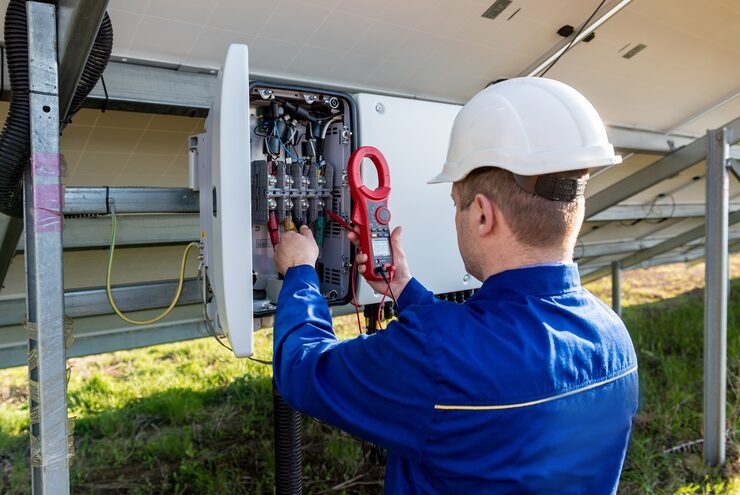
Troubleshooting starts with finding the actual fault, not guessing. Brandon traces the circuit, checks the panel, and tests connections at outlets, switches, and junction boxes. Common culprits in Ipswich’s older housing stock: a loose neutral in a fuse panel, a knob-and-tube splice that’s failed inside a wall, an outlet on a shared circuit that’s been overloaded by space heaters, or a breaker that’s simply worn out and no longer protecting the circuit it’s wired to.
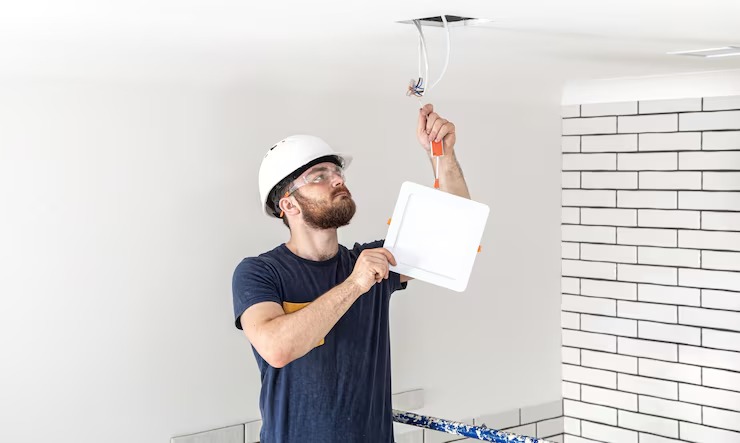
Once we know what’s wrong, we tell you the fix and the alternative if there is one. That might mean replacing a section of failed wiring, adding a dedicated circuit for a well pump or sump pump, swapping a bad breaker, or recommending a full panel change if the existing panel is a known problem type. Power to the affected circuit gets shut off at the panel for the repair, usually for an hour or two. If the whole panel needs to come out, we coordinate a brief service disconnect with National Grid, since only the utility can pull and reset the meter. That utility step is usually the shortest part of the day. The rest is our work: running wire, terminating connections, labeling circuits, and testing everything before we close a single wall or cover plate.
What It Costs
Straightforward troubleshooting and a single repair, like a bad breaker or a failed outlet circuit, typically runs {PRICE_LOW} to {PRICE_HIGH}. Cost moves with what we find: whether it’s one fault or several, how much of the house is on knob-and-tube or cloth wiring, whether we’re opening plaster versus drywall, and whether the fix is a repair or points to a bigger issue like an undersized panel that needs to be addressed separately. We give you the number after we’ve actually looked at the wiring, not before, because guessing on a house this old does nobody any favors.
How Long It Takes
Most single-fault troubleshooting and repair jobs are done in one visit, often a few hours. If the diagnosis turns up knob-and-tube that needs replacing in a section of wall, or a panel that’s a genuine safety concern, we’ll scope that as its own job with its own timeline rather than trying to rush it into the same afternoon. We would rather tell you it’s a two-visit job than cut a corner in a 200-year-old wall cavity.
Permits and Inspection
Electrical repair work in Massachusetts is permitted and inspected, and that’s true whether it’s a full panel swap or a single circuit repair that involves opening up wiring. Brandon pulls the permit, the town inspector signs off on the finished work, and you get a paper trail showing the repair was done to code. That’s the difference between hiring a licensed electrician and hiring someone with a truck and a multimeter. It also matters later, at resale or insurance time, when a buyer’s inspector or your insurer asks whether electrical work was permitted. [EXTERNAL LINK: Massachusetts Board of State Examiners of Electricians, for homeowners who want to verify a license or understand permitting requirements]
Common Questions
Is knob-and-tube wiring dangerous if it's still in my Ipswich home?
Not automatically, but it has no ground and its insulation degrades over decades. It becomes a real risk when it's been spliced into modern circuits, buried under insulation, or overloaded by devices it was never sized for. We test what's active and tell you honestly what needs to come out versus what can be monitored.
Do I need to upgrade my whole panel just to fix one circuit?
No. A lot of troubleshooting calls end with a single breaker or wiring repair and nothing more. We only recommend a panel upgrade when the panel itself is the actual problem, like a Federal Pacific panel with a known breaker failure pattern, or a 60 amp service that can't support what the house is actually running.
Can electrical repairs affect my well pump or septic alarm?
Yes, if either is sharing a circuit with something else, which we see often in older Ipswich homes. We check that your well pump and septic alarm each have their own dedicated, correctly sized circuit as part of any troubleshooting visit.
How does the utility get involved in an electrical repair?
For most single-circuit repairs, National Grid isn't involved at all. If a panel replacement or major service work is needed, the utility has to pull and reset the meter, which is a short scheduled step we coordinate, separate from the electrical work itself.
Reach Out for Electrical Repair
Old wiring in an old house is not a reason to panic, but it is a reason to get someone who knows the difference between knob-and-tube, a bad breaker, and a panel that’s simply done. Call {PHONE} and describe what’s happening. We’ll get a time on the books and take it from there.
Contact information
Talk to Brandon
Brandon is the electrician side of this company. He left union work to run electrical for Belfiore alongside his twin brother Chris, who handles the plumbing and heating side. If something in your Ipswich house is tripping, flickering, or just feels off, tell him what you’re seeing. He’ll walk you through what it’s likely to be before he ever picks up a tool, and he won’t recommend a repair he wouldn’t make in his own house.