
Bathroom Plumbing Remodeling in Georgetown, MA
A lot of Georgetown bathrooms are still running on the plumbing that was installed when the house was built decades ago, tied into an aging boiler and, in plenty of cases, a well system that was never set up to filter what’s actually coming out of the tap. When you remodel a bathroom here, you’re not just picking new fixtures. You’re deciding whether the pipe, vent, and water supply behind the wall are worth keeping.
Bathroom Plumbing Remodeling in Georgetown
Belfiore handles the plumbing side of bathroom remodels in Georgetown, from a single vanity swap to a full gut down to the studs. That means relocating or replumbing supply lines, resetting drain and vent piping to current code, running new shutoffs, and tying the new fixtures into whatever heating and water system the house already has. Chris runs the plumbing crew and looks at the whole system before any tile comes off the wall, because in a town with this much older housing stock, what’s behind the wall usually decides the plan more than what’s on the showroom floor.
What Georgetown homes typically have
Georgetown’s housing runs from antique farmhouses and colonials near the center to newer construction out toward the Rowley and Boxford lines. In the older homes, it’s common to find a mix of galvanized and copper supply lines, sometimes both in the same bathroom, along with a boiler that’s outlived its efficient years. Cast iron drain and vent stacks are common too, and they don’t always sit where a modern layout wants them.
Water source matters as much as age here. A good share of Georgetown is on private well, especially away from the town center, which makes filtration and water treatment a real conversation during a remodel, not an add-on. If your well water is leaving mineral buildup on fixtures or a sulfur smell in the bathroom, that’s worth addressing while the walls are already open.
Gas availability is uneven too. Some streets have natural gas at the curb, others don’t, and homes on the unserved side are running on oil or propane for heat and hot water. That distinction changes what’s realistic for a tankless water heater or a gas-fired boiler upgrade during the remodel, so it’s one of the first things Chris confirms on a walkthrough.
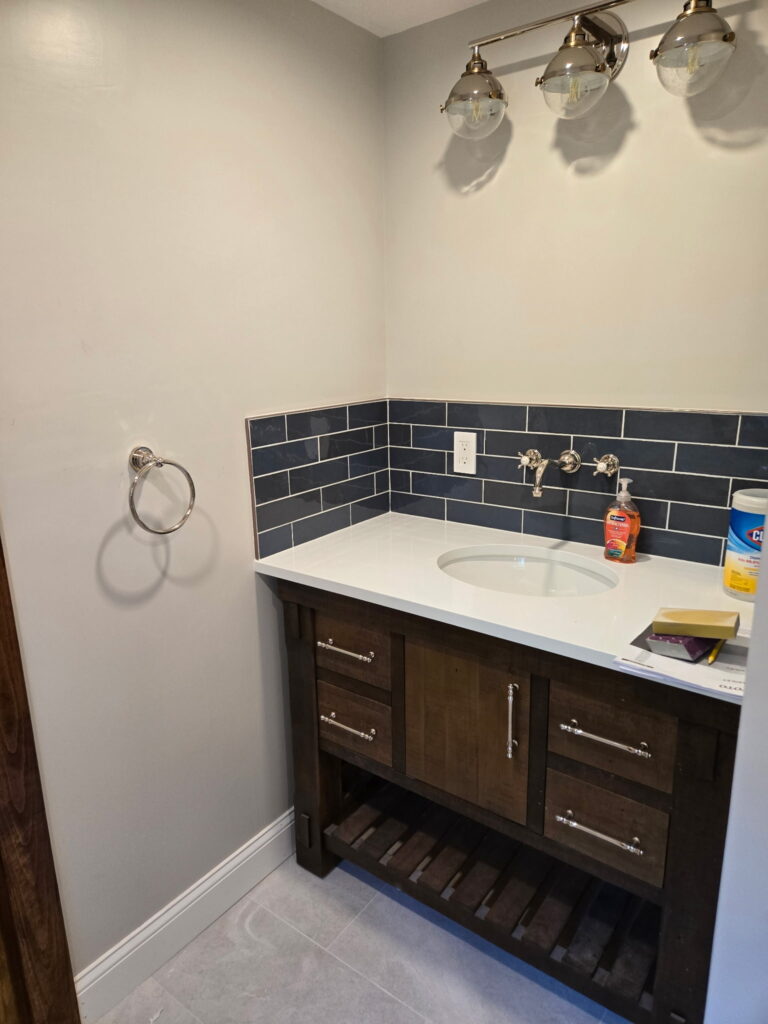
What the work involves
Once the scope is set, the plumbing side of a bathroom remodel generally covers:
- Draining the system. The water supply to the bathroom, and often the whole house depending on shutoff locations, gets drained before any pipe comes out.
- Supply line work. Old galvanized or undersized copper gets replaced with properly sized PEX or copper, run to code for the new fixture layout.
- Drain and vent changes. Moving a tub, shower, or toilet means resetting the drain line slope and reworking the vent stack so it still passes inspection.
- Gas sizing, if applicable. If the remodel includes a gas-fired water heater or a heated towel system with a gas connection, the line gets sized to the BTU load, not just tapped off the nearest run.
- Fixture rough-in and trim. Setting the new tub, shower valve, toilet, and vanity connections, then coming back for final trim once tile and finish work are done.
Depending on scope, the house is without water to that bathroom for the working day, and without hot water house-wide only if the water heater itself is part of the job. Chris schedules around that so you’re not caught off guard mid-remodel.
Repair or replace
Not every remodel needs new pipe from the meter to the mirror. If your supply lines are copper and in decent shape, there’s usually no reason to replace them just because the room is getting a facelift, and Chris will say so on the walkthrough. Where replacement earns its cost is old galvanized pipe, which corrodes from the inside and restricts flow no matter what fixtures you put on the other end, and cast iron vent stacks that have deteriorated to the point of leaking or smelling.
The same logic applies to the water heater. If it’s sized right, venting properly, and has years left in it, there’s no reason to swap it out just because the bathroom is being redone. If it’s undersized for the household or nearing the end of its service life, the remodel is the right time to deal with it, since the wall is already open and the labor to access it is already accounted for.
What it costs
Cost depends on how much of the existing plumbing gets reused versus replaced, whether fixtures are moving to new locations, and whether the water heater or filtration system is part of the scope. A refresh that keeps fixtures in place costs a lot less than a full relocation with new drain and vent runs. {PRICE} gives you a real range once Chris has seen the layout and the condition of what’s behind the wall. Anything quoted before that walkthrough is a guess, and Chris doesn’t like handing out guesses.
How long it takes
A straightforward fixture swap with no relocation typically takes {TIMEFRAME} for the plumbing portion. A full remodel with moved fixtures, new drain and vent runs, and a water heater swap runs longer, since inspections have to happen at rough-in before the walls close up. Chris builds the schedule around those inspection points so the rest of the remodel crew isn’t standing around waiting on plumbing.
Common Questions
Do I need to replace my water heater if I'm remodeling my bathroom?
Not automatically. If it's sized correctly for your household and venting properly, Chris will usually leave it alone. If it's undersized or near the end of its life, the remodel is a practical time to deal with it since access is already open.
My house is on well water. Does that change the remodel plan?
It can. Well water often carries more sediment or minerals than town water, which affects fixture life and can justify adding filtration during the remodel rather than as a separate project later.
Is my house on gas or oil?
It depends on your street. Parts of Georgetown have gas service at the curb and parts don't. Chris checks this before recommending any gas-fired fixture or tankless option, since running new gas line where there's none available changes the scope.
Can you work around an older cast iron vent stack?
Often yes, if it's structurally sound. If it's corroded or leaking, replacing that section during the remodel is usually cheaper than dealing with it as an emergency repair later.
How much of my old plumbing will actually get replaced?
Reach Out for Bathroom Plumbing Remodeling
If you’re planning a bathroom remodel anywhere in Georgetown, call Belfiore at {PHONE} and Chris will set up a walkthrough. Bring the punch list, the tile samples, whatever you’ve got, and he’ll tell you what the plumbing side actually requires before anything gets torn out.
Contact information
Talk to Chris
Chris walks every Georgetown bathroom remodel in person before quoting it. He’ll tell you straight whether your existing pipe is fine to keep, whether your water heater needs to be part of the conversation, and whether your well water is worth filtering while the walls are open. No upsell script, just what the house actually needs.