Gas Line Installation and Repair in Georgetown, MA
A lot of Georgetown houses are still running steam or hot water boilers that predate the current owners, and plenty of them sit on well water where a filtration setup is a practical need, not a sales pitch. When it comes to gas, the mix of old iron pipe, newer additions, and appliances added over the years means the line itself often needs a second look before anyone touches a furnace or a range.
Gas Line Installation and Repair in Georgetown
Belfiore handles gas line work for homes and small properties across Georgetown, from running new lines for a generator or a range to repairing old black iron that’s started to corrode at the joints. Chris runs the plumbing side of the business, and gas piping is one of those jobs where licensing isn’t a formality. A line sized wrong, or vented wrong, is a hazard in the house, not just a code problem on paper.
We work on the piping itself and coordinate with the gas utility where a new service or meter upgrade is involved. If you’re adding a generator, a tankless water heater, or converting a boiler from oil to gas, the gas line sizing has to be figured for total appliance load, not just the one new fixture.
What Georgetown Homes Typically Have
Georgetown’s housing stock runs older than a lot of the North Shore, with a good number of homes built well before mid-century and additions bolted on over the decades. That means original heating systems have often been replaced once already, sometimes twice, and the gas or oil piping doesn’t always match the age of the equipment currently attached to it.
Gas availability is not uniform out here. Some streets have natural gas mains running past them, and some don’t, which means propane is still common for heating and appliances on the parts of town further from the main lines. Before we talk about installing or extending a gas line, we check what’s actually running to the property, because that changes the whole scope of the job.
Well water and septic systems are common in Georgetown too, which is a separate issue from gas, but it tends to come up in the same conversation. Homes on well water usually need a filtration or treatment setup that’s genuinely useful given the mineral content out this way, not an add-on we’re pushing.
What the Work Involves
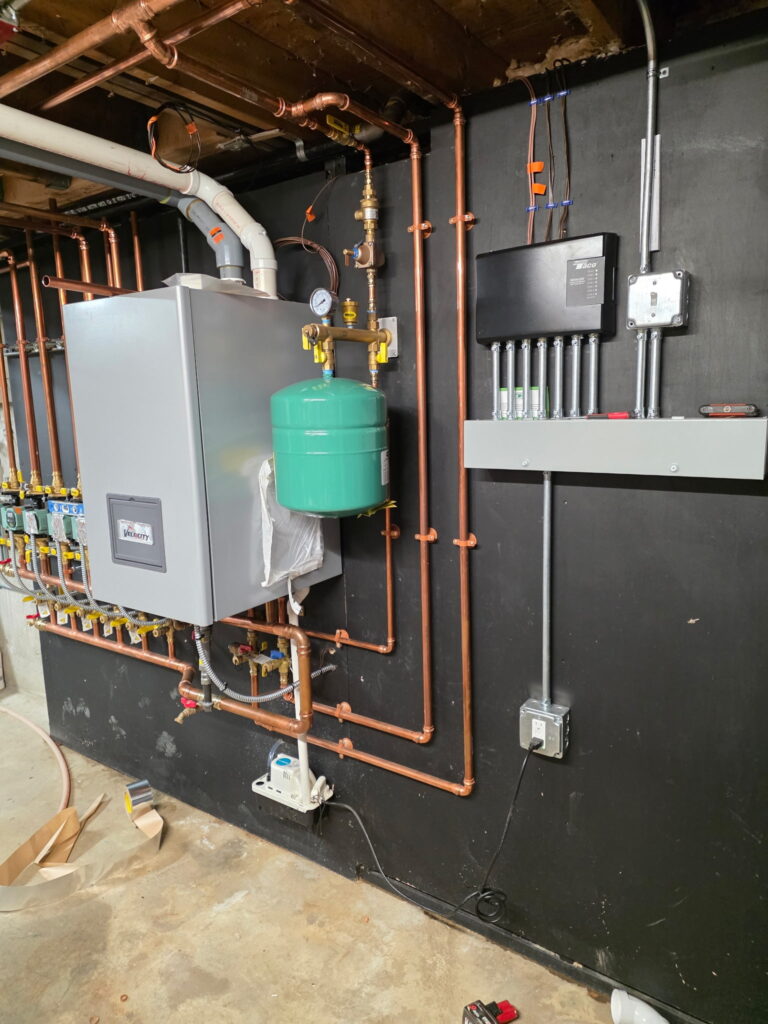
Gas line work starts with shutting down and depressurizing the section being worked on. For a repair, we isolate the affected run, cut out the bad section, and rejoin with properly rated pipe and fittings, black iron or CSST depending on the run and local code allowance. For a new line, we calculate total BTU demand across every appliance the line will feed, then size the pipe diameter and run length to match, because undersized gas piping is one of the more common issues we find in older homes here.
Every new or altered gas line gets pressure tested before it’s put into service. If the line feeds an appliance that needs venting, like a boiler or a water heater, we check that the venting is correct for the equipment, not just present. Loose or improperly pitched venting is a problem we see on older Georgetown boilers more than people expect.
Most gas line repairs are a matter of hours, not days. A full new line run to a detached generator or an addition can take longer depending on distance and whether we’re going through a foundation or under a slab. We’ll walk you through the specific run before we start so there’s no guessing about how long the house will be without heat or hot water, if either is affected at all.
Repair or Replace
Most gas line problems in Georgetown homes are a section of corroded or damaged pipe, not the whole system. If the rest of the line is sound and the fitting or short run in question can be cut out and replaced, that’s what we’ll tell you to do. There’s no reason to replace a gas line that’s otherwise in good shape because one joint failed a pressure test.
Full replacement makes sense when the piping is old enough, or corroded enough, that patching one section just means you’ll be back here in a year fixing the next one. It also makes sense when you’re changing what the line needs to do, like adding a whole-house generator or converting a boiler, and the existing line simply isn’t sized for the new load.
We’ll tell you straight which category your house is in. If a repair solves the problem, that’s the answer we give, even though a full replacement is the bigger job.
What It Costs
Gas line pricing depends on the length of run, the pipe material, whether we’re working through finished space or open framing, and whether the utility needs to be involved for a meter or service change. A single joint repair is a different job than a new 40-foot run to a generator pad. We give you the number for your specific situation, in writing, before work starts. It’s {PRICE_RANGE_PLACEHOLDER} territory and we’ll be specific once we’ve seen the job.
How Long It Takes
A straightforward gas line repair, isolating and replacing a bad section, is typically finished in a single visit. New installations take longer, and the timeline depends on the run: a line to a nearby appliance is quick, while a run to a detached structure or across a slab takes more time and coordination. Pressure testing adds a short wait to any job, because we’re not signing off on a line until it holds.
Common Questions
Is natural gas available everywhere in Georgetown?
No. Some parts of town have natural gas mains, and others don't, which means propane is still common for heating and appliances further from the main lines. We check what's actually available to your property before scoping any gas line work.
Can you convert my oil boiler to gas?
If natural gas or propane service is available to your property, yes, and it usually means running a new properly sized gas line to the boiler location along with the venting changes the new equipment requires. We'll walk you through what's involved for your specific setup.
How do I know if my gas line needs repair or full replacement?
It comes down to the condition of the pipe outside the affected section. If the rest of the line passes inspection and pressure testing, a repair is the right call. If the piping is old and corroded throughout, or you're adding load it wasn't sized for, replacement is the honest answer.
Will I be without heat or hot water during the work?
For most single-section repairs, only briefly, and we schedule around that. For larger jobs like a boiler conversion, we tell you upfront how long the affected system will be down before we start.
Do you handle the utility company coordination for a new gas service?
Reach Out for Gas Line Installation and Repair
Belfiore is a Salem-based company, and we work across Georgetown on gas line installation and repair for boilers, water heaters, ranges, and generators. Call {PHONE} to get a licensed opinion on what your line actually needs.
Contact information
Talk to Chris
If you’ve got a gas smell, an appliance that won’t stay lit, or you’re planning ahead for a generator or a boiler swap, call and talk it through with Chris directly. He’ll ask what you’re seeing, what’s original to the house versus added later, and give you a straight read on what the fix looks like before anyone comes out.