Electrical Panel Replacement in North Reading, MA
A lot of North Reading was built or filled in during the postwar boom and the ranch and split-level wave that followed, and those houses came with panels sized for a house that ran a furnace, a fridge, and maybe a window air conditioner. Now those same houses are getting EV chargers in the garage, heat pumps replacing the oil burner, and finished basements with a home office and a mini-split. The panel underneath the stairs was never built for any of that.
Why North Reading Homes Need This
North Reading’s housing stock spans enough decades that we see the full range of old electrical problems in this town alone. Older sections still have cloth-insulated wiring and knob and tube in the walls, sometimes behind a panel that was already swapped once in the 1970s or 80s. That’s when a lot of homes here picked up a Federal Pacific Stab-Lok panel or a Zinsco box, both of which have a well-documented history of breakers that don’t trip when they should. That’s not a scare line, it’s a known failure mode, and it’s a real reason to replace rather than patch.
We also see plenty of 60 amp services still in place on homes that have since added central air, an electric range, or a garage full of power tools. Sixty amps was fine for a 1955 kitchen. It isn’t enough for a house running an EV charger, a heat pump, and a modern kitchen at the same time, and stacking more circuits onto an undersized or unsafe panel just moves the risk around instead of fixing it. On North Reading’s larger lots, we also handle plenty of homes with detached garages or barns that need their own subpanel fed off a main panel that has to be sound to begin with.
What the Work Involves
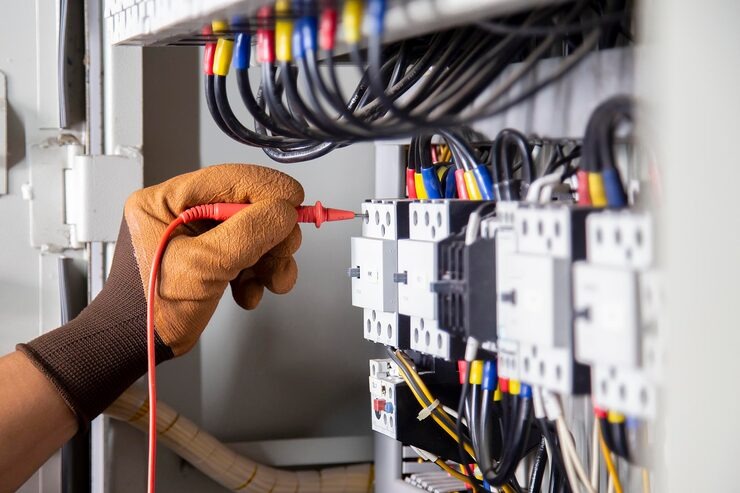
A full panel replacement means pulling the old panel out and installing a new one, not just swapping a few breakers. Brandon shuts down power at the meter, disconnects every circuit, removes the old panel enclosure, and mounts the new one in its place, or relocates it a few feet if code or access requires it. Every circuit gets landed on a new breaker sized correctly for its wire gauge, which is also when we catch double-tapped breakers or undersized wire from past DIY work.
The utility has to pull the meter or, depending on the setup, coordinate a brief outage on their end, so there’s a short window, usually a few hours, where the house has no power at all. After the new panel is in, everything gets tested circuit by circuit, grounding and bonding are verified, and the panel is labeled properly so the next person who opens it isn’t guessing. This is also the point where we’ll flag anything upstream, like an undersized meter base or service drop, that would need a service upgrade instead of or in addition to the panel itself.
What It Costs
A straightforward panel replacement in North Reading generally runs {PRICE_LOW} to {PRICE_HIGH}. Where it lands depends on the panel size you’re moving to, whether the new panel is going in the same location or needs to be relocated, how many circuits have to be re-terminated, and what we find once the cover is off. A house with knob and tube feeding into the panel, or a detached garage subpanel to reconnect, takes more time than a straight swap. We’ll open the panel, tell you what’s actually going on, and give you a number before anything gets cut.
How Long It Takes
Most panel replacements are a one-day job. Brandon and the crew handle the teardown, install, and circuit reconnection in a single visit, with the power outage itself usually limited to a few hours in the middle of the day. If the utility needs to schedule a meter pull or there’s a permit inspection required before we can close the wall back up, that can add a day or two to the calendar, but the physical work itself is done in one shift.
Permits and Inspection
Panel replacement requires a permit in Massachusetts, and it gets inspected. That’s true whether it’s a full 200 amp panel or a smaller subpanel. We pull the permit, the town inspector reviews the work before it’s closed up, and you get a record on file that the work was done by a licensed electrician to code, not by whoever was cheapest on a Saturday. If you’re ever selling the house, that permit history is worth having. [EXTERNAL LINK: Massachusetts Board of State Examiners of Electricians, for verifying licensing and the state electrical code requirements] is the state’s own resource on what licensed electrical work in Massachusetts requires.
Common Questions
How do I know if I have a Federal Pacific or Zinsco panel?
Open the panel door and check the manufacturer name printed inside, usually on the door or near the main breaker. Federal Pacific panels often say "FPE" or "Federal Pacific Electric" and have a distinctive red Stab-Lok breaker switch. Zinsco panels usually say "Zinsco" or "GTE Sylvania" on the breakers themselves. If you're not sure, send us a photo and Brandon can tell you.
Do I need a full replacement or can the panel just be repaired?
Individual breakers can sometimes be replaced, but if the panel itself is a recalled or obsolete brand, or the bus bar shows heat damage or corrosion, repair isn't a real option. At that point you're replacing the whole enclosure, not patching around a known problem.
Will my power really be off for hours?
Yes, for part of the day. The main breaker and often the meter have to be disconnected for the swap to happen safely. We schedule around this so you know what to expect and can plan the day accordingly.
Does panel replacement affect my homeowners insurance?
Can you replace my panel and add EV charger capacity at the same time?
Reach Out for Electrical Panel Replacement
If your panel is original to a 1960s North Reading colonial, or it’s a Zinsco or Federal Pacific box someone installed decades ago, get it looked at before you add another circuit to it. Call Belfiore at {PHONE} and we’ll set up a time for Brandon to take a look and walk you through the options.
Contact information
Talk to Brandon
Brandon is the licensed electrician at Belfiore. He grew up in this trade, left the union to work the family business full time, and he’s the one who’ll walk into your basement, open the panel, and tell you straight whether you’ve got a Federal Pacific box that needs to go now or a service that’s got a few more years in it. No sales script, just what he’d do in his own house.