
Kitchen Plumbing Remodeling in Newburyport, MA
A lot of Newburyport kitchens are still running on the same rough plumbing layout the house had in 1900, patched over a few times since. When you pull a cabinet off the wall in one of these downtown houses, you often find galvanized branch lines, a vent that was never sized right, or a water heater that was already too small for the house before you added a second sink and a dishwasher to the plan.
Kitchen remodels here are rarely just a faucet swap. They usually mean moving supply and drain lines to a new island or sink location, upsizing a gas line for a new range, and figuring out what the existing water heater or boiler can actually support once the kitchen’s done. Chris handles that side of the job directly, and he’ll tell you upfront if the plumbing behind your walls is going to drive the budget more than the cabinets do.
Kitchen Plumbing Remodeling in Newburyport
Newburyport’s downtown and South End are dense with federal and Greek Revival homes, many with additions or converted spaces where a kitchen has been moved at least once already. That history shows up when you open a wall. You’ll find old iron drain lines tied into newer PVC, shutoffs that don’t fully close anymore, and vent stacks that were routed around a chimney instead of straight up through the roof.
None of that stops a remodel, but it changes how the job gets scoped. Chris walks the space before any pricing gets written down, because a kitchen plumbing job in a 200-year-old Newburyport house and the same job in a 1990s Newburyport colonial are not the same project, even if the new fixtures are identical.
What Newburyport Homes Typically Have
Most of the housing stock in and around downtown Newburyport predates 1920, with a good number of homes going back much further. Heating is a mix of old steam boilers that were never converted, hot water boilers that replaced them at some point, and a smaller number of newer high-efficiency units in homes that have already been through a renovation.
Water service is almost always town water in the downtown core and closer neighborhoods. Once you get out toward the edges of town and into parts of neighboring Newburyport and Salisbury, private wells become more common, and well water changes the kitchen plumbing conversation. If you’re on a well, filtration and a properly sized pressure tank matter more than they would on town water, and it’s worth addressing during a remodel rather than after.
Gas availability also varies more than people expect. Some streets in Newburyport have gas mains, others don’t, and a fair number of older homes still run on oil heat with no gas service at the street at all. If you want a gas range as part of your kitchen remodel, that’s one of the first things Chris checks, because it can mean a call to the utility before any pipe gets run.
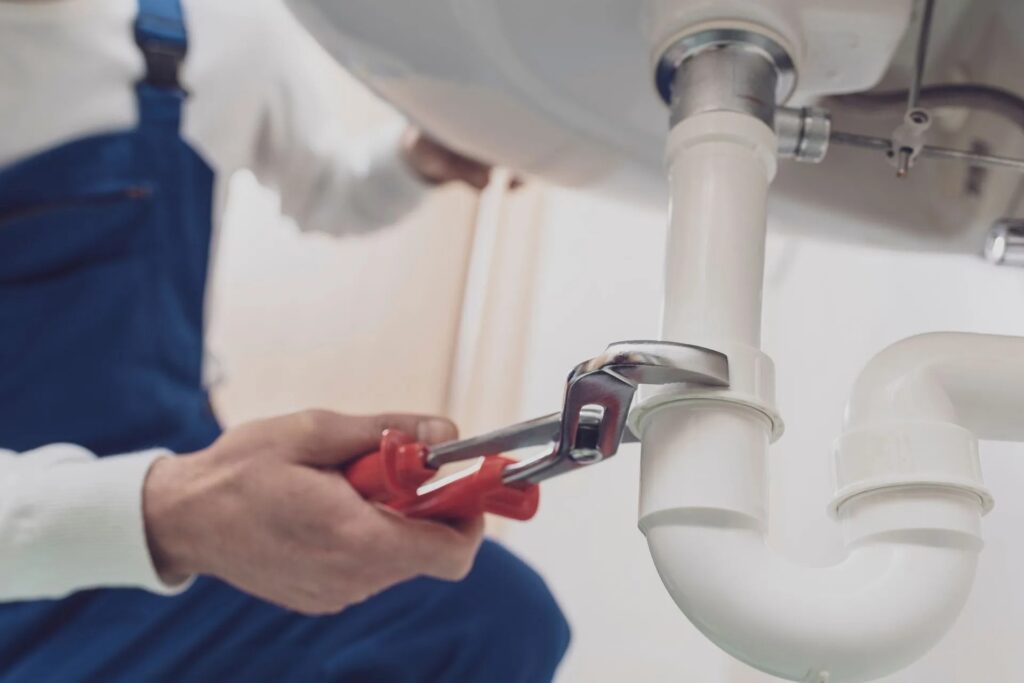
What the Work Involves
A kitchen plumbing remodel typically starts with shutting down and draining the existing supply and drain lines feeding the sink, dishwasher, and any ice maker or pot filler you’re adding. From there the work depends on how far the layout is moving.
If the sink or island is relocating, that means new drain runs with proper slope back to the stack, and a vent that meets code, not just a line that happens to work. Moving a kitchen sink more than a few feet from the existing stack often means an air admittance valve or a rerouted vent path, and Chris will tell you which option fits your walls and your ceiling below.
For a gas range, the existing line gets checked for size. A lot of older ranges ran on 1/2 inch line, and adding a higher-BTU range or a second gas appliance can call for 3/4 inch pipe run back to the meter or manifold. Undersized gas line is one of the more common surprises in a Newburyport kitchen job, and it’s cheaper to size it correctly during the remodel than to retrofit it after the cabinets are in.
Water heater capacity gets a look too. A kitchen with a new dishwasher and a bigger sink puts more demand on hot water than the old layout did. If your tank is already marginal for the house, that’s a conversation worth having before the new counters go in, not after.
Repair or replace
Not everything in a kitchen remodel needs to be torn out. If your supply lines are copper and in decent shape, they usually stay, even if the fixtures around them are changing. If the drain line under the sink is PVC from a past renovation and it’s the right diameter with a working vent, there’s often no reason to replace it just because the cabinets are new.
Where replacement makes sense is anything undersized, anything galvanized, or anything that’s been patched more than once. Galvanized supply lines corrode from the inside and restrict flow long before they visibly fail, so if your kitchen still has them, a remodel is the right time to swap that section out. Chris will point out what’s fine to keep and what isn’t, and he’ll say so even when it means a smaller job and a smaller bill than you were expecting.

What it costs
Kitchen plumbing costs in a remodel depend on how much of the layout is changing and what’s found once the walls are open. A straight fixture swap with no relocation is a much smaller job than moving a sink to an island or adding a second water line for a pot filler. Gas line upsizing, water heater capacity issues, and vent rework in an older Newburyport house all add scope that’s hard to price sight unseen.
Chris gives you a number after he’s actually looked at the space, not a phone estimate based on square footage. That’s the only way to account for what a specific house needs versus what a generic kitchen remodel might cost. Call {PHONE} and he’ll walk through it with you.
How long it takes
A fixture and faucet update with no line relocation can be done in a day, with the kitchen back in service by evening. A full relocation job, where the sink or island is moving and new drain and vent lines are being run, usually takes longer and coordinates with the general contractor’s schedule, since walls and floors need to be open for the plumbing before cabinets go back in.
Gas line work adds a step, since a new or modified gas line needs inspection before it’s put into service. Chris will lay out a realistic timeline once he knows the scope, including how many days the kitchen will be without a working sink.
Common Questions
Do I need to move my water heater for a kitchen remodel?
Not usually just to move a sink or update fixtures. It becomes a conversation if the new kitchen adds enough hot water demand, like a bigger sink plus a dishwasher, that your existing tank is undersized for the house as a whole.
Can I add a gas range if my house currently has electric?
It depends on whether gas is available at the street. Some Newburyport blocks have gas mains and some don't, especially in areas where oil heat is still common. Chris checks this before any other planning happens.
My kitchen sink is moving to an island. Is that a big job?
It's more involved than a straight fixture swap because the drain needs proper slope and a code-compliant vent, which sometimes means an air admittance valve depending on where the stack is. It's a common request in older Newburyport layouts and very doable, just not a same-day job.
Will you replace pipe that doesn't need it just because the kitchen is being redone?
No. If your existing supply and drain lines are the right material and size and in good condition, they stay. Chris only recommends replacing what's actually undersized, galvanized, or failing.
I'm on well water. Does that change the remodel?
Reach Out for Kitchen Plumbing Remodeling
Belfiore is a Salem-based company working across Newburyport and the rest of the North Shore. Call {PHONE} to set up a time for Chris to walk through your kitchen and tell you straight what the plumbing side of the remodel looks like.
Contact information
Talk to Chris
Chris runs the plumbing side of Belfiore and looks at every kitchen remodel job himself before it’s scoped. If you’re planning a kitchen update in Newburyport and want to know what your existing plumbing, gas line, and water heater can actually handle, that’s the conversation to have before you finalize a layout with your contractor or designer.