Electrical Troubleshooting and Repair in Reading, MA
A lot of Reading’s housing stock went up in the postwar boom and the subdivision waves that followed through the 60s and 70s, on lots big enough that additions and finished basements kept coming for decades after. Those homes were wired for window units and a washer and dryer, not for a heat pump, an EV charger, and a home office running on the same panel. When something trips, flickers, or just stops working, it’s usually the wiring telling you it’s out of room, not just out of luck.
Why Reading Homes Need This
The service panel is the first thing we look at, and in Reading it’s often a 60 or 100 amp panel that made sense in 1965 and doesn’t make sense now. Add central air, a garage subpanel, a couple of space heaters in winter, and you’re asking a small service to carry a modern load. We still find Federal Pacific Stab-Lok and Zinsco panels in this town’s older homes, and both have documented breaker failure issues that are worth knowing about even if nothing feels wrong yet.
Homes closer to the older sections of town, particularly ones that haven’t been fully rewired, can still have cloth-insulated wiring or knob and tube in the attic or wall cavities. That wiring isn’t automatically dangerous, but it wasn’t built for insulation packed tight against it or for today’s amperage draw, and it changes what an electrician can safely tie into. One detail specific to Reading’s larger-lot layout: detached garages and converted barns are common here, and a lot of them are still running on an old feeder cable that was never sized for the tools or EV charger someone wants to run out there now.
What the Work Involves
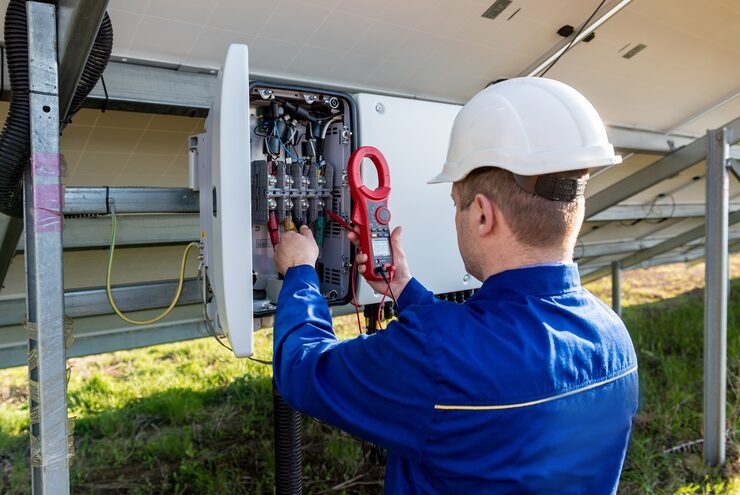
A troubleshooting call starts with tracing the problem, not guessing at it. Brandon checks the panel first, then works outward: breaker condition, wire gauge at the outlets in question, and whether the issue is a loose connection, a failing device, or a panel that’s undersized for what’s plugged into it. Some fixes are contained to a single circuit and take an hour. Others point to a panel or service upgrade, and that’s a bigger conversation with a clear next step, not a surprise.
For anything touching the main panel or service entrance, the power to that panel gets shut off for the duration of the work, and depending on the scope, National Grid may need to pull and reset the meter or coordinate a temporary disconnect. That utility step is out of our hands on timing, but the panel work itself is ours. Once the new panel or circuit is in, everything gets tested under load before we call it done: breakers cycled, GFCI and AFCI protection verified where code requires it, and connections checked for torque.
What It Costs
Straightforward troubleshooting, like a dead outlet or a breaker that won’t hold, typically runs in the {PRICE_LOW} to {PRICE_HIGH} range depending on how far the problem is buried in the wall or attic. Panel-level work costs more because it involves permitting, utility coordination, and more labor. What moves the number: how old the wiring is behind the wall, whether the panel itself needs replacing versus just the circuit, and whether the utility service drop needs to be upgraded to support the new load. We give you a number before anything gets opened up, not after.
How Long It Takes
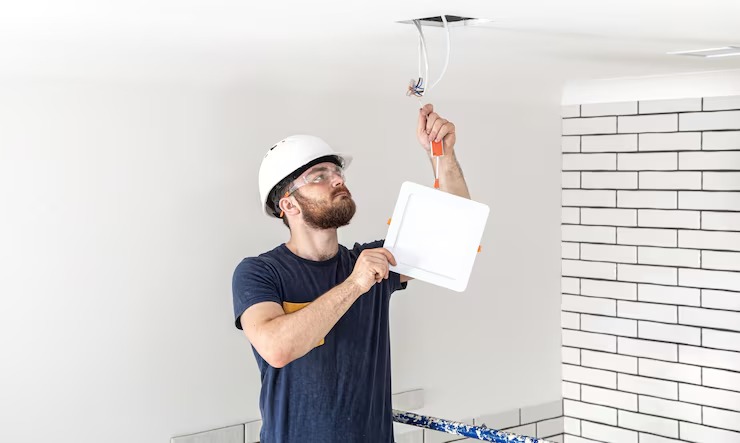
A single circuit or outlet repair is usually done same day, often in an hour or two once we’re on site. A panel upgrade is a longer job, generally a full day of on-site work plus the lead time to schedule the permit and inspection. The power to the affected circuits, or the whole house if it’s panel work, is off only while we’re actively working, and we plan the shutoff window around when you need lights and refrigeration back on.
Permits and Inspection
Electrical work in Massachusetts is permitted and inspected, and panel and service work always requires it. That means a licensed electrician pulls the permit with the Town of Reading’s inspectional services, does the work to the state electrical code, and a municipal inspector signs off before the panel is closed up for good. This is the difference between a licensed electrician and someone working off a truck with no license number to put on the paperwork. [EXTERNAL LINK: Massachusetts Board of State Examiners of Electricians licensing and code information, for homeowners who want to verify licensing requirements or research the state electrical code themselves]
Common Questions
Why does my breaker keep tripping even when I unplug everything?
A breaker that trips with a light load usually means the breaker itself is worn out, or there's a loose connection somewhere in that circuit generating heat. In older Federal Pacific or Zinsco panels, worn breakers are a known issue and worth having checked rather than just reset repeatedly.
Do I need a panel upgrade or just a repair?
If the problem is isolated to one outlet or circuit, it's usually a repair. If you're adding a heat pump, EV charger, or finishing a basement and the panel is already full or undersized, that points to an upgrade. Brandon can tell you which one you actually need after looking at the panel.
Is knob and tube wiring dangerous?
Not automatically, but it wasn't built for modern loads or for insulation packed against it, and many insurance companies won't cover a home that still has it in active use. If we find it during a repair, we'll tell you what your options are for that section.
How long will my power be off during a repair?
For a single circuit repair, only that circuit is off, usually for under an hour. For panel work, the whole house loses power for the working window, which we schedule around your day.
Is this work permitted?
Yes. Panel and service work in Massachusetts requires a permit and a municipal inspection before it's signed off. We handle the permit filing as part of the job.
Reach Out for Electrical Repair
We work across Reading and the rest of the North Shore, and we’re a Salem-based company that keeps both plumbing and electrical licensed in-house. Call {PHONE} to get a straight answer on what’s wrong and what it takes to fix it right.
Contact information
Talk to Brandon
Brandon left union work to run the electrical side of this family shop, and he’s the one who’ll actually be tracing the circuit in your attic or opening up your panel. If something’s tripping, flickering, or you’re planning a heat pump or EV charger and want to know honestly whether your service can handle it, that’s a conversation worth having before you buy the equipment.