
Boiler Repair in Hamilton, MA
A lot of Hamilton is old farmhouse and estate-lot property, and the heating systems match the houses. You’ll find cast iron steam boilers that have been patched a dozen times, oil-fired hot water boilers running on original zone valves, and well water that leaves scale and sediment sitting in the boiler loop where nobody sees it until something fails. When the heat drops out on a cold morning here, the fix usually isn’t as simple as flipping a switch, and it isn’t always a full replacement either.
Boiler Repair in Hamilton
We get calls out of Hamilton for no heat, boilers short-cycling, kettling noise from a steam boiler with low water cut-off buildup, and hot water boilers losing pressure overnight. On the long driveways and rural roads out here, a cold house isn’t a minor inconvenience. Pipes freeze faster in a place with this much square footage and this much distance between the boiler room and the far end of the house. Chris and the crew treat a Hamilton no-heat call as the same-day priority it actually is.
What Hamilton homes typically have
Hamilton has a real mix of building eras, from 18th and 19th century farmhouses to larger homes built on former estate land, and the mechanical systems reflect that. Steam boilers are common in the older housing stock, original to homes that have since been added onto multiple times. Newer construction and renovated properties tend to run cast iron or high-efficiency hot water boilers.
Gas availability is uneven across town. Some streets have natural gas at the curb; a meaningful share of Hamilton still heats with oil, especially further from the center. If gas isn’t run to your street, converting a boiler to gas means a propane tank and a real look at the economics, not just a swap. And because so many Hamilton properties sit on private wells rather than town water, boiler feed water often carries more mineral content, which shows up as scale in the heat exchanger and sediment in low water cut-off assemblies faster than it would on town water.
What the work involves
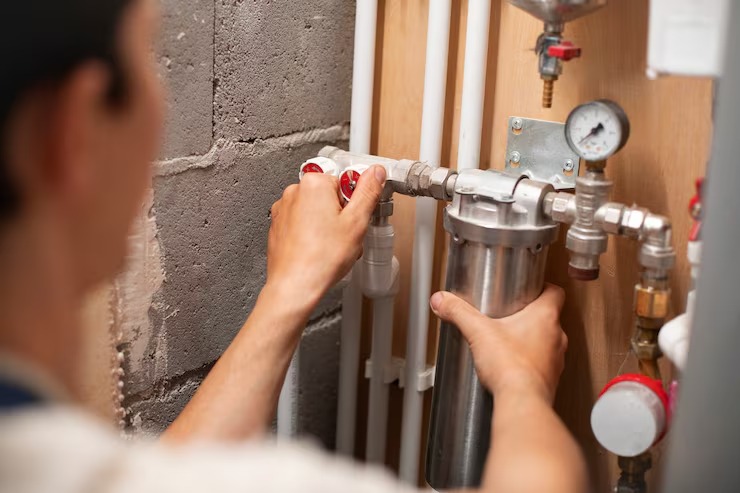
A boiler repair call starts with isolating the problem, not guessing at parts. For a steam system, that means checking the low water cut-off, pigtail, and gauge glass before anything else, since most steam complaints trace back to water level and float switches. For hot water boilers, we’re checking the circulator, zone valves, expansion tank pressure, and aquastat settings.
If a part needs replacing, the boiler gets drained and isolated, the old component comes out, and depending on what failed we may need to re-flue or re-vent a section, especially on older masonry chimney setups that don’t meet current venting clearances. Gas-fired units get checked against the gas line sizing already run to the appliance; undersized gas piping is a common finding on older Hamilton systems that have had appliances swapped over the years without the line being re-sized. Most single-part repairs mean the house is without heat for a few hours, not a full day. If the whole heat exchanger or a major casting has failed, that timeline changes and we’ll tell you before we start, not after.
Repair or replace
This is the part most companies skip past, and it’s the part that matters most. If your boiler is under 15 years old, the failure is a single part like a circulator, zone valve, or igniter, and the heat exchanger itself is sound, repair is the right call almost every time. We’ll fix it and tell you straight that it’s worth fixing.
Replacement makes sense when the heat exchanger itself is cracked or leaking, when a steam boiler has been oversized or undersized for the radiation it feeds and never ran efficiently to begin with, or when a unit is old enough that parts are back-ordered or discontinued. On well water especially, a boiler that’s taken on years of mineral-heavy feed water without proper treatment can reach a point where patching one failure just means the next one is a few months out. When we see that, we say so, and we’ll walk you through what a replacement actually involves rather than just quoting a number.
What it costs
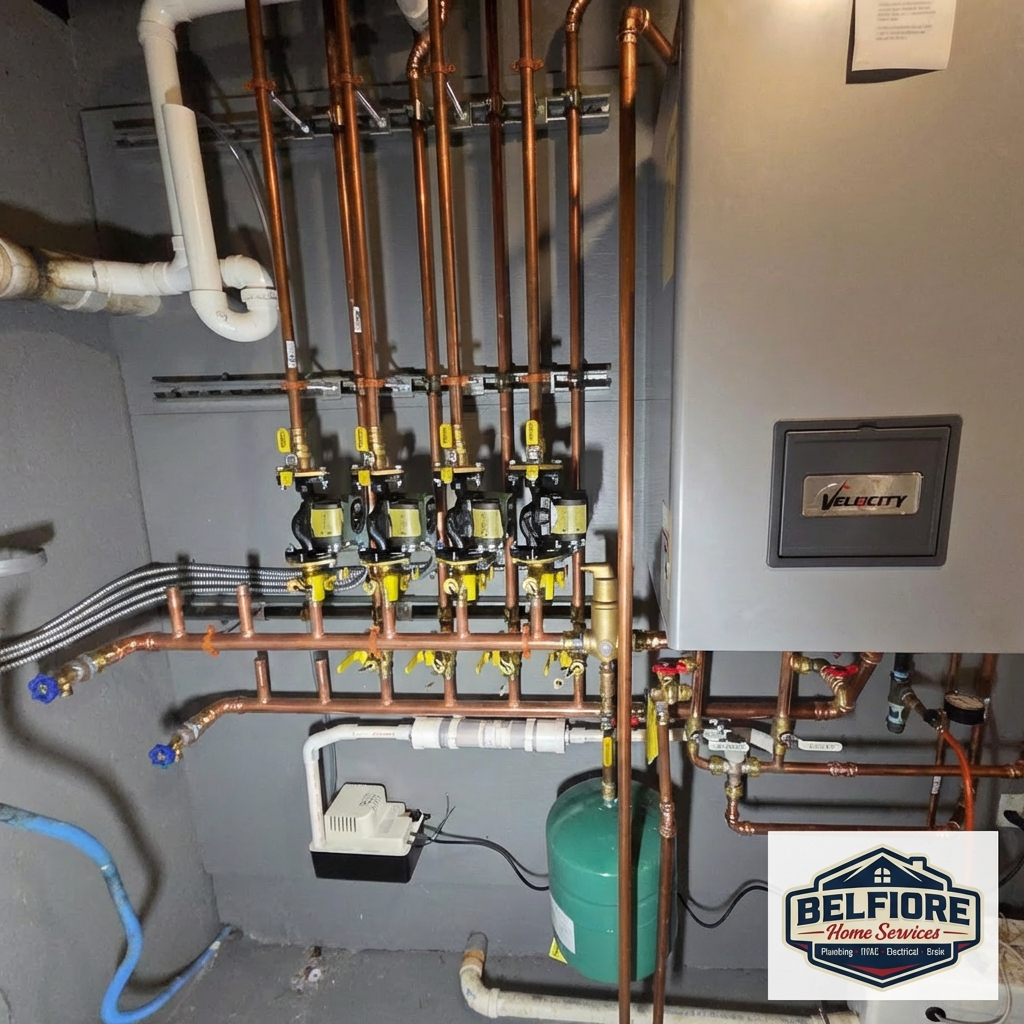
A straightforward part replacement, like a circulator pump, zone valve, or low water cut-off, runs toward the lower end of a repair bill. A failed control board, igniter assembly on a gas boiler, or gas valve costs more in parts and labor. {PRICE} is a reasonable range for most single-repair calls, but the honest answer depends on what’s actually failed, and we won’t quote a number over the phone before someone’s looked at the system. If replacement is the better answer, we’ll price that out separately and explain what’s driving the cost, whether that’s boiler size, venting changes, or gas line work.
How long it takes
Most repair visits in Hamilton take one visit, often the same day the boiler is diagnosed, assuming the part is in stock. Parts for older or less common boiler models sometimes need to be ordered, which can push a repair out a day or two. If you’re facing that gap in a rural part of Hamilton where the house cools down fast, we’ll talk through space heater options or a temporary fix to hold you over. A full boiler replacement is typically a one-day job for the swap itself, with venting or gas line changes adding time depending on what the existing setup requires.
Common Questions
My boiler is short-cycling. Is that a quick fix?
Usually. Short-cycling is often a thermostat, aquastat, or circulator issue rather than a sign the whole boiler is failing. We check the controls first before assuming anything bigger is wrong.
Do you work on both steam and hot water boilers?
Yes. Hamilton has a good number of older steam systems alongside newer hot water setups, and Chris works on both. The diagnostic approach is different for each, which is why it helps to have someone who knows the difference.
I'm on well water. Does that affect my boiler?
It can. Mineral content in well water contributes to scale buildup in heat exchangers and sediment around low water cut-off assemblies faster than town water does. If you're on a well, we check those components closely during a repair visit.
My street doesn't have gas. What are my options?
If gas isn't run to your part of Hamilton, you're generally looking at oil or propane for boiler replacement. We'll walk through what each option means for your specific setup rather than assuming one is obviously right.
How do I know if it's time to replace instead of repair?
Reach Out for Boiler Repair
If your heat’s out or acting up anywhere in Hamilton, call {PHONE}. We work across Hamilton and the rest of the North Shore, and we’ll get someone out to look at your system and give you options, not a script.
Contact information
Talk to Chris
Chris runs the plumbing and heating side of the business and has walked into enough Hamilton boiler rooms to know that every one of them is a little different, especially in houses that have been added onto over generations. He’ll look at the actual system, tell you what’s wrong, and give you a straight answer on whether it’s worth fixing. No pressure toward a bigger job than the one you actually need.