
Pipe Repair and Repiping in Boxford, MA
Boxford has a lot of older farmhouses and estate-style properties, and a lot of them are still running on the original supply piping from whenever the house was built or last touched. That means galvanized steel in some crawlspaces, copper with pinhole leaks in others, and well systems that were sized for a different era of water use. If your water pressure has dropped, your water has a metallic taste, or you’ve had a pipe let go in an unheated space over a cold snap, this is the page for that.
Pipe Repair and Repiping in Boxford
Chris handles the plumbing side of the business, and pipe work in a town like Boxford looks different than it does closer to the water in Salem. Lots are bigger, driveways are longer, and a good share of the piping run from the street or the well pump to the house is long enough that pressure loss and pipe condition actually matter to daily life, not just to a home inspection report. We look at the whole supply run, not just the leak in front of us, because in an older Boxford house the leak you can see is rarely the only section of pipe under strain.
What Boxford Homes Typically Have
A good number of homes here date back decades, some well before modern plumbing codes, with additions and renovations layered on over the years. That usually means a mix of pipe materials in one house: galvanized steel from the original construction, copper added in the 60s through 80s, and in some cases sections of polybutylene from a renovation done in the 80s or early 90s. None of those age well forever. Galvanized corrodes from the inside and chokes down water flow. Polybutylene is a known failure risk industry-wide. Copper holds up longest but still develops pinhole leaks, especially where water is aggressive or acidic.
Boxford also has a meaningful number of properties on private well water rather than town water, particularly in the more rural sections. Well water changes the conversation. Sediment, iron, and hardness all take a toll on pipe interiors and on fixtures, and filtration is often a real fix for pressure and pipe-life problems, not an add-on sale. Heating fuel varies too. Some streets have gas service, others are oil-only, and that affects which water heater and boiler options are actually on the table when we’re already in the mechanical room for pipe work.
What the Work Involves
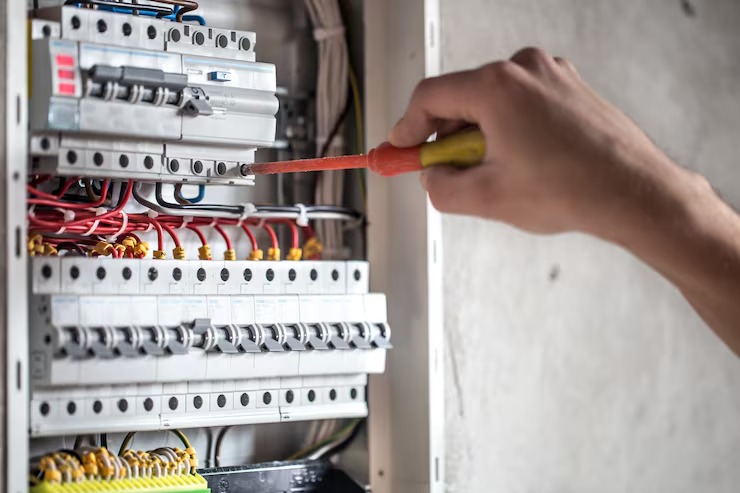
Pipe repair starts with isolating the section of piping in question, draining the affected supply lines, and cutting out the failed or failing section. For a single pinhole leak in copper, that can mean a localized repair with a coupling and a short section of new pipe. For galvanized or polybutylene runs that are failing in multiple spots, the more honest answer is often a repipe of that branch, or the whole house, using copper or PEX depending on the layout and the walls we’re working with.
A full or partial repipe means draining the system, running new supply lines through basement, crawlspace, or wall cavities, and reconnecting to fixtures, the water heater, and any boiler or hydronic zones on the same supply. If the work touches a gas water heater or boiler, we size and check the gas line to make sure it’s still correct for the load once everything is reconnected. Water is typically off to the affected area for the working day. Whole-house repipes on a larger Boxford property can run longer depending on how many fixtures and how much wall or floor access is involved.
Repair or Replace
This is where we tell you straight, and it’s the part most companies skip. If you’ve got one pinhole leak in an otherwise sound copper system, that’s a repair. There’s no reason to repipe a house over one bad joint or one corroded fitting. If the copper is original from the 60s or 70s and you’re now on your second or third pinhole leak in different spots within a year or two, that’s a pattern, and it’s worth talking about a phased repipe before you’re dealing with leaks on a rotating basis.
Galvanized pipe is a different story. It doesn’t fail in one spot and stay fine everywhere else. If it’s corroded enough to leak or choke your pressure in one section, the rest of the system is on the same clock. Same with polybutylene. In those cases, repair buys you time but not a solution, and we’ll say so rather than keep billing you for patches. Chris would rather tell you a repair is the right move and lose the bigger job than sell you a repipe you don’t need yet.
What It Costs
Pipe repair pricing depends on how many spots need fixing, what material we’re working with, and how accessible the pipe is behind walls or floors or in a crawlspace. Repiping is priced by scope: how many fixtures, how many stories, whether we’re running new PEX through existing walls or opening them up, and whether the water heater or boiler connections are part of the job. We’ll give you a firm number for the property in front of us, {PRICE_RANGE}, once we’ve seen the piping layout and the access. On a larger Boxford lot with a finished basement or a slab section, access is often the bigger cost driver than the pipe itself.
How Long It Takes
A single pipe repair is usually a same-day job, often just a few hours depending on access. A partial repipe, one branch or one bathroom’s worth of supply lines, typically runs a full day. A whole-house repipe on a larger property, which is common in Boxford given the size of a lot of these homes, can take {DAYS_ESTIMATE} depending on the number of fixtures, floors, and whether we’re opening walls or fishing PEX through existing cavities. We’ll walk you through the schedule before we start so you know how many days you’re without full water service in affected areas.
Common Questions
How do I know if my pipes are galvanized or copper?
Galvanized pipe is steel with a dull gray finish and often shows rust staining or corrosion at joints. Copper has a reddish-brown color and doesn't rust the same way, though it can develop small greenish or white mineral deposits around a pinhole leak. If you're not sure, we can take a look at an exposed section in your basement or crawlspace and tell you what you're working with.
Is polybutylene pipe actually a problem, or is that overstated?
It's a real concern. Polybutylene, often gray plastic pipe installed mostly in the 80s and early 90s, is prone to cracking and failure from the inside out in ways that are hard to predict. If your Boxford home has it, we'll walk you through a realistic repipe timeline rather than waiting for a failure.
Can a frozen pipe be repaired without a full repipe?
Usually yes, if it's an isolated section, like an exterior wall run or an unheated crawlspace line. We repair the burst section and can talk about insulation or heat trace to prevent it from happening again in that same spot.
Does well water affect how long my pipes last?
It can. Hard water, iron, and sediment common in North Shore wells accelerate corrosion and buildup inside pipes, especially galvanized ones. Filtration at the point of entry is often the fix that extends the life of the piping you already have, rather than an unnecessary upgrade.
Will I be without water during a repipe?
Reach Out for Pipe Repair and Repiping
Belfiore is a Salem-based company working across Boxford and the rest of the North Shore. Call {PHONE} to talk through a leak, a pressure problem, or an aging pipe system before it turns into an emergency. We’ll give you a straight answer on repair versus repipe and get you scheduled.
Contact information
Talk to Chris
If you’re dealing with a pipe that’s already failed, or you just want an honest read on whether your galvanized or copper supply lines are worth fixing versus replacing, call and ask for Chris. He’ll walk through what he’s seeing, what the realistic options are for your specific house, and what it would take to get it done right. No pressure toward the bigger job if the smaller one is the right call.