EV Charger Installation in Beverly, MA
A lot of Beverly homes were wired for a stove, a water heater, and maybe a window AC unit. Now the same panel is being asked to run a Level 2 charger that pulls 30 to 50 amps for hours at a stretch. If your house dates to the streetcar-suburb boom of the early 1900s or the postwar additions along Route 1A, the electrical service was never designed with a car in the driveway that needs its own circuit.
Why Beverly Homes Need This
Beverly’s housing stock skews old. Cabot Street and the neighborhoods around it are full of two and three family conversions, farmhouses split into units, and capes built before 1950. That means a lot of 100 amp services, and in some of the older homes, a 60 amp service that was upgraded once decades ago and never touched again. Some of these houses still have knob and tube segments feeding upstairs rooms, or cloth-insulated wire that was fine for lamps and radios but was never rated for continuous high-draw loads.
We’ve also come across Federal Pacific and Zinsco panels in Beverly basements, both known for breakers that don’t trip reliably under fault conditions. Adding a 40 or 50 amp EV circuit to a panel like that isn’t a matter of finding an open slot. It’s a question of whether the panel should be feeding a car charger at all, or whether it needs to come out first.
What the Work Involves
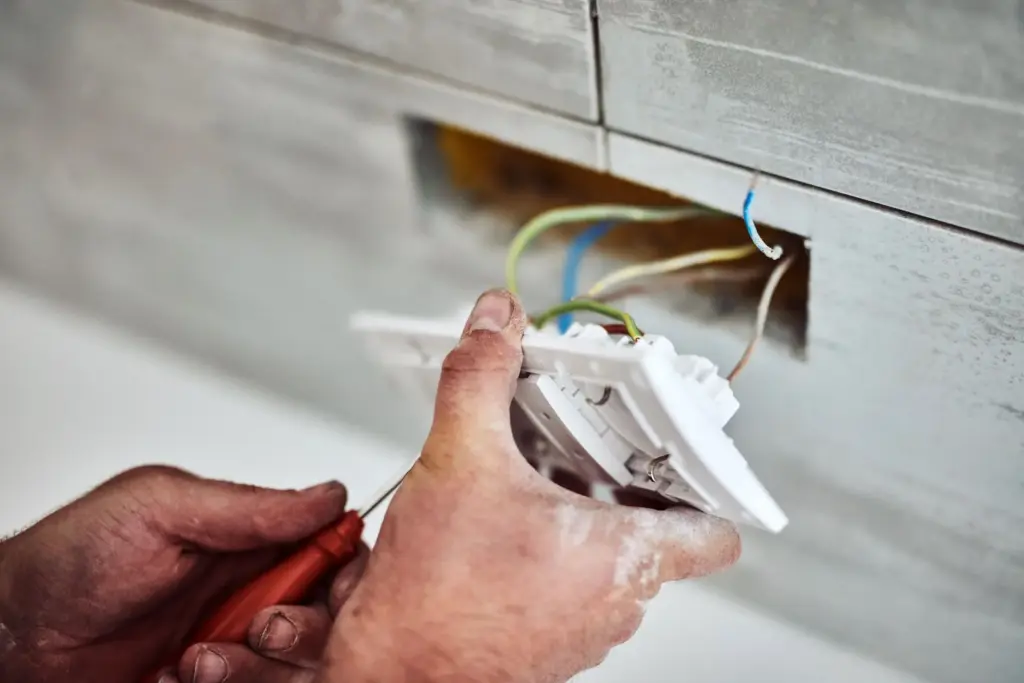
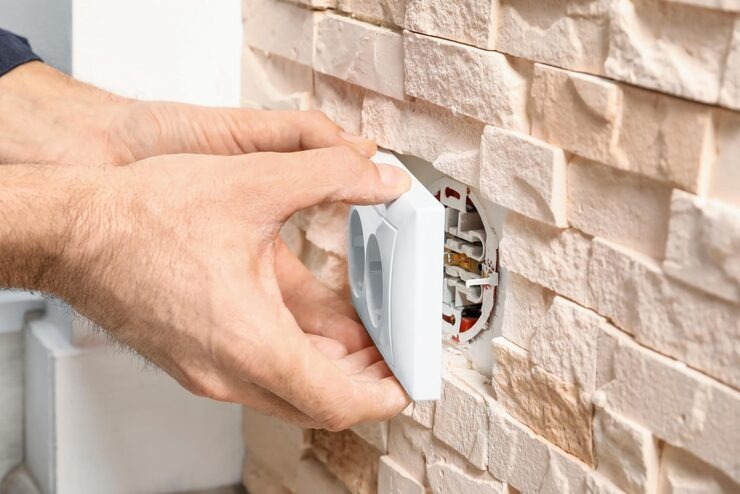
Every job starts with a look at your existing service. Brandon checks the panel’s amperage, the condition of the breakers, the size of the service entrance conductors, and how much spare capacity you actually have once your existing loads (heat, water heater, range, dryer) are accounted for. On a 200 amp panel with room to spare, this is often a same-day job: run a dedicated circuit on 6 or 8 gauge copper depending on the charger’s draw, land it on a new double-pole breaker, and terminate at either a hardwired connection or a NEMA 14-50 outlet, depending on what your charger brand calls for.
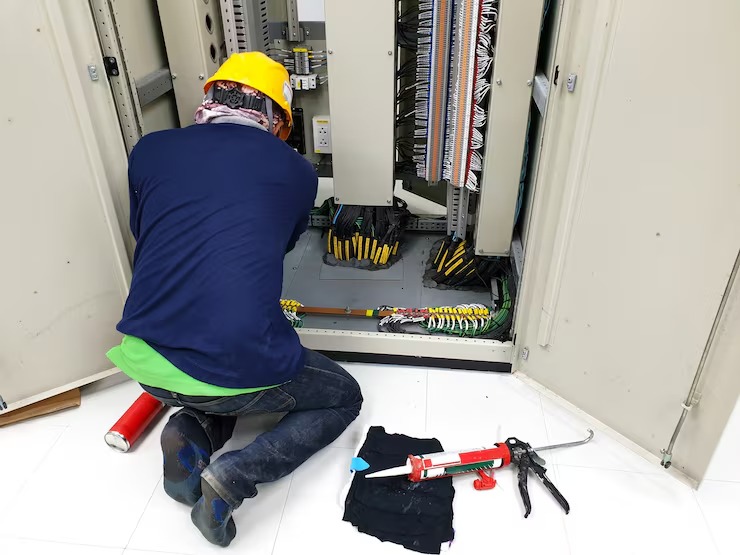
If your service is undersized, the job changes. A 100 amp service carrying an electric range, electric heat, or a heat pump may not have 40 amps of headroom left. In that case the honest answer is a service upgrade to 200 amps before the charger goes in. That involves coordinating with the utility, since they own the drop and the meter, while Brandon’s crew handles the panel, grounding, bonding, and the new circuit itself.
Power to the house is off for the panel work, usually a few hours, not a full day. We walk you through what shuts down and for how long before we start, so you’re not guessing.
What It Costs
A straightforward dedicated circuit to an existing panel with capacity to spare runs {PRICE_LOW} to {PRICE_HIGH} in most cases. That range moves based on wire run length (a garage on the far side of the house costs more than a driveway next to the panel), whether you need a hardwired connection versus a plug-in outlet, and whether the panel needs any interior work first, like a subpanel or a tandem breaker swap. If the underlying service is too small and needs a full upgrade, that’s a separate, larger cost we’ll walk you through before any work starts. Nobody gets a number pulled out of thin air. Brandon looks at the panel and the run and gives you a real figure for your house.
How Long It Takes
A dedicated circuit install with an adequate panel is typically done in a single visit, often four to six hours depending on the wire run and whether we’re going through finished walls, an unfinished basement, or exterior conduit. If a service upgrade is part of the job, expect it to span two visits: one for the panel and service work, coordinated around the utility’s schedule for any drop or meter changes, and a second for inspection sign-off before the charger circuit gets energized for use.
Permits and Inspection
EV charger circuits and any service work are permitted and inspected under Massachusetts electrical code. That’s not a formality we skip to save you time. Brandon pulls the permit, the local inspector reviews the completed work, and you get a record that the installation was done to code. That paperwork matters if you ever sell the house or file an insurance claim, and it’s the clearest difference between a licensed electrician and someone working off a truck with no license number to show you. [EXTERNAL LINK: Massachusetts Board of State Examiners of Electricians – state electrical code and permit requirements]
Common Questions
Can my current panel handle an EV charger?
It depends on the amperage and what else is already on it. A 200 amp panel with moderate loads usually has room. A 100 amp panel with electric heat or an electric range often doesn't. Brandon can tell you after a load check, not a guess.
Do I need a 240-volt outlet or a hardwired connection?
Both work. Some charger brands, like certain Tesla wall connectors, are typically hardwired. Others use a NEMA 14-50 outlet so you can unplug the charger if you move. We'll match the install to the equipment you bought or are planning to buy.
What if I have a 60 amp service?
A 60 amp service is a real limitation in an older Beverly home, especially with knob and tube still in parts of the house. In most of these cases, we recommend a service upgrade before adding an EV circuit rather than overloading an already tight service.
Does National Grid need to be involved?
Is a permit really required for this?
Reach Out for EV Charger Installation
Call {PHONE} to get your panel looked at and get a real number for your house. We work across Beverly and the rest of the North Shore, and we’ll tell you plainly if your service needs an upgrade before it needs a charger.
Contact information
Talk to Brandon
Brandon is the electrician half of Belfiore. He left union work to run the electrical side of this family shop, and panel evaluations like this are the kind of job he does on repeat across the North Shore. If you’re not sure whether your panel can handle a charger, that’s the first question to ask him, not the last.