
Electrical Troubleshooting and Repair in Newburyport, MA
Walk through the South End or around the Bartlet Mall and you’re looking at houses built when a home’s entire electrical load was a few light bulbs and maybe a radio. Most of that downtown federal and colonial housing was wired decades after it was built, often with a 60 amp or 100 amp service that was generous for its time and is thin by today’s standard. Add central air, a heat pump, an induction range and an EV charger to a house like that and something has to give.
Why Newburyport Homes Need This
Newburyport’s housing stock is older on average than most of the towns we work in, and it shows in the panel. We still find knob and tube segments in attics and wall cavities that were never fully removed during a remodel, cloth-insulated wiring behind plaster that’s brittle and no longer rated for the loads people put on it, and 60 amp services that were fine for a 1954 kitchen and are not fine for a 2024 one. Federal Pacific Stab-Lok panels turn up regularly in homes that had electrical work done in the 60s and 70s and never touched since – they’re a known fire risk and insurance companies are increasingly asking about them at renewal. Add the fact that Newburyport’s downtown historic district often limits what you can change on the exterior of a house, and a service upgrade here sometimes takes more coordination than the same job in a newer neighborhood in Newburyport.
What the Work Involves
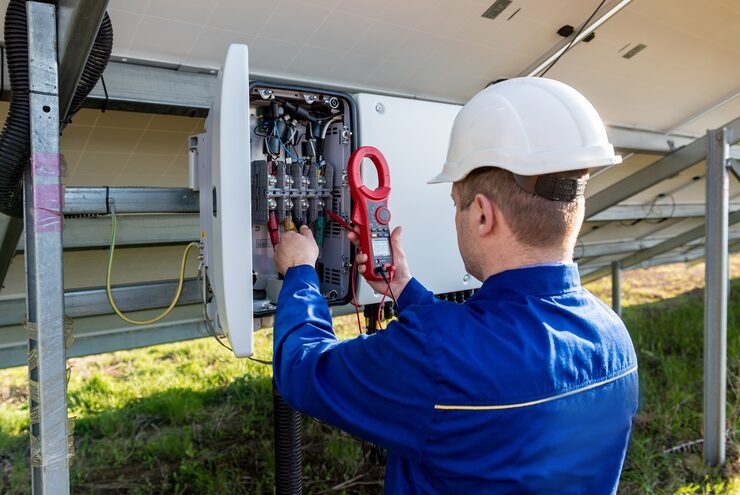
Troubleshooting starts with finding the actual fault, not guessing. Brandon traces breakers that trip for no obvious reason, outlets that read dead, flickering lights that point to a loose neutral, and the smell of hot plastic that means something’s overheating behind a wall. Repair work ranges from replacing a single failed breaker or a scorched receptacle to re-running a circuit that’s been overloaded for years.
For anything that touches the main panel or service entrance, the power to that panel gets shut off for the duration of the work – usually a few hours, not a full day. The utility is responsible for the service drop or lateral up to the meter; everything from the meter into the house is the electrician’s work. That includes the panel itself, breakers, grounding, and every branch circuit feeding your outlets and fixtures. Once the repair is done, we test each affected circuit under load before we call it finished, not just with the panel closed back up.
What It Costs
A straightforward repair – a bad breaker, a dead outlet, a short in one circuit – typically runs {PRICE_LOW} to {PRICE_HIGH}. What moves that number is how much of the house is affected, whether the wiring is modern romex or older cloth and knob-and-tube that needs to be partially replaced to do the job safely, and how accessible the affected area is. A repair in an open basement ceiling is quicker than the same repair behind original plaster and lath in a South End dining room. We give you a number before we open a wall, not after.
How Long It Takes
Most single-circuit troubleshooting and repair is done in one visit, often in half a day. Jobs that turn into panel work or that uncover knob and tube needing replacement can run one to two days depending on how much of the house that wiring touches. We’ll tell you at the diagnosis stage which one you’re looking at, before the work starts, not partway through.
Permits and Inspection
Electrical work in Massachusetts is permitted and inspected, and panel and service work always requires a permit pulled by a licensed electrician. That inspection is a second set of eyes confirming the grounding, the breaker sizing and the connections meet code, not a formality. It’s also the clearest difference between hiring a licensed electrician and hiring someone with a truck and a multimeter. Brandon pulls the permit, schedules the inspection, and handles the paperwork as part of the job. [EXTERNAL LINK: Massachusetts Electrical Code (527 CMR 12) reference for homeowners researching permit requirements]
Common Questions
Is my old wiring dangerous or just outdated?
Outdated doesn't automatically mean dangerous, but knob and tube and cloth-insulated wiring lose their margin for error as loads increase. If it's intact and lightly loaded it can be stable; if it's been spliced into modern circuits or buried under insulation, it's a real risk. Brandon can tell you which situation you're in during a diagnosis.
Do I need a full panel replacement or just a repair?
Not always. A tripping breaker or dead outlet is often a contained issue. A panel replacement becomes the right call when the panel itself is an obsolete brand like Federal Pacific or Zinsco, when you're out of breaker space, or when the service size can't support what you're adding.
How much does electrical troubleshooting cost in Newburyport?
Most single-issue repairs fall between {PRICE_LOW} and {PRICE_HIGH}. Older wiring, hard-to-access areas, and historic-district plaster walls can push that higher because of the extra time to work around them safely.
Will the power be off for the whole house during a repair?
Only if the work is at the main panel. Most circuit-level repairs are isolated to the affected circuit, so the rest of the house stays powered while Brandon works.
Does Newburyport's historic district affect electrical work?
It can affect exterior changes like a new service mast or meter relocation, since those are visible from the street. Interior repairs and panel work inside the house aren't restricted the same way, but we plan exterior work with that in mind.
Reach Out for Electrical Repair
If a breaker keeps tripping, an outlet has gone dead, or you’re planning an addition and want to know what your existing service can handle, call {PHONE}. We work across Newburyport and the surrounding North Shore, and we can usually get a look at the problem quickly.
Contact information
Talk to Brandon
Brandon left union electrical work to run the electrical side of his family’s company, and he’s the one who shows up, diagnoses the problem, and does the repair. He’ll walk you through what’s actually wrong, what your options are, and what he’d do in your house before any work starts. No call center, no dispatch to a subcontractor you’ve never met.