
Electrical Panel Replacement in Rowley, MA
A lot of Rowley homes were wired for a much smaller life than the one being lived in them now. A farmhouse off Main Street built with a 60 amp fuse panel in the 1950s was never meant to run a heat pump, a well pump, an electric range, and a couple of space heaters at once. When the panel starts humming, tripping for no clear reason, or showing scorch marks around the breakers, that is not a wiring problem you patch. That is a panel that needs to come out.
Why Rowley Homes Need This
Rowley’s housing stock skews old, and old panels fail in predictable ways. We still find Federal Pacific Stab-Lok panels in capes and colonials off Route 1A, and those breakers have a documented history of not tripping when they should, which is a fire risk rather than an inconvenience. Zinsco panels show up too, with breakers that fuse to the bus bar and stop protecting the circuit at all. Add in cloth-insulated wiring and 60 amp fuse services original to the house, and you have a panel that was outdated before the current owners ever added central air or an electric water heater.
Rowley is also well-and-septic country for a good share of its properties, which means a well pump pulling its own dedicated circuit, sometimes off a panel that was never sized to carry it safely alongside everything else in the house. And because Rowley loses power for real stretches when North Shore storms come through, a lot of homeowners want a panel that can accept a generator interlock or transfer switch cleanly, not one that has to be worked around. A tired panel makes both of those things harder than they need to be.
What the Work Involves
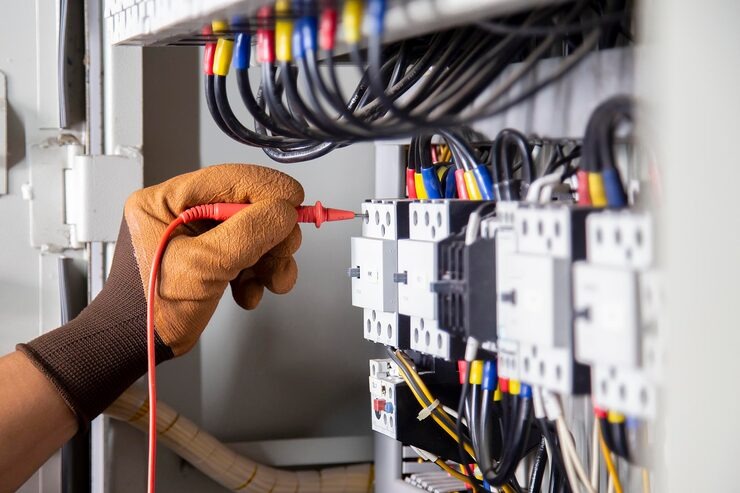
Brandon starts by opening the panel and checking what is actually behind the cover: bus bar condition, breaker type, wire gauge, grounding, and whether the panel is a known problem brand. If replacement is the right call, the job means killing power to the house, pulling the old panel, and setting a new one, usually 200 amp for a Rowley home, sized to the load you actually run.
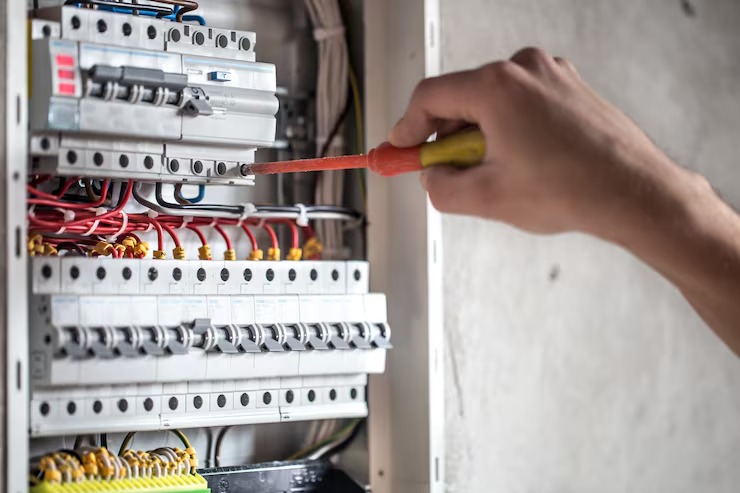
The utility has to pull the meter or disconnect the service drop before anything comes apart, and that is coordinated ahead of the job, not discovered on site. The electrician’s side is the panel itself: new breakers matched to each circuit, grounding and bonding brought up to current code, and every circuit landed and labeled correctly, not just shoved back in wherever it fits. Power is typically out for most of the working day, sometimes into a full day on an older three-phase or oddly configured setup, and we tell you that up front rather than after the fact.
What It Costs
Panel replacement in Rowley generally runs {PRICE_LOW} to {PRICE_HIGH}. What moves the number: whether it’s a straight swap versus a full 100 to 200 amp jump, how much of the existing wiring has to be reworked to meet current code, whether a generator interlock or EV-ready circuits get added at the same time, and how much rerouting the panel’s location requires. A clean swap in an accessible basement costs less than pulling a panel out of a cramped closet with knob-and-tube feeding into it. Brandon gives you the real number after he’s seen the panel, not a phone estimate.
How Long It Takes
Most straightforward panel replacements are a single day of work, start to finish. Power goes out once the utility disconnects the drop and comes back on once the new panel is set, tested, and the utility reconnects. Jobs that involve rerouting circuits away from old cloth wiring, or relocating the panel to a better spot, can run into a second day. We tell you which one you’re looking at before we start, not partway through.
Permits and Inspection
Panel replacement is permitted work in Massachusetts, full stop. Brandon pulls the permit, the town inspector reviews the finished panel, and the work gets signed off before it’s buried behind a cover plate for the next twenty years. That inspection is what separates a licensed electrician’s work from a handyman job that looks fine until it doesn’t. If you’re ever selling the house, a permitted panel replacement shows up clean on the record; an unpermitted one is the kind of thing a home inspector flags and buyers ask about.
Common Questions
How do I know if my panel is a Federal Pacific or Zinsco panel?
Check the label inside the panel door. Federal Pacific panels usually say Federal Pacific Electric or FPE, and Zinsco panels often have a distinctive colored breaker design. If you're not sure, Brandon can identify it on sight during a visit.
Can I just replace individual breakers instead of the whole panel?
On Federal Pacific and Zinsco panels, no. The failure is in the bus bar design itself, not just the breakers, so swapping breakers doesn't fix the underlying problem. Full replacement is the only real fix.
Will replacing my panel let me add a generator or EV charger later?
Yes, and it's worth planning for at the same time. A new 200 amp panel with the right breaker spaces makes adding a generator interlock or EV charger circuit later a much simpler job than retrofitting an old, full panel.
Do I need to be home during the panel replacement?
Does my well pump need special attention during a panel replacement?
Reach Out for Electrical Panel Replacement
If your Rowley home is still running on a panel from before you owned it, or you’ve had an electrician mention Federal Pacific or Zinsco and move on quickly, call {PHONE}. We’ll look at the panel, tell you what it is, and lay out what replacing it actually involves.
Contact information
Talk to Brandon
Brandon is the electrician side of Belfiore. He’s licensed, he left union work to run this side of the family business, and panel replacement is the kind of job he’d rather walk you through in person than sell over the phone. If you’ve got a Federal Pacific or Zinsco panel, or a fuse box that’s original to the house, he’ll tell you straight whether it needs to come out now or whether it can wait.