
Boiler Installation and Replacement in Peabody, MA
A lot of Peabody’s housing stock is older, and that means a lot of original or aging steam and hot water boilers still doing the work every winter. It also means water heaters that were sized for a smaller family decades ago, and in some pockets, well water that puts real wear on any heating system it feeds. If your boiler is groaning, short-cycling, or just old, this page walks through what we actually see in Peabody homes and what your options are.
Boiler Installation and Replacement in Peabody
Chris and the team install and replace steam and hot water boilers across Peabody, from the older triple-deckers near downtown to the ranch and colonial-style homes further out toward the Lynnfield and Danvers lines. We work on cast iron steam boilers, hot water boilers on gas or oil, and combination systems that also handle domestic hot water. The goal on every job is the same: give you a straight answer on repair versus replacement, then do the install right the first time, including the venting and gas sizing that get rushed on cheaper jobs.
What Peabody homes typically have
Peabody has a mix of building eras, but a large share of the housing near West Peabody and South Peabody dates back to the early-to-mid 1900s, with plenty of two and three-family conversions from that same period. Original steam boilers are common in these older homes, often paired with cast iron radiators that have been in place since the house was built. Newer construction and homes built from the 1970s onward are more likely to run hot water baseboard systems.
Gas service reaches most of Peabody’s older neighborhoods, but it isn’t universal. Some streets, particularly in the more rural western edges of town, still rely on oil delivery. This matters directly for boiler replacement, because a gas-fired unit is often more efficient to run and simpler to vent, but it only makes sense if gas is actually available at your curb. We check this before we ever quote a job, not after.
Most of Peabody is on town water, so scale and sediment inside an old boiler are usually a function of age rather than water source. The smaller number of homes on private wells see more mineral buildup over time, which is worth flagging when we’re evaluating an old boiler’s condition.
Repair or replace
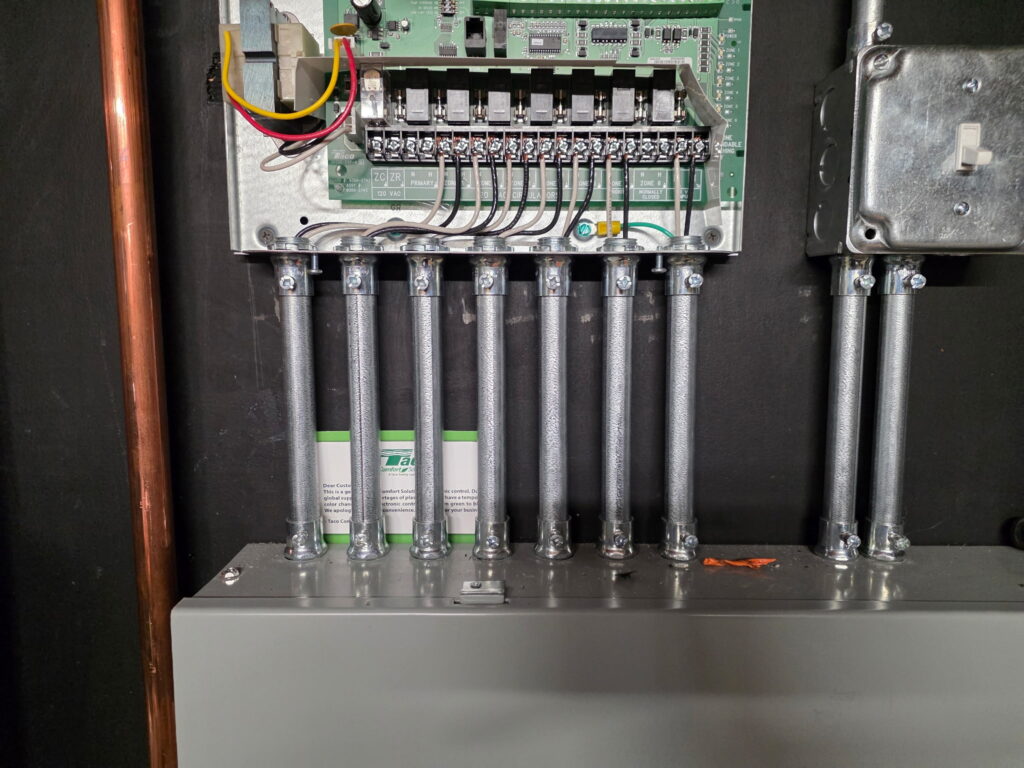
This is the question that matters most, and it’s the one that gets skipped when a company is trying to sell you a new system. Chris will look at four things: the age of your boiler, the cost of the specific repair needed, the efficiency you’re currently getting, and whether parts are still readily available for your model.
If your boiler is under 15 years old and the issue is a failed circulator pump, a bad zone valve, an ignition problem, or a leaking gasket, repair is almost always the right call. Those are contained fixes that don’t touch the heat exchanger or the boiler’s core components. If the boiler is original to a home built before 1970, if the heat exchanger itself is cracked or leaking, or if you’re replacing the same type of part for the second or third winter in a row, that’s when replacement starts making more sense financially and practically. We’ll say so plainly either way. There’s no upsell built into how we answer this.
What the work involves
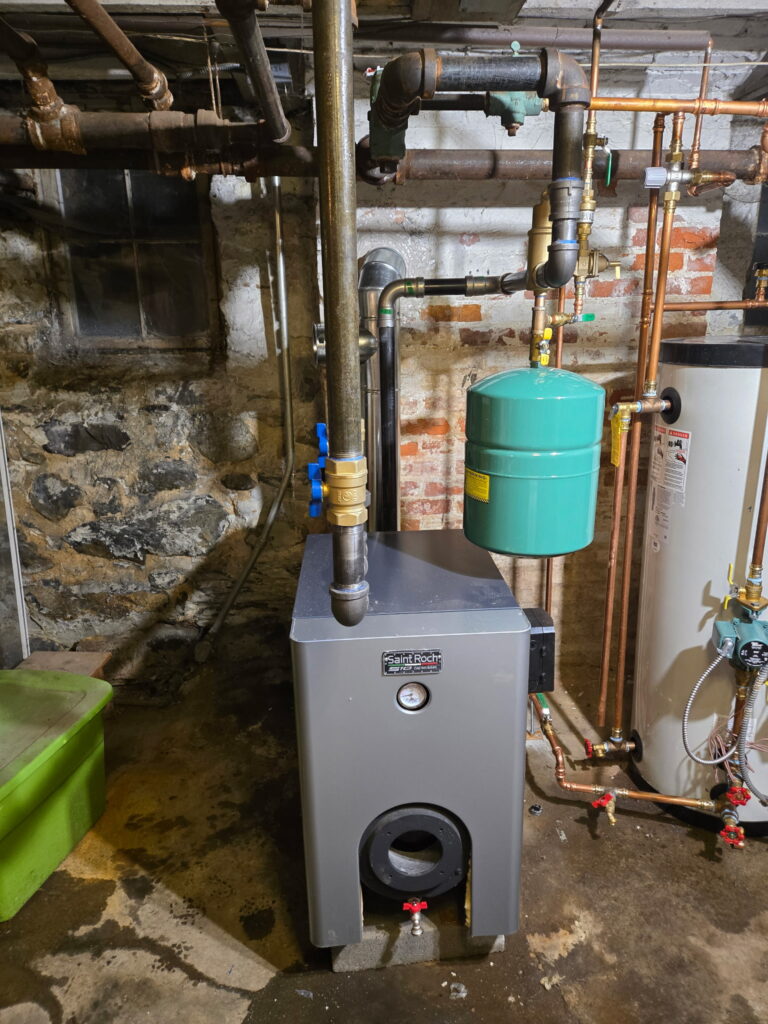
A full boiler replacement starts with draining the existing system and disconnecting the old unit, including gas or oil supply lines and the flue connection. We assess the venting next: older steam boilers were often vented into a masonry chimney, and code requirements around liner condition and sizing have changed since those systems went in. If you’re staying on gas, we recalculate gas pipe sizing for the new unit’s BTU input, since many older boilers were undersized to begin with and a straight swap without checking pipe size is how you end up with pressure problems.
Once the new boiler is set, we connect gas or oil supply, run new venting or reline the chimney if needed, reconnect the near-boiler piping, and refill and bleed the system. For a straightforward like-for-like swap, gas to gas or oil to oil with existing venting reused, most Peabody homes are back on heat the same day. Jobs that involve rerouting gas line, changing fuel type, or redoing a chimney liner take longer, and we’ll tell you that up front during the estimate, not the day of.
What it costs
Boiler replacement cost depends on the unit size, whether you’re staying with your current fuel type, and how much of the venting and piping needs updating alongside the boiler itself. A straight swap costs less than a job that also requires a chimney reline or a gas line upsize. We give you a firm number after Chris has actually looked at your system and your house, not a phone estimate, because the difference between a simple swap and a complicated one is usually only visible in person. Ask about {FINANCING_OR_PAYMENT_OPTIONS} when we’re on site.
How long it takes
Most straightforward boiler replacements in Peabody, where fuel type stays the same and existing venting is reused, are done in a single day, and you’re back to heat that evening. If the job involves converting from oil to gas, replacing a chimney liner, or upsizing gas line back to the meter, plan for the job to run into a second day. We’ll give you a realistic timeline during the estimate so you can plan around it, especially if it’s the middle of winter and heat matters that day.
Common Questions
How do I know if my boiler needs to be replaced instead of repaired?
Age is the biggest factor. A steam or hot water boiler in a Peabody two-family that's original to the 1960s or 70s conversion is a candidate for replacement even if it's still limping along, because efficiency has dropped and parts are getting harder to source. If your boiler is under 15 years old and the problem is a single failed component, like a circulator pump or a zone valve, repair is usually the right call. Chris will tell you straight which category your system falls into.
Is my house on gas or oil in Peabody?
It depends on the street. Gas mains run through a lot of Peabody's older neighborhoods, but there are pockets, especially further from the main corridors, still on oil delivery. If gas is at the curb, converting to a gas-fired boiler at replacement time is worth pricing out. If it isn't, we size and install a modern oil-fired unit instead.
How long will my house be without heat during a boiler replacement?
A straightforward swap, gas to gas or oil to oil with existing venting reused, is usually a one-day job. If we're changing fuel types, rerouting gas line, or replacing venting, plan on it running into a second day.
Can you convert my steam system to hot water while you're in there?
It's possible but it's a bigger job than a straight boiler swap, since it means new piping and radiator changes throughout the house. Most Peabody customers stick with steam and replace like-for-like, because the existing radiators and piping are already set up for it. We'll walk through both options if you want to hear the tradeoffs.
Do you handle the gas line sizing for a new boiler?
Reach Out for Boiler Installation and Replacement
If your boiler is struggling to keep up, making noise it didn’t used to make, or just old enough that you’re wondering, call {PHONE}. We’ll look at the actual system in your Peabody home and tell you honestly whether it’s a repair or a replacement, then walk you through fuel type, venting, and gas sizing before any work starts.
Contact information
Talk to Chris
Chris runs the plumbing and heating side of the business and has seen the range of what Peabody’s older housing stock throws at a boiler system. If you want a straight opinion on whether your boiler is worth fixing one more time or whether it’s time to replace it, that’s the conversation to have before anything gets scheduled.